
Livraison le jour même ou le lendemain

Qualité garantie

Débloquez vos offres de bienvenue: Livraison GRATUITE | Jusqu'à -80 % | 30 jours d'essai gratuits à JoyPlus
Téléchargez l'application
Low pressure, a slow puncture or a tyre that needs topping up before a long journey can quickly turn a simple trip into a real headache. A portable car air compressor fits easily in the boot and can also come in handy for a motorbike, bicycle or certain inflatables. The key is choosing a model that suits your needs.
Technical specifications sometimes highlight impressive figures, even though other criteria matter more than maximum pressure alone. Here are the points to check before buying, along with a selection of models for different types of motorists in France.
A 150 PSI tyre compressor may reach a high pressure, but that does not mean it will quickly reinflate a completely flat car tyre. Speed also depends on the airflow rate, motor power, cylinder diameter and operating temperature.
For making a small pressure adjustment, a compact inflator will generally do the job. If you need to inflate several tyres, choose a device whose airflow rate and operating time are clearly specified.
A cordless tyre pump is particularly convenient at a service station or on the roadside. However, its battery may reach its limits after several inflation cycles. Check its capacity in mAh, the time needed to recharge it and the stated battery life.
For example, the Porbi Q16 has a 4,000 mAh battery and offers up to 25 minutes of stated operating time, with a recharge time of around 3.5 hours. Its specifications state that it can handle approximately two empty car tyres in size 195, at 7 to 8 minutes per tyre. These figures naturally depend on the starting pressure and temperature.
A device powered by 12 V connects to the cigarette lighter socket or a compatible auxiliary socket in the vehicle. Remember to check the length of the cable and hose, so you can reach all four wheels without having to move the device.
By contrast, a rechargeable air pump gives you greater freedom of movement, but it must be charged before you set off. For regular journeys, some drivers choose to keep a corded model in the boot and a cordless device for bicycles or outdoor activities.
For a passenger car, the recommended pressure can be found in the vehicle handbook, on a label inside the door frame or near the fuel flap. It is generally expressed in bar, while inflators often display their values in PSI.
A digital pressure gauge makes readings easier, particularly in the dark, and helps prevent conversion errors between bar, PSI and kPa. The automatic shut-off function stops inflation once the preset pressure has been reached. However, it does not replace checking the pressure recommended by the vehicle manufacturer.
An LED light can also be useful during a roadside repair at night. Treat it as supplementary lighting, not as a road-safety signalling device.
For a cordless device, compare the battery capacity, charging connector — often USB-C — and the option to use an external power source. With a corded model, check the cable length and whether there is a storage compartment for the hose and nozzles.
The overall size also deserves your attention. A portable car inflator intended to stay in a glove compartment needs to be considerably more compact than a compressor designed for the boot or a home workshop.
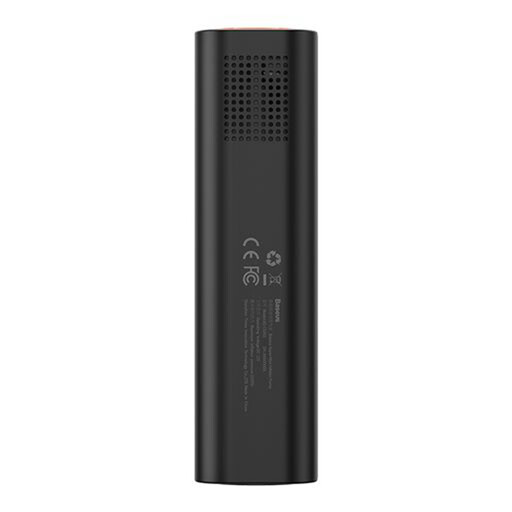
Why this choice suits this profile: Its 12 V power supply is ideal for motorists who want a device that is simple to use from the vehicle socket, without having to monitor the level of a built-in battery.
The specifications confirm compatibility with 12 V vehicles and recommend taking breaks to allow the device to cool down. It should therefore not be regarded as a compressor designed for continuous operation.
Stated pressure of 0.2 to 150 PSI, LED light and 12 V socket power supply.
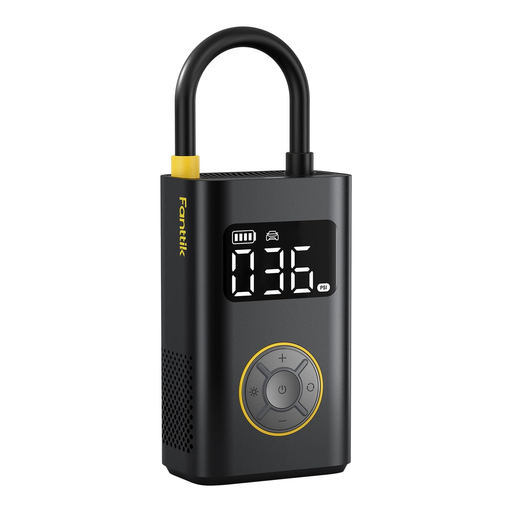
Why this choice suits this profile: It is aimed at drivers looking for a clear interface, several modes and cordless use for cars, motorbikes, bicycles or balls.
Automatic shut-off at the selected pressure means you do not need to monitor inflation constantly. The specifications also state that the device switches off automatically after three minutes of inactivity.
Stated maximum pressure of 150 PSI, 7.4 V battery and stated operating time of up to 23 minutes.
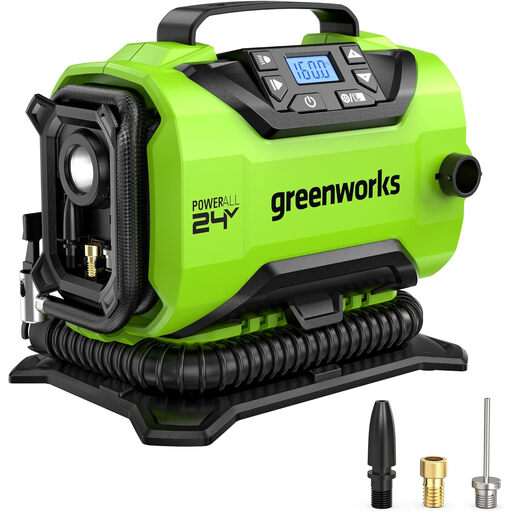
Why this choice suits this profile: Its high- and low-pressure modes are suitable for users who regularly inflate tyres, balls, mattresses or other outdoor equipment.
The 24 V battery and charger are sold separately. It is best to know this before ordering, so you can check compatibility with your Greenworks equipment.
Stated maximum pressure of 11 bar, automatic shut-off, three adapters and a 0.5 m hose.
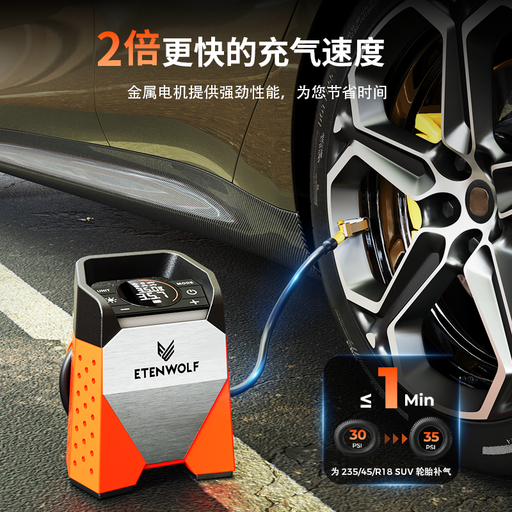
Why this choice suits this profile: Its larger format and stated 100% operating capacity are designed for users who need to inflate several items.
Its specifications list a power rating of 132 W, an airflow rate of 1.25 cu ft/min and a noise level of 78 dB. This information helps you anticipate its performance and the noise it produces.
Stated maximum pressure of 160 PSI, battery power and accessories for cars, bicycles and balls.
We have put together a comprehensive, real-time updated selection of products that meet these strict criteria, as well as European safety requirements.
A motorbike and bicycle tyre inflator should also come with the appropriate adapters. If your bicycle has a Presta valve, a specific adapter may be required.
Yes, some models can, but the time required varies according to the tyre size, starting pressure and available power. Check the stated inflation time and take breaks to prevent overheating. In the event of a serious puncture, an inflator is not a substitute for repairing or changing the tyre.
A 12 V tyre pump draws power directly from the vehicle and does not rely on an internal battery. It may be suitable for prolonged inflation, provided you follow the manufacturer’s instructions. More convenient to handle, a cordless model must be recharged regularly and its battery life remains limited.
The electricity consumption of a small inflator is generally low, as it only runs for a few minutes. With a rechargeable model, the electricity cost of recharging it is minimal. The budget mainly depends on the purchase price, battery lifespan, accessories supplied and any additional purchase of a separate pressure gauge.