
Livraison le jour même ou le lendemain

Qualité garantie

Débloquez vos offres de bienvenue: Livraison GRATUITE | Jusqu'à -80 % | 30 jours d'essai gratuits à JoyPlus
Téléchargez l'application
Whether you’re brewing a coffee, rehydrating a meal or cooking a hot dinner in the great outdoors, choosing a portable camping stove depends on your route, the fuel you use and your cooking habits. A lightweight model isn’t always the most practical, and high power doesn’t guarantee good stability or sufficient wind resistance.
Before you place an order, three mistakes crop up time and again among hikers and campers in the UK:
For straightforward use on a hike, a stove compatible with an isobutane cartridge with a threaded connection can be very convenient. The EN 417 standard is commonly used for portable gas cartridges with a threaded valve. However, always check the product details and the exact type of cartridge available.
A system designed for a threaded cartridge must not be used with a puncture-style cartridge without the correct adapter. Conversely, the presence of an adapter doesn’t mean all fuels are compatible. In particular, check:
Only use a gas stove outdoors or in a very well-ventilated space – never inside a tent, car or enclosed room.
For a trek where you’re carrying everything, the weight of your outdoor cooking gear needs to be assessed as a whole. A stove weighing 240 g on its own can quickly take up more space once you add the pot, lid, case and cartridge base.
A 600 ml hiking pot is generally enough for a hot drink, soup or a single dehydrated meal. A one-litre pan gives you more leeway for boiling water or cooking while reducing the risk of spillage, but it also takes up more room in your rucksack.
Nesting systems are particularly appealing for a solo camping cook set: the burner, support and some accessories store directly inside the pot. This reduces the space taken up in your bag, as well as the risk of losing a small part.
An ultralight burner with small supports may be fine for a mug, but it becomes less reassuring with a full pan. Look at the width of the arms, the shape of the feet and whether there’s a stable base.
A 3,240 W wind-resistant stove can offer an adjustable flame and partial protection against draughts. However, the wind guard must never completely enclose the cartridge: heating the gas canister could create a dangerous situation. Always set up your gear on a flat, clear surface that’s resistant to heat.
The models below suit different needs. The features mentioned come from the product listings; where the cartridge is not included, it must be purchased separately.
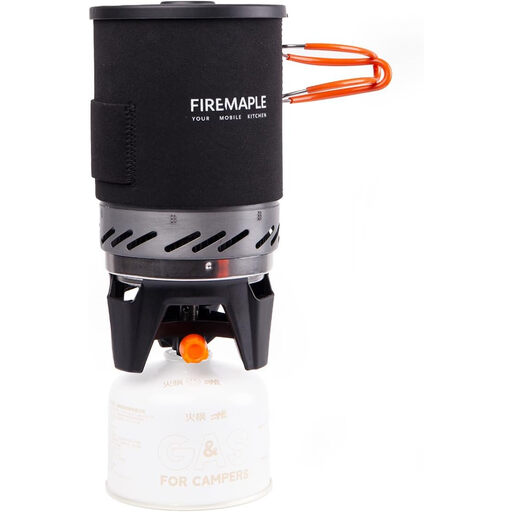
Why this choice suits this profile: This nesting kit combines a one-litre pot, a burner and the essential accessories for starting out solo camping without accumulating lots of gear.
Storing everything inside the pan reduces the volume of kit you need to fit in your rucksack. The listing states it attaches directly to standard threaded isobutane cartridges, but the cartridge is not included.
Anodised aluminium pan, folding handle and heat-resistant neoprene sleeve. The system is described as suitable for hiking, trekking and wild camping.
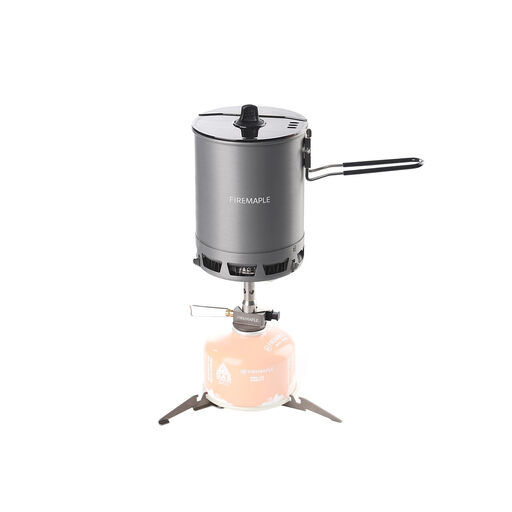
Why this choice suits this profile: Trekkers who count every gram can turn to this integrated cooking system, claimed to weigh 265 g with a 600 ml capacity.
Its nesting design means you don’t have to carry several separate pieces. The three supports spaced at 120° are designed to improve stability on uneven ground – but always check the surface is level before lighting.
Transparent Tritan lid with vent, folding handle and internal space designed for a small 110 g gas canister.
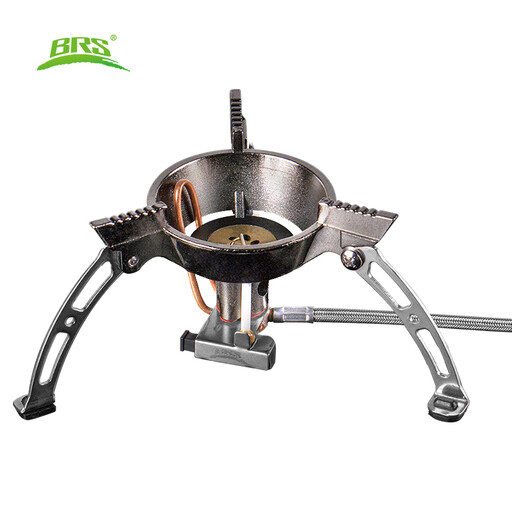
Why this choice suits this profile: This stove is for those who want fine flame control and a foldable burner to take camping, hiking or on regular trips.
The listing states 240 g, a foldable design, a cartridge base and a carry bag. The cartridge must be bought separately and compatibility should be checked before each use.
Adjustable power claimed up to 3,240 W, non-slip folding support and multifunctional adapter included according to the product listing.
We’ve put together a full, real-time updated list of products that meet these demanding criteria and European safety regulations.
Before you head out, do a dry assembly to check the thread, the stability of the supports and that the ignition works properly. In the field:
After each trip, remove any residue from the burner head, dry the various parts and inspect the seals. An uneven flame, a persistent smell of gas or a damaged seal means you must stop using the stove immediately and replace the affected part.
A nesting kit of 600 ml to 1 litre helps keep the volume you carry to a minimum. For making a hot drink and a dehydrated meal, 600 ml can be enough. If you cook foods that need more water, a one-litre capacity will be more comfortable.
The cost depends on the price and capacity of the cartridge, as well as the outside temperature, wind and the time needed to boil water. Depending on its design, a pan with a heat exchanger can reduce heat loss. However, it’s impossible to work out a precise saving without comparing identical conditions. For long trips or cold weather, always carry a spare fuel supply.
No. Even if it’s described as wind-resistant, a stove consumes oxygen and can produce carbon monoxide. Only use it outdoors, in a clear, well-ventilated area, following the manufacturer’s instructions and any local restrictions on open fires.