
当日/次日达

品质保障

开启新人专享福利: 全场免邮 | 低至 2 折 | 免费试用 30 天 JoyPlus 会员
下载 Joybuy
A portable camping stove can make a camping trip, hike or picnic considerably easier. Between promises of high power, accessories presented as universal and increasingly compact designs, certain details can nevertheless turn a good idea into impractical equipment.
Before placing your order, check compatibility with your fuel, the stability of the base and the stove’s actual size in your rucksack. Here are the criteria to consider, along with a selection suited to different types of campers and hikers.
A very powerful stove heats up quickly, but this specification alone is not enough to assess how comfortable it is to use. When simmering a dish, preparing a hot drink or cooking in a small camping pot, precise flame control matters just as much as maximum power.
A camping gas stove rated at 3 240 W may be suitable for a relatively large saucepan. By contrast, a 1 500 W model with continuous adjustment will often be more pleasant when you need to control the cooking of an individual meal.
Not all cartridges are interchangeable. Check the connection type, thread and accepted fuel. Some stoves use screw-on valve cartridges conforming to the EN 417 standard, while others require a dedicated adapter.
The gas cartridge is rarely included. Its price, availability in shops near your routes and weight should therefore all be factored into your overall budget.
The weight of the burner does not necessarily correspond to that of the complete system. To compare two hiking stoves, add together the burner, support, camping pot, lid, carrying case and any adapters.
A folding stove may be lightweight while taking up more space than a cooking kit whose components fit inside one another. Conversely, a very compact set may limit the cooking capacity to a single portion.
The folding feet must remain properly open on a flat, stable, non-flammable surface. Check their width, grip and the load capacity specified by the manufacturer. With a wide or full saucepan, a narrow base increases the risk of tipping.
A windproof stove can help keep the flame steadier outdoors, but it does not replace a clear cooking area. Never use a burner in a tent, car, enclosed shelter or any other poorly ventilated space: carbon monoxide poses a real risk.
Measured in watts, power indicates the burner’s maximum capacity. It should be appropriate for how you intend to use it:
These figures correspond to the information provided in the technical specifications. In practice, wind, temperature, altitude and cartridge type can significantly affect how the stove performs.
Anodised aluminium makes it possible to produce a lightweight cooking vessel. Stainless steel is often used for parts exposed to heat and repeated handling. After each trip, allow the equipment to cool, remove any residue and dry each component thoroughly before storing it.
Inspect the connections and seals regularly. Before lighting the stove, make sure there are no leaks and use only the fuel and adapters compatible with the model.
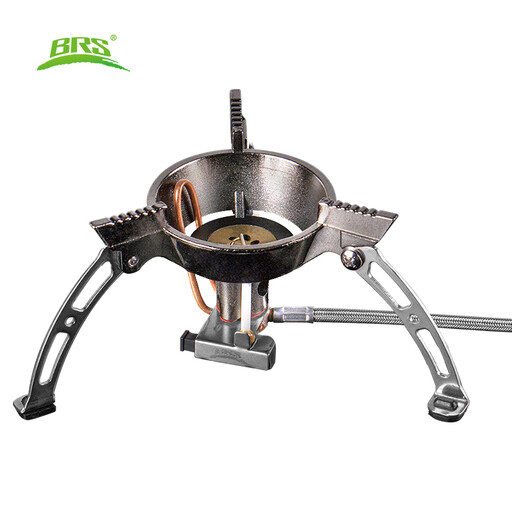
Why it suits this profile: Weighing a stated 240 g and featuring a folding design, this model is easy to carry on your first camping trips, hikes or picnics.
The product information states that it is compatible with 7/16 thread and EN 417 cartridges, and that an adapter is included. The cartridge must nevertheless be purchased separately.
Adjustable power up to 3 240 W, stated support capacity of up to 5 kg, carrying bag and piezo ignition.
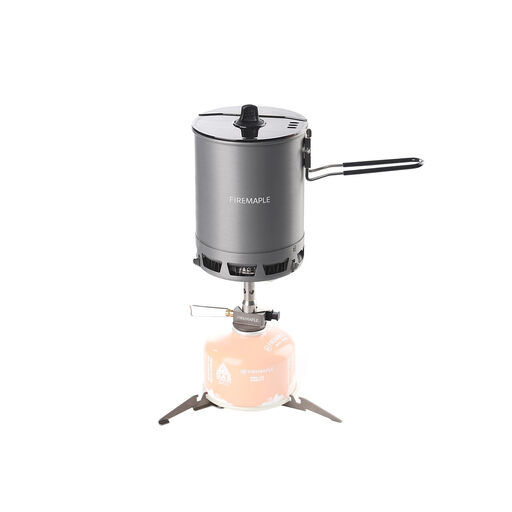
Why it suits this profile: This complete kit is designed for those who prefer a nesting set to minimise the space it takes up in their rucksack on longer treks.
The stove and a 110 g cartridge can be stored inside the 600 ml cooking pot. This clearly defines the space required for transport.
Stated weight of 265 g for the complete set, ventilated Tritan lid, folding handle and three-branch base.
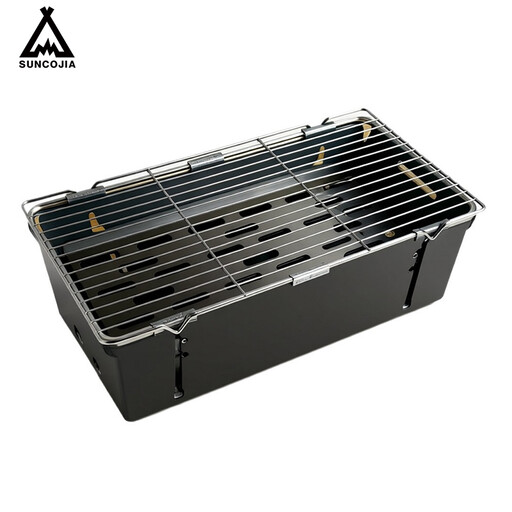
Why it suits this profile: This format is suitable for group meals, picnics and cooking that requires a grill rather than a simple hiking burner.
With a stated weight of around 3.6 kg, this model should be considered a folding barbecue for transporting by car or over a short distance, rather than a hiking stove.
Carbon steel body, stainless steel grill, quick-folding design and Oxford carry bag included.
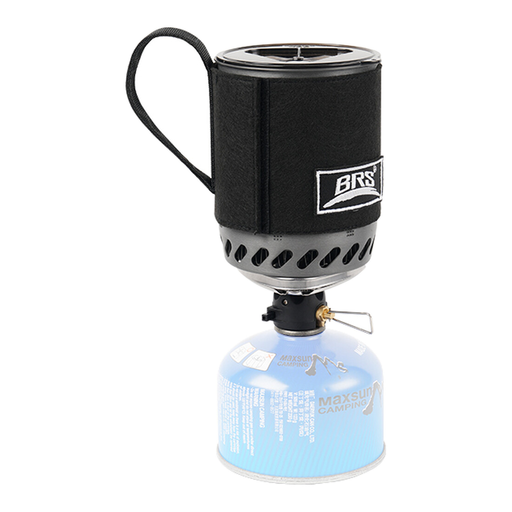
Why it suits this profile: With its 0.5 L cooking pot and nesting storage design, this kit is a well-balanced solution for anyone looking for a lightweight camping stove for one.
The stated total weight is 0.36 kg and the various components fit inside the pot. The manufacturer therefore specifies the weight of the complete system, rather than just the burner.
Stated power of 1 500 W, anodised aluminium cooking pot, lid, insulated cover and adjustment valve.
We have put together a complete, real-time updated list of products that fully meet these strict selection criteria and European safety regulations.
Before your first trip, test the stove outdoors on a stable, clear surface. Check that the burner is correctly attached to the cartridge and that the control knob turns without unusual resistance. With a model fitted with an adapter, check each connection separately and follow the manufacturer’s instructions.
While cooking, keep flammable materials, loose clothing, children and animals at a safe distance. Never move the stove while it is lit or still hot. After use, turn off the fuel supply, wait until it has cooled completely, then store the whole set in a dry place.
It depends on the connection accepted by the burner and the conditions in which you plan to use it. Butane or butane-propane blend cartridges are commonly used for camping and hiking. Check the product information to confirm the standard, particularly the 7/16 or EN 417 thread, and never use an adapter that is not intended for your model.
No. A camping gas stove must only be used outdoors, in a well-ventilated area. A tent, caravan, vehicle or enclosed shelter can allow carbon monoxide to build up and create a fire risk. Always set up the burner away from tent fabric, dry branches and any other combustible material.
The cost depends on the type of cartridge, its capacity, the power used and the cooking time. In addition to the price of the stove, allow for compatible cartridges, a cooking pot if one is not included and, where applicable, an adapter. To keep costs down, choose a system suited to the number of people using it and avoid carrying a heavy or oversized burner for individual use.