
Livraison le jour même ou le lendemain

Qualité garantie

Débloquez vos offres de bienvenue: Livraison GRATUITE | Jusqu'à -80 % | 30 jours d'essai gratuits à JoyPlus
Téléchargez l'application
A portable Bluetooth speaker slips into a bag to accompany a picnic, a day at the beach, an evening with friends, or simply a few hours of music at home. But product listings often focus on power, bass or waterproofing without always explaining what those promises actually mean in real-world use.
Before choosing your wireless speaker, there are three pitfalls to keep in mind: battery life measured at moderate volume, an IP rating that is sometimes misunderstood, and high power output that doesn't necessarily guarantee balanced sound. Here are the criteria to examine, followed by a selection of interesting models in 2026.
A more powerful portable speaker doesn't automatically produce a more pleasant sound. Expressed in watts, power mainly tells you about the maximum volume level. It says nothing, however, about vocal clarity or the balance between bass, mids and treble.
For everyday use, also check:
Very prominent bass can be enjoyable for a party, but an overly demonstrative setting risks drowning out vocals and making certain musical details disappear.
The ratings IPX4, IPX5, IPX6, IPX7 and IP66 do not guarantee the same level of protection.
A so-called waterproof Bluetooth speaker should therefore not be left exposed to heavy rain for hours without its exact certification having been checked. The charging port covers must also be properly closed before any contact with water. The term "waterproof" used in an advert never replaces reading the IP rating.
The stated battery life generally varies depending on volume level, type of connection, built-in lighting and sometimes temperature. A rechargeable Bluetooth speaker rated for 20 or 30 hours may last significantly less if you use it at high volume.
To compare models, look at:
For a bedroom, an office or a small balcony, a compact model of a few watts can be perfectly adequate. For a terrace or a group picnic, a stated power of 15 to 35 W offers more headroom. "Party box" type models, such as speakers rated at 150 W, are more designed for large spaces and events.
Weight also deserves your attention. A speaker weighing 575 g is easily carried in a bag, while a model weighing several kilograms will be more at home set up in one spot for an evening.
Bluetooth allows you to quickly connect a phone, tablet or computer. Recent versions can improve connection stability, but compatibility with your device still needs to be checked.
Depending on your needs, also look for:
A lithium-ion battery must be charged with a compatible cable and adapter. Avoid covering the speaker while charging and do not leave it exposed to high heat. If it swells, emits an unusual smell or overheats, stop using it immediately.
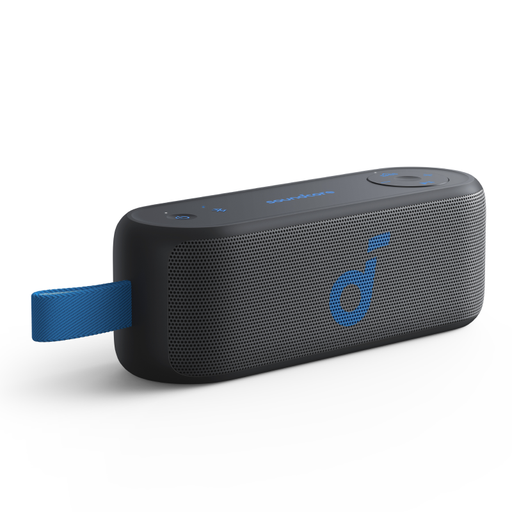
Why this model suits this profile: at 575 g, it's easy to carry for a day out, in the garden or for everyday use. Its stated 20 hours of battery life means you won't need to recharge constantly during a day outdoors.
The listing mentions 16 W stereo power, two full-range speakers and IPX7 protection. This information gives you a clearer picture of the product than a simple promise of powerful bass.
BassUp technology, 16 W stereo, stated 20 hours of listening time and IPX7 rating according to product information.
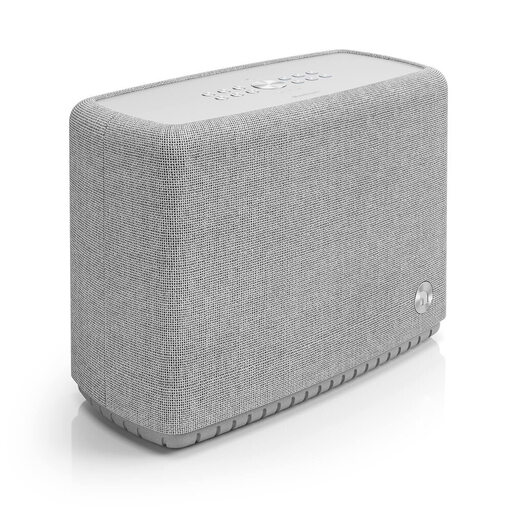
Why this model suits this profile: this speaker is aimed at more demanding home listening, with Bluetooth, Wi-Fi, AirPlay 2, Google Cast and support for several music streaming services.
Its IPX2 rating reminds you that it only withstands light splashes. It is therefore not intended for the beach or direct exposure to rain.
Stated 25 W digital amplification, 11.4 cm bass driver, textile tweeter and stated battery life of up to 11 hours.

Why this model suits this profile: its IP67 rating and stated 15 hours of listening time make it a suitable candidate for hikes, bike rides and days outdoors, provided you follow the manufacturer's recommendations.
Protection against dust and water is clearly certified IP67, rather than being summed up by the marketing term "waterproof" alone.
Bluetooth 5.4, stated 6 W RMS power, stereo pairing, built-in microphone and stated 15-hour battery life.
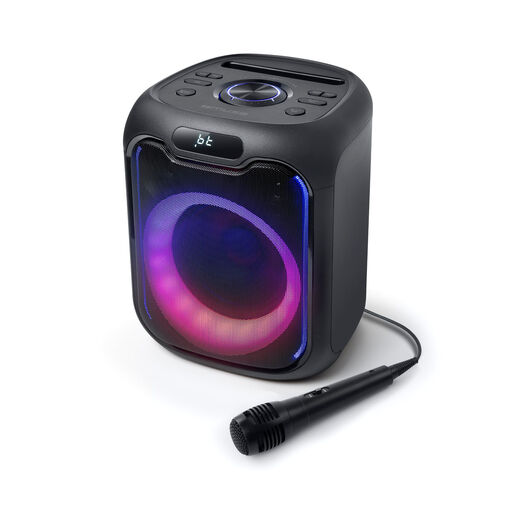
Why this model suits this profile: at 3.4 kg, it's designed for home parties, events and large spaces. Its controls, microphone inputs and lighting effects are put to full use here.
The listing states 150 W, but battery life is limited to 5 hours. To keep the party going, it's best to have a mains socket nearby.
Two microphone inputs, bass and treble adjustment, USB port, auxiliary input, multicolour lighting and stereo pairing.
Discover a complete, regularly updated selection suited to different uses, sizes and levels of protection.
It all depends on its IP rating. An IPX4 speaker can handle splashes, while an IPX6 model resists water jets but not immersion. Before heading out, make sure the port covers are properly closed and dry the device thoroughly before charging it.
Listening time depends on volume, any lighting used and temperature. The models in this selection claim between 5 and 30 hours, but these figures are indicative and vary depending on usage conditions. To preserve the battery, avoid high temperatures and use a compatible cable.
For personal listening, a few watts can be enough. In a garden or for a small group, a stated power of 15 to 35 W offers more headroom. A party box style speaker will be more suitable for large parties, but it will also be heavier, less discreet and often have shorter battery life.