
Livraison le jour même ou le lendemain

Qualité garantie

Débloquez vos offres de bienvenue: Livraison GRATUITE | Jusqu'à -80 % | 30 jours d'essai gratuits à JoyPlus
Téléchargez l'application
A portable Bluetooth speaker can come with you to the beach, a party, a work session or a weekend camping trip. The problem is that product descriptions often focus on power, bass or water resistance without explaining what these features really mean in everyday use.
Before choosing a wireless speaker, there are three pitfalls to avoid: battery life measured under ideal conditions, water resistance that is often misunderstood, and power that alone does not guarantee balanced sound. Here are the key criteria to consider, followed by a selection suited to different types of user.
A powerful portable speaker can reach a high volume, but that does not guarantee clear vocals or well-controlled bass. Speaker design, the presence of a passive radiator, digital signal processing and the manufacturer's tuning also play a crucial role.
In a small room, a compact model with a few watts may be perfectly adequate. For entertaining or listening to music outdoors, higher RMS power and better sound dispersion will generally be more relevant.
The IP rating distinguishes protection against dust from protection against water. The first digit concerns solid particles, while the second indicates the level of protection against liquids.
A waterproof Bluetooth speaker cannot necessarily be submerged just because it can withstand rain. Before using it outdoors, also check that the port covers are properly closed.
Battery life varies depending on listening volume, lighting effects, the distance from your phone and the type of content being played. A rechargeable speaker advertised to last 15 or 20 hours may run for significantly less at high volume.
For everyday use, compare the advertised battery life with your actual habits. A battery offering 7 to 10 hours may be enough for an afternoon, while a model rated for 12 to 20 hours will give you more flexibility when staying away from a power socket.
RMS power is a more useful indicator for comparing products than maximum power figures, which are often presented under different conditions. A speaker with powerful bass may feature a passive radiator or bass-enhancement technology, but the result will also depend on its position and the room's acoustics.
To maintain a balanced listening experience, look in particular for:
At home or in the office, an IPX4 rating may be enough if you simply want protection against a few splashes. For the pool, beach or camping, an IP67 certification offers more reassuring protection against dust and moisture, provided you follow the manufacturer's instructions.
A fabric covering, strap or magnetic base is no substitute for a clearly stated IP rating. Also avoid charging the speaker while it is still wet.
Weight has a direct impact on how easy the speaker is to carry. A 280 g model will slip easily into a bag, while a speaker weighing several kilograms is more likely to be designed for permanent installation or for providing sound at a party.
Also remember to check:
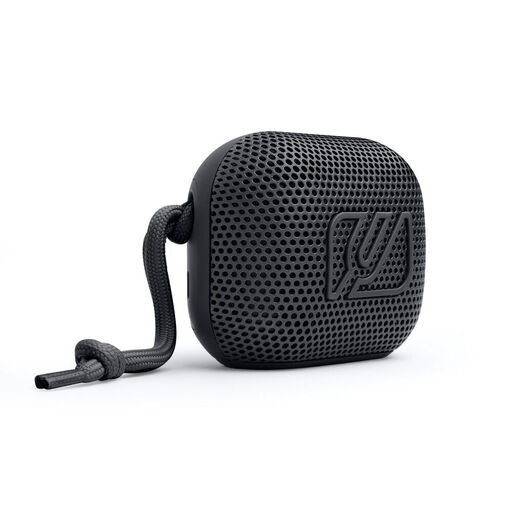
Why this choice suits this profile : Weighing 280 g, with 5 W of power and Bluetooth range of up to 10 m, it is an ideal first portable speaker for use at home, while studying and on your daily journeys.
The product listing states up to 5 hours of battery life and an IPX4 rating, making its usage limits clear without presenting it as a speaker suitable for immersion.
USB-C, hands-free function and TWS stereo pairing with a compatible model.
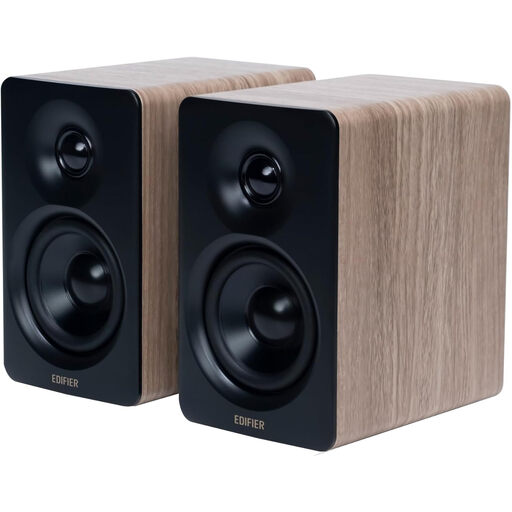
Why this choice suits this profile : This compact system is designed for users who prioritise sound quality, wired connections and a setup on a desk or in a living room.
The stated 66 W RMS is complemented by USB-C and auxiliary inputs, as well as digital signal processing, so the promise is not based solely on a volume figure.
Bluetooth 5.3 with LDAC support and included aluminium stands for angling the speakers towards the listener.
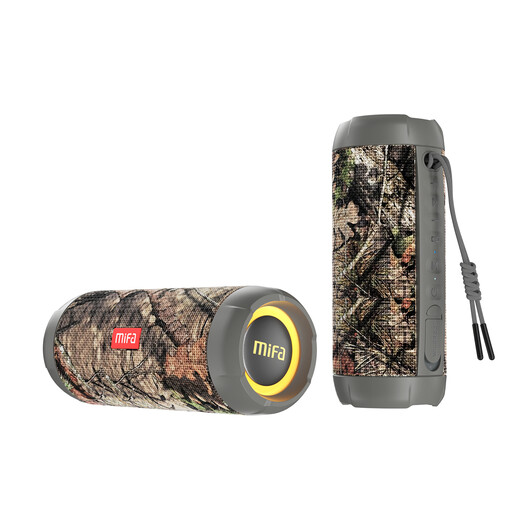
Why this choice suits this profile : Designed for outdoor use, it will accompany trips to the beach, camping, hikes and long listening sessions, thanks to its advertised battery life of up to 12 hours.
The IPX7 and IP67 ratings are listed separately in the product description, allowing you to check the water resistance and dust protection independently before use.
Advertised power of 30 W, Bluetooth 5.3, playback via Micro SD card and the option to connect multiple compatible speakers.
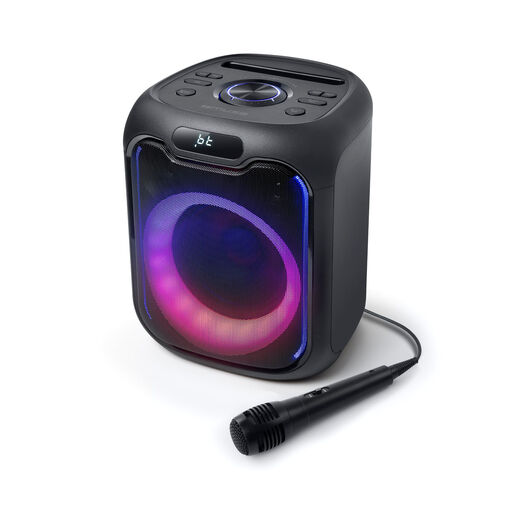
Why this choice suits this profile : Weighing 3,4 kg, this model is designed for birthdays, parties and gatherings that require more volume than a small portable speaker can provide.
The product description states up to 5 hours of battery life and specifies that there is no water protection, so this speaker is best suited to indoor parties or covered spaces.
Advertised power of 150 W, inputs for two microphones, bass and treble controls, USB port and auxiliary input.
We have put together a comprehensive, regularly updated selection of products that meet these demanding criteria, while also taking European safety regulations into account.
For a bedroom, office or small patio, moderate power may be sufficient. For a party or a large room, focus instead on RMS power, the number of speakers and the option to pair two speakers. Maximum volume should never be the only criterion.
An IPX4 rating is suitable for splashes and light rain. A higher rating provides enhanced protection within the limits set by the standard. However, the ports must remain closed, and the speaker should not be charged while wet. Always consult the instructions for the model in question.
Usage time depends on volume, lighting, temperature and the condition of the battery. To help preserve it, use a suitable charger, avoid high temperatures and do not leave the device completely discharged for a long period. An advertised battery life of 7 to 15 hours covers many portable uses, but actual results may vary.