
Livraison le jour même ou le lendemain

Qualité garantie

Débloquez vos offres de bienvenue: Livraison GRATUITE | Jusqu'à -80 % | 30 jours d'essai gratuits à JoyPlus
Téléchargez l'application
A portable Bluetooth speaker can accompany you on a picnic, a night out with friends, a trip, or a gaming session at home. Yet product descriptions often focus on power, bass or lighting effects, overlooking the practical constraints of everyday use. A speaker advertised as "powerful" may lack battery life, while a model presented as waterproof isn't necessarily designed to be submerged.
Before you make a purchase, here are three pitfalls to avoid.
The number of watts alone isn't enough to predict sound quality. A powerful portable speaker can reach higher volumes, but clarity also depends on the number of drivers, their design, digital signal processing and bass tuning. For balanced listening in a room, a reasonable power output can prove more relevant than maximum volume.
IPX6, IPX7 and IP67 ratings do not guarantee the same level of protection.
Even a waterproof Bluetooth speaker must be used in accordance with its instructions. Connectors must remain properly closed, and the device must not be subjected to water pressure higher than that specified by the manufacturer.
Maximum battery life is usually measured at moderate volume. Sound level, RGB lighting, hands-free calls and temperature can significantly reduce usage time. If you're looking for a long-lasting Bluetooth speaker, also check the charging time, the type of port used, and whether you can continue listening to music while it charges.
For a bedroom, office or small patio, a speaker with 6 to 20 W may suffice, depending on the volume you want. In a large room or to liven up a party, higher power and multiple drivers will offer more headroom.
Stereo pairing allows you to connect two compatible speakers to separate the left and right channels. The soundstage then gains width, but you'll obviously need to buy two devices. Some models also allow simultaneous connection of two Bluetooth devices – a handy feature for sharing control of a playlist.
A portable speaker needs to be compact enough to carry easily. At 575 g, the soundcore Select 3 remains practical in a travel bag. Conversely, a model weighing several kilograms can produce more volume but will be less pleasant to move around regularly.
For the beach, camping or outdoor activities, choose a model with a clearly stated certification, a handle or strap, and a grille protected against splashes. A waterproof speaker isn't necessarily designed to float – this feature must be explicitly mentioned.
Bluetooth is sufficient for streaming sound from a smartphone, tablet or computer. USB-C, AUX or microSD inputs, however, provide useful backup options. For gaming on a computer, a Bluetooth PC speaker can be a good choice if it also offers a USB or wired connection to reduce audio latency.
For a television, a Dolby Atmos soundbar serves a completely different purpose: it's designed to stay installed near the screen and run on mains power. It therefore doesn't replace a portable speaker intended to be moved around.
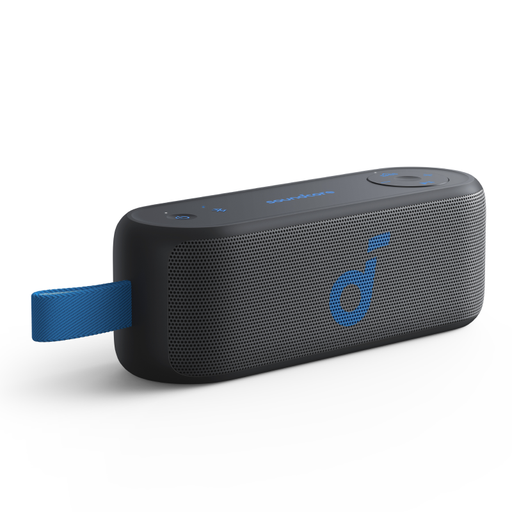
Why this choice suits this profile: with its weight of 575 g, 16 W stereo power and Bluetooth controls, it makes a versatile first speaker for home, garden or outings.
The product page distinguishes power, battery life and IPX7 rating – the essential criteria are easier to compare than a simple promise of volume.
Two full-range drivers, BassUp technology and up to 20 hours of claimed playback time.
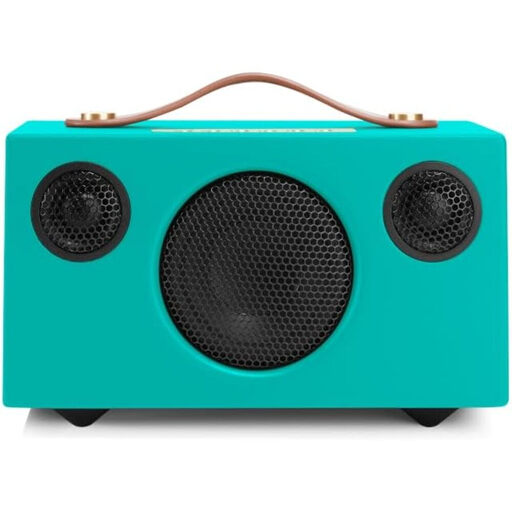
Why this choice suits this profile: its handle, wired and wireless inputs, and claimed battery life make it a suitable solution for long listening sessions, at home or on the move.
The measurement conditions are specified: up to 30 hours at medium volume, versus 12 hours at maximum volume. This gives you a more realistic idea of battery life.
25 W amplification, 89 mm woofer, two tweeters and USB-A port for charging a device.
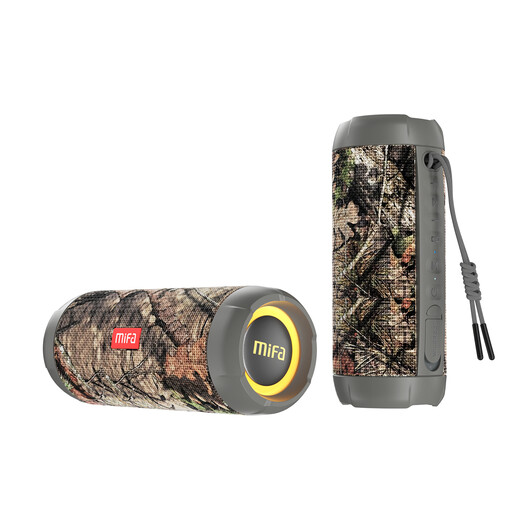
Why this choice suits this profile: this model is designed for regular outings, the beach, hiking and parties where enhanced protection against water and dust is welcome.
The product page distinguishes IP67 dust protection from IPX7 waterproofing and states that the speaker can float. The intended outdoor uses are therefore clearer.
Claimed power of 30 W, Bluetooth 5.3, microSD card slot, up to 12 hours of battery life and pairing of multiple compatible speakers.
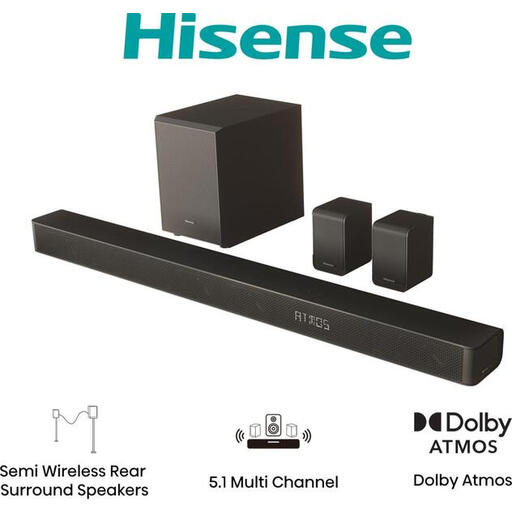
Why this choice suits this profile: this is a fixed system for a television, with a subwoofer and wireless rear speakers – not a portable speaker.
The 5.1 configuration, HDMI eARC and optical connections, and the absence of a battery clearly show this is a home cinema setup.
5.1 system with 340 W maximum power, Dolby Atmos, DTS:X, subwoofer and two wireless rear speakers.
We've put together a comprehensive, real-time updated selection of products that meet these demanding criteria as well as European safety standards.
Turn on the speaker, enable Bluetooth in your phone's settings, then select the model name from the list of available devices. Once paired, sound from compatible apps will play wirelessly. If the connection fails, disable old Bluetooth connections or move the two devices closer together.
This depends on the battery, frequency of use, heat and number of charge cycles. Avoid leaving the speaker in direct sunlight, covering its vents or using a damaged cable. Kept dry, charged with a compatible adapter and used at a reasonable volume, it should remain functional for longer. Before buying, also check the warranty conditions and availability of accessories.
Its power consumption is generally moderate during charging, but it varies depending on the battery capacity and the adapter's power output. If the instructions recommend it, unplug the charger once the battery is full and preferably use a compliant USB-C cable. For daily listening at home, a wired speaker or soundbar may also be more suitable than a battery-powered model.