
Livraison le jour même ou le lendemain

Qualité garantie

Débloquez vos offres de bienvenue: Livraison GRATUITE | Jusqu'à -80 % | 30 jours d'essai gratuits à JoyPlus
Téléchargez l'application
A portable Bluetooth speaker can accompany you to the beach, a party with friends, camping, or simply around the house. Yet spec sheets alone don't always give you a true sense of the real-world experience. High power output doesn't guarantee balanced sound, and a misunderstood waterproof rating can leave you with a broken speaker after just a few splashes.
Before choosing a wireless speaker, it's worth focusing on the features that will genuinely make a difference day to day: power, battery life, water resistance, connectivity and size.
Watts are often pushed to the forefront, but they don't tell you everything about audio performance. A powerful Bluetooth speaker can go very loud while lacking precision in vocals or treble. Instead, look at whether the spec sheet mentions RMS power, the number of drivers, the presence of a passive radiator or digital signal processing.
In a living room, moderate power can be perfectly adequate. For a party or outdoor use, a bit more headroom comes in handy – provided the speaker is still easy to carry.
Protection ratings are not all the same and cannot be used interchangeably. An IPX4 speaker is splash-proof but must not be submerged. IPX6 certification protects against powerful water jets, but still doesn't allow for immersion. An IPX7 speaker can generally handle temporary submersion under the conditions specified by the manufacturer. IP67 adds dust protection.
This certification only applies under the stated conditions. Connector covers must be properly closed, and the speaker should not be used underwater unless this is explicitly mentioned.
A battery life quoted as "up to" usually refers to moderate volume levels under controlled test conditions. At high volume, with LED lighting switched on, or when using the phone-charging function, listening time can drop significantly.
For daily commutes, five to ten hours may be enough. For a weekend or a long day outdoors, go for a Bluetooth speaker with a rechargeable battery that has good capacity. Also check the charging type, whether a cable is included, and whether you can use the speaker while it's charging.
A two-driver setup can improve channel separation, especially if the speaker offers a true stereo mode. TWS lets you pair two compatible speakers to widen the soundstage. Just check whether the second model has to be exactly the same.
A passive radiator can enhance bass perception without needing an extra driver. For more precise listening at home, also look into digital signal processing, frequency response and supported codecs.
Bluetooth is sufficient for streaming music from a phone, tablet or computer. Newer versions can improve connection stability and multi-device management, but compatibility also depends on the source you're using.
The most versatile models add an AUX input, a USB port for playing files or charging a device, a Micro SD card slot, or even Wi-Fi connectivity. A multi-room speaker compatible with AirPlay 2, Google Cast or a dedicated app will be better suited to a fixed installation than to an impromptu outing.
A small speaker slips easily into a bag, but its volume and bass response are generally limited. A model weighing several kilograms is better placed on a patio, in a living room, or for a party on a stable surface.
For an outdoor Bluetooth speaker, also check for a handle or strap, the stability of the base, and protection for the connectors. LED lighting can add a nice atmosphere, but it uses more power. If battery life is your priority, it's a secondary concern.
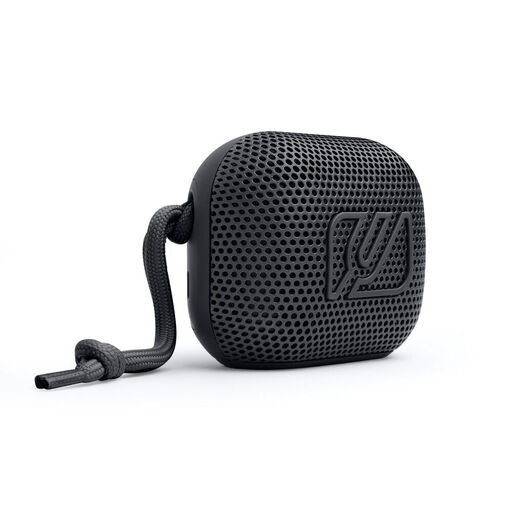
Why this suits this profile: At just 0.28 kg and with a Bluetooth range of 10 m, it's ideal for everyday listening, travel and small rooms.
The spec sheet clearly states 5 W, a battery life of up to 5 hours and IPX4 protection. No risk of mistaking it for a speaker designed for immersion.
Bluetooth, USB-C, hands-free function and TWS stereo pairing in a compact design.
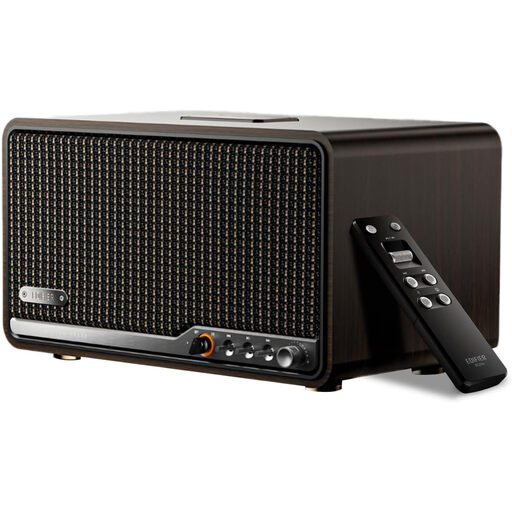
Why this suits this profile: This tabletop system focuses on home listening, a wide range of sources and detailed reproduction rather than portability.
The 80 W RMS, USB-C and AUX inputs, plus Bluetooth 5.4 and LDAC compatibility, provide concrete technical benchmarks.
High-resolution audio up to 24 bit/96 kHz, AirPlay 2, stereo pairing and multi-room functions.
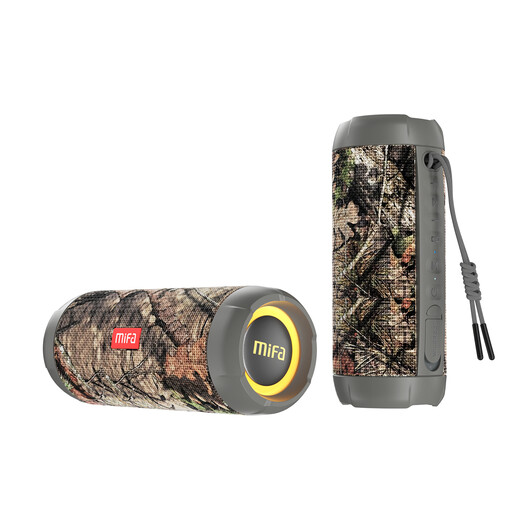
Why this suits this profile: Its outdoor-focused design makes it a great companion for the beach, the park, camping or near water.
The IPX7 and IP67 ratings clearly distinguish water resistance from dust protection. The speaker is advertised as floating, but usage conditions must still be followed.
Advertised power of 30 W, Bluetooth 5.3, battery life up to 12 hours, RGB lighting and playback from Micro SD card.
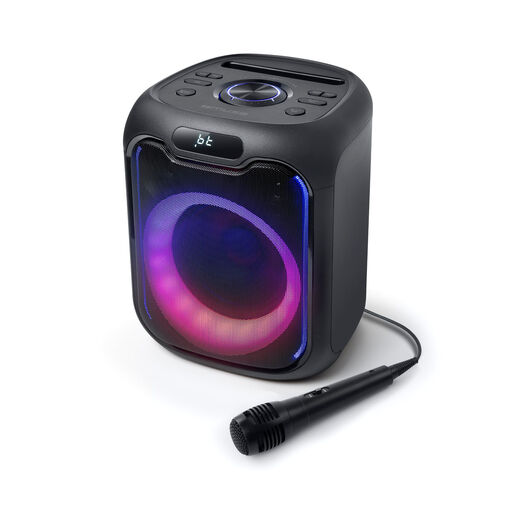
Why this suits this profile: At 3.4 kg and with microphone inputs, it's built for entertainment, karaoke or gatherings.
The advertised 150 W comes with separate bass and treble controls, plus a mains power supply that's handy for long sessions.
Dynamic lighting, Bluetooth 5.0, USB playback, auxiliary input, two microphone inputs and stereo pairing.
We've put together a comprehensive, real-time updated selection of products that meet these demanding criteria, while complying with European safety regulations.
Turn on Bluetooth in your phone's settings, switch on the speaker, then select its name from the list of available devices. If it's already connected to another device, temporarily disable that connection or reset the pairing mode.
An advertised battery life of five to ten hours is enough for most daily uses. For a trip or a full day outdoors, compare the battery capacity, the listening volume you plan to use, and any power-hungry features like LED lighting. The quoted figures are indicative and can vary depending on usage conditions.
It depends on its IP rating. An IPX4 speaker is splash-proof, while an IPX6 model can handle water jets within the limits set by the manufacturer. Only speakers that specify immersion protection can be submerged. Connector covers must always remain closed. To protect the battery and casing, let the device dry completely before charging it.