
Livraison le jour même ou le lendemain

Qualité garantie

Débloquez vos offres de bienvenue: Livraison GRATUITE | Jusqu'à -80 % | 30 jours d'essai gratuits à JoyPlus
Téléchargez l'application
A portable Bluetooth speaker can accompany a night with friends, an afternoon in the garden, a trip to the beach or simply a few hours of music at home. Yet product specs often focus on power, bass or lighting effects without really explaining what these features mean in everyday use.
Before buying a wireless speaker, three pitfalls deserve your attention: power figures quoted without context, water resistance that is easily misinterpreted, and battery life measured under particularly favourable conditions. Here are the criteria to examine when comparing models available in the UK.
A high wattage figure can produce plenty of volume, but it is not enough to judge sound quality. The number of drivers, their design, the presence of passive radiators and the signal processing all play a role too.
For a room or on-the-go use, a speaker with 6 to 20 W can be perfectly adequate, depending on the volume level you want. To power a party or fill a large outdoor space, a model rated at 34 or 60 W will have more headroom. However, this figure should be compared with caution, as manufacturers do not always use the same measurement method. RMS power in particular is a more reliable indicator to look for.
Protection ratings are not interchangeable:
A waterproof Bluetooth speaker should always be used with its port cover properly closed. Salt water, chlorine, knocks and seal wear can also reduce its protection level over time. A waterproof speaker is therefore not designed to be deliberately submerged for long periods.
A long-lasting speaker may claim 12, 15 or 20 hours of playback, but the actual duration depends on volume, bass level, lighting and temperature. Listening at high volume will generally reduce the available battery life.
Also check the type of charging port, the cable supplied, the time needed to recharge the battery and whether you can use the speaker while it is charging.
For the beach, camping or the pool, choose a model with a clearly stated protection rating. An outdoor Bluetooth speaker certified IP67 offers more complete protection than an IPX6 model, as it also resists dust. For rain and splashes, an IPX5 or IPX6 rating may be enough, provided you avoid any immersion.
After exposure to water, dry the device and do not open the charging port while it is still damp.
A speaker weighing 500 to 600 grams slips easily into a bag. A handle, loop or carabiner makes it simpler to carry on a hike or picnic. Larger models may offer more bass, but they also take up more space.
Think about where you plan to use it: garden table, shelf, rucksack or poolside. The size should suit your everyday life, not just occasional use.
A speaker with powerful bass may include a passive radiator or dedicated amplification for low frequencies. For a wider soundstage, look for a portable stereo speaker, a pairing function between two devices or TWS technology.
The Bluetooth version, multipoint connection, auxiliary input, playback from a microSD card or USB stick, and a built-in microphone can also make a difference. For a few calls, a microphone is handy; for a party, stereo pairing will often be more useful.
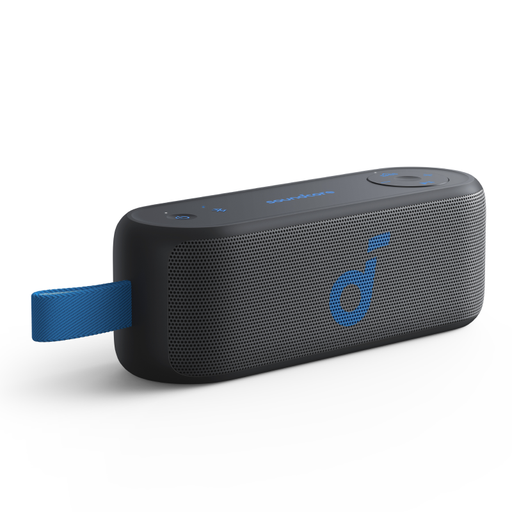
Why this choice suits this profile: At 575 grams and with a claimed 20 hours of playback, it makes a great first speaker for home, garden or occasional outings.
The spec sheet clearly states stereo power, weight, battery life and IPX7 rating, allowing you to compare concrete details.
16 W, two full-range drivers, BassUp technology and claimed IPX7 protection.
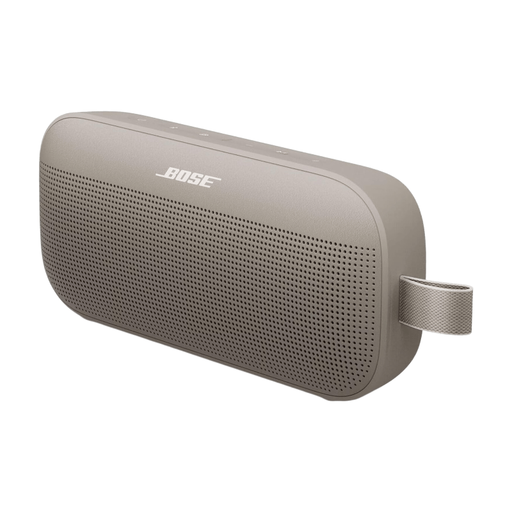
Why this choice suits this profile: This compact model combines an IP67 certification, a transport loop and sound adaptation depending on the speaker's orientation.
The IP67 rating clearly distinguishes dust protection from water resistance, unlike specs that simply use the term "waterproof".
Bluetooth 5.3, multipoint, up to 12 hours claimed battery life and pairing of two compatible speakers.
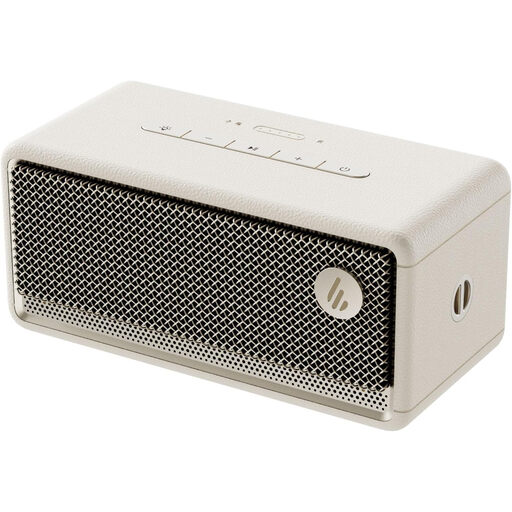
Why this choice suits this profile: Its 34 W RMS, stereo pairing and lighting effects meet the needs of sustained listening at home or during a gathering.
The RMS power, claimed 9-hour battery life and IP66 protection are listed separately: volume and resistance are not confused.
34 W RMS, Bluetooth 5.4, dual connection, stereo pairing and USB-C input.
We have compiled a comprehensive list, updated in real time, of products that meet these demanding selection criteria as well as European safety regulations.
Turn on the speaker, enable Bluetooth on your phone, then select the model name from the list of available devices. Once paired, you can usually control playback and volume from your smartphone or the speaker's buttons.
IPX6 means resistance to powerful water jets, while IPX7 guarantees protection against temporary immersion under defined conditions. IPX7 does not mean the speaker can stay underwater. For dust resistance, look for a rating such as IP67.
Power consumption is generally low, as the battery charges via USB. The cost mainly depends on how often you recharge and your electricity tariff. A speaker used for several hours a week typically represents a modest amount of energy use. However, it is best to unplug the charger once charging is complete.