
Livraison le jour même ou le lendemain

Qualité garantie

Débloquez vos offres de bienvenue: Livraison GRATUITE | Jusqu'à -80 % | 30 jours d'essai gratuits à JoyPlus
Téléchargez l'application
A portable Bluetooth speaker slips into a bag to accompany a trip, an afternoon in the garden, an evening with friends, or simply a few hours of music at home. The spec sheets often highlight watts and light shows without always spelling out the product's real limitations. To avoid disappointment when you unbox it, it's worth focusing on a few concrete criteria before you buy.
A high wattage figure alone doesn't guarantee balanced sound. The design of the drivers, the presence of a passive radiator, digital signal processing and the bass tuning all play a major role. A very powerful portable speaker can be brilliant at a party, but frankly overkill in an office or a small room.
So check the type of drivers, the power expressed in RMS when stated, and the available controls for bass and treble.
Not all IP ratings are equal. A water-resistant Bluetooth speaker certified IPX4 mainly withstands splashes, whereas an IPX7 model can handle temporary submersion under the conditions specified by the manufacturer. IPX6, on the other hand, protects against powerful water jets, but doesn't necessarily allow for submersion.
The term "waterproof" doesn't let you off checking the IP rating. Also bear in mind that a water-resistant speaker isn't necessarily protected against sand, dust or salt water.
The stated battery life generally depends on the volume level, lighting, type of connection and sometimes even the content being played. A speaker with a rechargeable battery advertised for several hours can last significantly less time at high volume.
For a long day out, compare the battery life measured at moderate volume, the type of charging port, and whether you can use the speaker while it's charging.
In a bedroom, kitchen or next to a computer, moderate power is often enough. To fill a patio or a party, it's better to go for a speaker with two drivers, a passive radiator or a stereo pairing function.
A stereo speaker reproduces the left and right channels, but the result depends on the driver layout and listening distance. Some models let you link two compatible speakers to widen the soundstage.
Here's how to interpret the main levels you'll come across:
For a speaker intended for outdoor use, shock resistance, the presence of a handle or wrist strap, and stability on uneven surfaces can also make all the difference.
Bluetooth works with smartphones, tablets and laptops. For a PC speaker, a USB-C audio input, a 3.5 mm auxiliary jack or low latency can come in handy. Bluetooth 5.3 or 5.4 offers a recent connection, but the actual range always depends on obstacles and the source device.
If several people regularly use the speaker, choose a model that can remember or connect two devices, or even handle stereo pairing. For calls, a built-in microphone is handy, without necessarily replacing dedicated equipment.
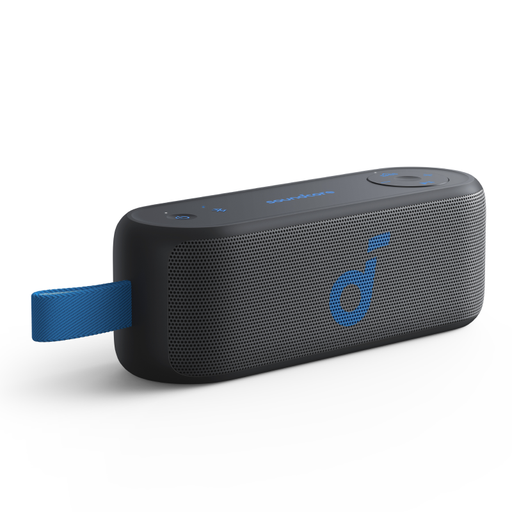
Why this choice suits this profile: At 575 g and with a claimed 20 hours of playback, it's ideal for a first purchase, picnics and everyday listening.
The advertised 16 W is backed by two full-range drivers and an IPX7 rating. As always, battery life should be considered in relation to listening volume.
16 W stereo sound, BassUp technology and IPX7 water resistance as stated on the product page.
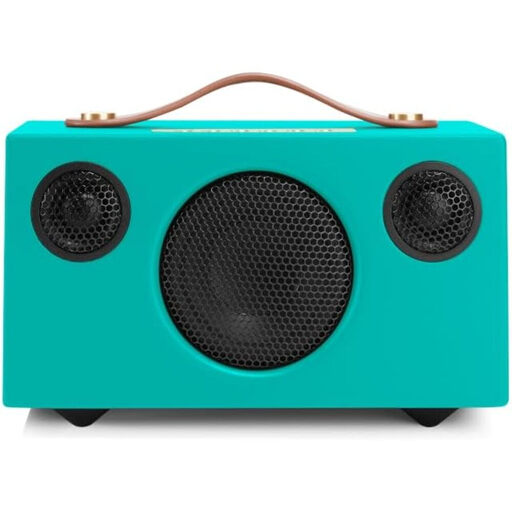
Why this choice suits this profile: Its larger size is aimed at those who want refined stereo reproduction and long listening sessions, at home and on the move.
The product page distinguishes the claimed 30 hours at medium volume from the 12 hours at maximum volume. A useful detail for a more realistic picture.
25 W amplification, auxiliary input, Bluetooth and USB-A port for charging a device.
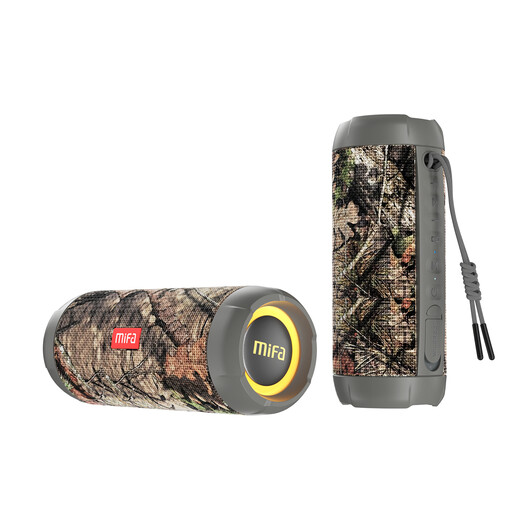
Why this choice suits this profile: Its claimed IP67 dust protection and IPX7 water resistance make it ideal for camping trips, the beach or by the pool.
The product page mentions dust protection and the ability to float. It's still best to follow the immersion conditions stated by the manufacturer.
Claimed 30 W power, Bluetooth 5.3, Micro SD card reader and claimed battery life of up to 12 hours.
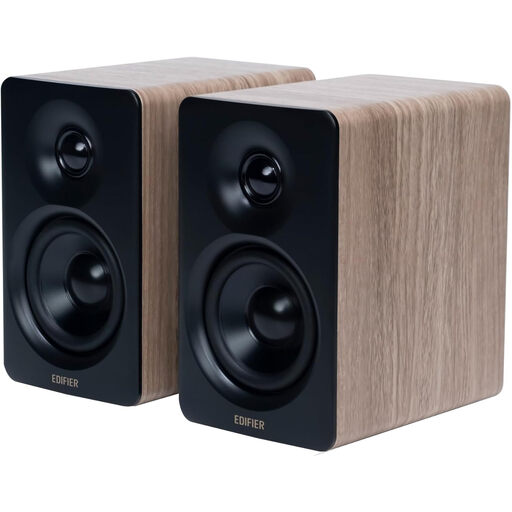
Why this choice suits this profile: This compact pair is designed for the desk, films and music on your computer. Its various inputs let it adapt to several devices.
This isn't an outdoor speaker: its mains power supply and desktop format prevent you from accidentally choosing a portable model for a fixed setup.
Claimed total power of 66 W RMS, Bluetooth 5.3 with LDAC, USB-C and auxiliary input.
We've put together a comprehensive, real-time updated selection of products that meet these criteria and the requirements of European safety regulations.
In a room or office, moderate power can be perfectly adequate. For a garden or a small party, a model with 16 to 30 W will give you more headroom. Larger "party box" style speakers are bulkier and their battery life can drop significantly at high volume.
It all depends on its IP rating and the manufacturer's instructions. IPX4 is fine for splashes, while IPX6 protects against water jets. An IPX7 speaker is designed for temporary submersion under specific conditions, but that doesn't mean it can be exposed for hours to rain or salt water.
Use a compatible cable and adapter, avoid high temperatures and store the speaker in a dry place. A damaged, swollen or abnormally hot lithium-ion battery should not continue to be used. Volume level, lighting effects and temperature also affect battery life between charges.