
Livraison le jour même ou le lendemain

Qualité garantie

Débloquez vos offres de bienvenue: Livraison GRATUITE | Jusqu'à -80 % | 30 jours d'essai gratuits à JoyPlus
Téléchargez l'application
A portable Bluetooth speaker can join you on a weekend away, liven up a party with friends, accompany a cooking session, or simply improve the sound from your phone. Yet product listings often focus on power, bass or lighting effects, without always spelling out the product's real-world limitations.
Before you buy, three pitfalls deserve your attention:
For listening to music in a bedroom or office, moderate power is usually enough. For a patio or a larger room, a powerful Bluetooth speaker with multiple drivers will perform better. However, check whether the stated figure refers to RMS power – which is more useful for comparing models – or to a peak power that's only reached occasionally.
A passive radiator, a dedicated woofer or a separate bass adjustment can give a warmer sound. A Bluetooth speaker with bass shouldn't be chosen solely on the promise of an "intense" sound, though: the cabinet size and placement also play an important role.
If you want true left-right separation, check for wireless stereo pairing support. Some models let you link two identical speakers to widen the soundstage.
IP ratings need to be interpreted carefully:
An outdoor Bluetooth speaker intended for the beach, camping or poolside also needs to withstand sand, knocks and repeated handling. Water resistance doesn't mean you can skip closing the port covers properly before any exposure to water.
A speaker with a rechargeable battery should be judged not only on its stated battery life, but also on its charging system. USB-C makes it easier to use with modern chargers, while an auxiliary input can be a handy backup if Bluetooth plays up.
Also remember to check:
For a TV, a Bluetooth soundbar is usually a better fit than a small portable speaker. An HDMI ARC or eARC connection makes volume control and synchronisation with a compatible TV much easier.
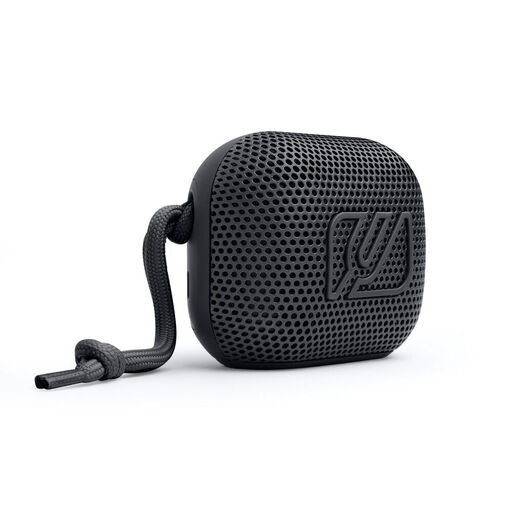
Why this pick suits this profile: compact and lightweight, this portable speaker is ideal for first-time use at home, in a bedroom or on short trips.
Its spec sheet clearly states 5 W power, up to 5 hours of battery life and IPX4 protection, making it easier to set your expectations.
Bluetooth with a stated range of 10 metres, USB-C, hands-free function and TWS stereo pairing.
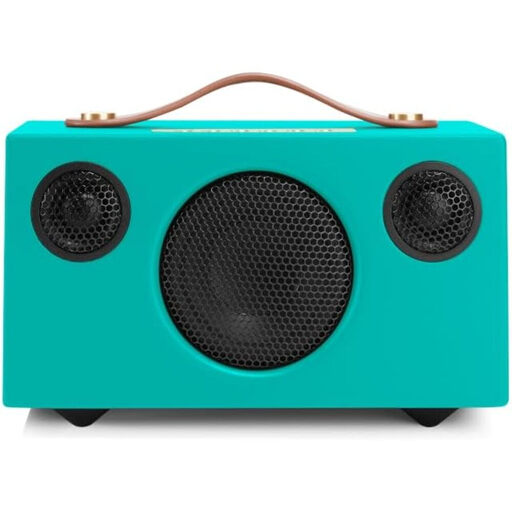
Why this pick suits this profile: its larger size and music-focused design appeal to users who prioritise sound quality and battery life.
The stated battery life distinguishes between up to 30 hours at medium volume and 12 hours at maximum volume – a more useful detail than a single figure.
25 W amplification, 89 mm woofer, two tweeters and a 3.5 mm auxiliary input.
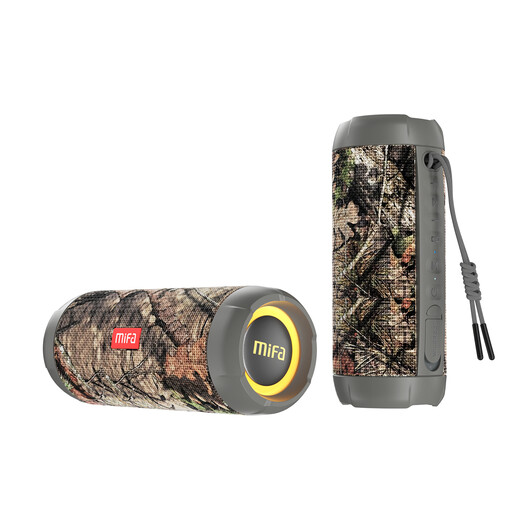
Why this pick suits this profile: its rugged design is built for outdoor trips, camping, the beach and activities that demand extra protection.
The spec sheet mentions IP67 dust protection and IPX7 water resistance, with the ability to float – though immersion conditions still need to be followed.
Bluetooth 5.3, stated power of 30 W, 5,000 mAh battery and up to 12 hours of battery life.
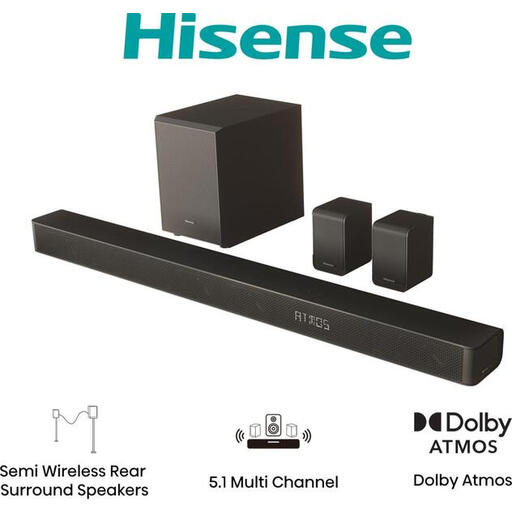
Why this pick suits this profile: this system is aimed at households that want to upgrade their TV sound with a soundbar, subwoofer and rear speakers.
The 5.1 configuration is clearly detailed, with a subwoofer and two wireless rear speakers – so it's not just a simple Bluetooth speaker.
Stated peak power of 340 W, HDMI eARC, Bluetooth 5.0, Dolby Atmos and DTS:X according to the product spec.
We've put together a full, real-time updated selection of products that meet these demanding criteria and European safety standards.
Place the speaker on a stable surface, making sure not to block its grilles. For a speaker used at a party, avoid keeping the volume high for several hours, especially around children. A water-resistant speaker should never be charged while wet: dry the connectors thoroughly before plugging in the cable.
Charge the battery using a cable and adapter that comply with the manufacturer's recommendations. If you notice swelling, overheating, an unusual smell or visible damage, stop using it immediately and contact customer service.
For a bedroom or office, 5 to 10 W can be enough. On a patio or for a small gathering, a higher RMS power, around 20 to 30 W, usually gives you more headroom. However, the driver layout and room acoustics matter just as much.
It depends on its IP rating. An IPX4 certification protects against splashes, while an IPX6 certification resists water jets without allowing immersion. Always check the manufacturer's instructions and make sure the ports are properly sealed.
Its power consumption is generally modest during charging. It varies depending on the battery capacity, volume level and features used, especially lighting. Unplugging the charger once the battery is full and avoiding repeated full discharges can help extend its lifespan.