
Livraison le jour même ou le lendemain

Qualité garantie

Débloquez vos offres de bienvenue: Livraison GRATUITE | Jusqu'à -80 % | 30 jours d'essai gratuits à JoyPlus
Téléchargez l'application
A portable Bluetooth speaker can be your companion on a picnic, at a party with friends, on a trip, or simply at home. Yet product descriptions often focus on power or lighting effects, without always clarifying the device's limitations. A speaker advertised as powerful may lack battery life, while a model marketed as water-resistant might only withstand a few splashes.
Before placing your order, three pitfalls deserve your attention.
For a bedroom, kitchen or office, a speaker with a few watts can be perfectly adequate. On a terrace or to liven up a party, it's better to have a more comfortable power reserve. Models with 20 to 35 W RMS offer a good compromise for a medium-sized room and moderate outdoor use. Larger speakers, such as a 60 W portable model or a 150 W party speaker, are more suited to large spaces.
The RMS rating is more meaningful than power figures given without any qualification. Also check for the presence of two drivers, a passive radiator or a dedicated bass adjustment. Generous bass can be very enjoyable with electronic music, but an overly demonstrative sound may compromise the clarity of vocals and instruments.
The TWS function generally allows you to pair two compatible speakers to create a Bluetooth stereo system. It can widen the soundstage, provided you have two models that are compatible with the same system.
Here's how to interpret the most common ratings in everyday use:
An outdoor Bluetooth speaker intended for the beach, camping or a rain-exposed terrace benefits from a high rating. However, the ports must remain closed, and the device should not be used underwater unless the manual explicitly allows it.
A speaker with a rechargeable battery is usually charged via USB-C, but the mains adapter is not always included. Check the capacity in mAh, the charging time and the advertised battery life depending on the volume level.
Bluetooth connection is sufficient for streaming music from a smartphone, tablet or computer. For a more complete home setup, Wi-Fi, AirPlay 2, Google Cast or a multi-room speaker function allow you to synchronise several rooms. A 3.5 mm auxiliary input remains handy for devices without Bluetooth.
Additional features should mainly match your habits: a microphone for hands-free calls, a USB port for playing files or charging a phone, LED lighting to create a party atmosphere, and a mobile app to adjust the sound.
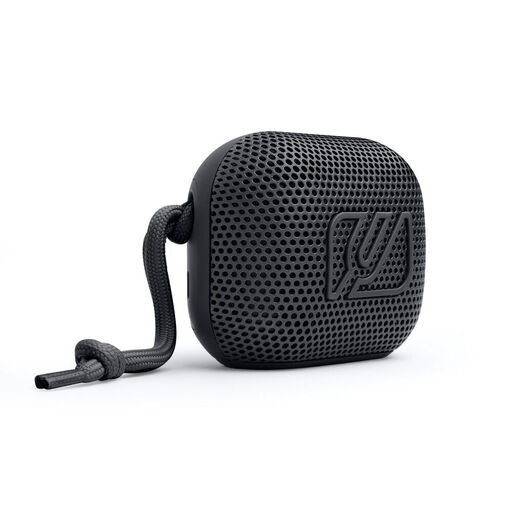
Why this choice suits this profile: Compact and lightweight at 280 g, this speaker slips easily into a bag for daily commutes, a bedroom or a small outing.
The product page clearly states a power of 5 W, a battery life of up to 5 hours and an IPX4 rating. This makes it hard to mistake for a model designed for big parties or immersion.
Bluetooth with a range of up to 10 m, USB-C charging, hands-free function and TWS stereo pairing.
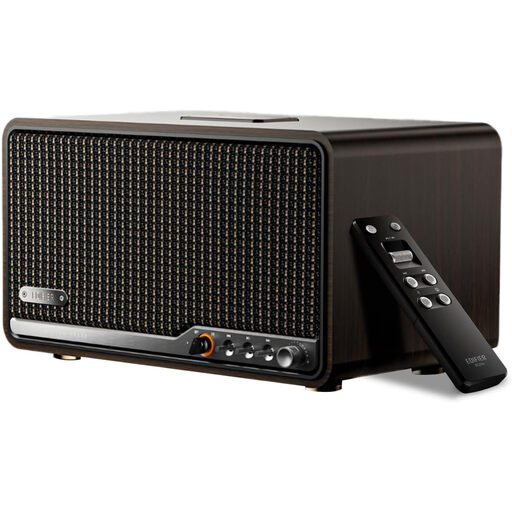
Why this choice suits this profile: Its tabletop format and numerous connections cater to audiophiles who prioritise a refined listening experience at home rather than frequent portability.
The product page distinguishes the total power of 80 W RMS, the USB-C and AUX inputs, and Bluetooth 5.4 transmission with LDAC, rather than relying solely on a volume argument.
High-resolution audio claimed, AirPlay 2 compatibility, stereo design and the ability to create a multi-room setup.
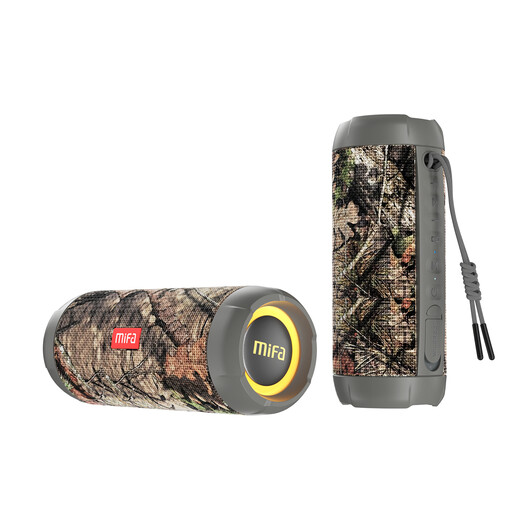
Why this choice suits this profile: Its robust design is ideal for outdoor trips, camping, by the pool and for users who regularly carry their audio equipment.
The product page mentions an IP67 rating for dust and water protection, as well as immersion up to 1 m for 30 minutes under the specified conditions. This does not mean the speaker can remain underwater.
Claimed power of 30 W, Bluetooth 5.3, battery life of up to 12 hours, Micro-SD card playback and adjustable RGB lighting.
We have put together a comprehensive, real-time updated selection of products that meet these demanding selection criteria and European safety regulations.
For personal listening, 5 to 15 W RMS can be sufficient. In a larger room or on a terrace, a power of 20 to 35 W RMS offers more headroom. Beyond that, keep an eye on weight, size and battery life: higher power often goes hand in hand with a bulkier and more power-hungry device.
It all depends on its IP rating. An IPX4 speaker resists splashes but should be sheltered in continuous rain. An IPX6 model withstands water jets without being submersible. For greater exposure to water and dust, the IP67 rating offers more extensive protection, provided you follow the manufacturer's instructions.
Charge the speaker with a compliant cable and adapter, avoid extreme temperatures and do not cover the device while charging. Moderate volume also reduces power consumption. If the speaker becomes very hot, swells or gives off an unusual smell, stop using it immediately and contact customer service.