
Livraison le jour même ou le lendemain

Qualité garantie

Débloquez vos offres de bienvenue: Livraison GRATUITE | Jusqu'à -80 % | 30 jours d'essai gratuits à JoyPlus
Téléchargez l'application
A portable Bluetooth speaker can accompany an evening at home, a picnic, a day at the beach or a weekend camping trip. Yet some purchases fall short: unbalanced sound, battery life far below what was promised, or water resistance that’s been misinterpreted.
Before choosing a wireless model, it’s worth looking beyond the marketing claims and examining some concrete details. Power, battery life, ingress protection rating and connectivity all help you compare speakers based on how you actually intend to use them.
High wattage doesn’t guarantee a more pleasant sound. The overall performance also depends on the number of drivers, their design, the cabinet volume and the digital signal processing. A speaker with plenty of bass can lack clarity on vocals if the mids and treble are neglected.
For everyday use, check for RMS power – a more meaningful figure for comparing models. Also look at whether the speaker includes passive radiators, full-range drivers or an adjustable equaliser.
IP ratings are not all the same. A waterproof Bluetooth speaker certified IPX6 can withstand powerful water jets, but must not be submerged. An IPX7 model, on the other hand, is designed to handle temporary immersion under the conditions specified by the manufacturer. The IP67 rating adds dust protection.
If a specification sheet lacks an ‘X’ or a digit, it may mean that the corresponding protection hasn’t been declared. For the pool, the beach or dusty hikes, read the full rating and make sure you close the port covers properly.
A long-lasting Bluetooth speaker may claim 12, 15 or 20 hours of playback. This estimate typically depends on volume level, music type, any built-in lighting and ambient temperature. At high volume, the battery often drains much faster.
For a long outing, allow some margin. A speaker rated at 10 hours should be fine for an afternoon, while a model quoted at 20 or 30 hours will be more comfortable for a trip without a power socket nearby.
For a room or an office, moderate power can be perfectly adequate. For an outdoor portable speaker, focus instead on RMS power, the number of drivers and the speaker’s ability to project sound in an open space. A stereo configuration can improve channel separation, while pairing two speakers widens the soundstage when that feature is supported.
Check the port type, the cable supplied and the conditions under which the battery life was measured. USB-C charging is particularly handy when you’re on the move. Some models can also double as a power bank to give your phone a few extra percentage points in a pinch.
For a beach and camping speaker, the IP rating should match the environment you have in mind:
Sand, salt and mud can still damage the connectors. Rinse the speaker only if the manufacturer allows it, dry it thoroughly and never charge it while the port is still damp.
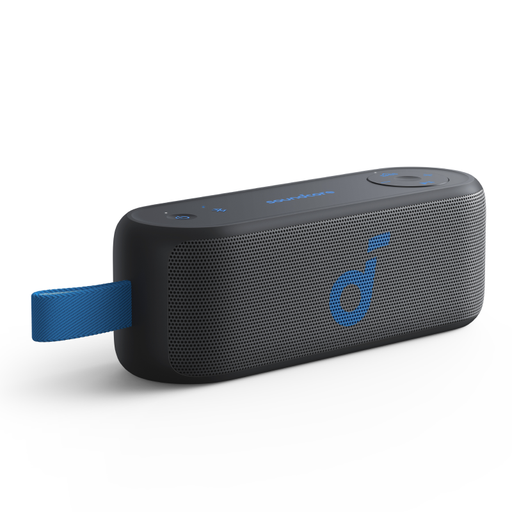
Why this choice suits this profile: At 575 g and with a claimed 20 hours of battery life, this model makes a convincing first wireless speaker for home, garden or occasional outings.
The spec sheet states 16 W in stereo, two full-range drivers and an IPX7 certification – concrete details, far from a vague promise of power.
BassUp technology, up to 20 hours of claimed playback and a compact design.
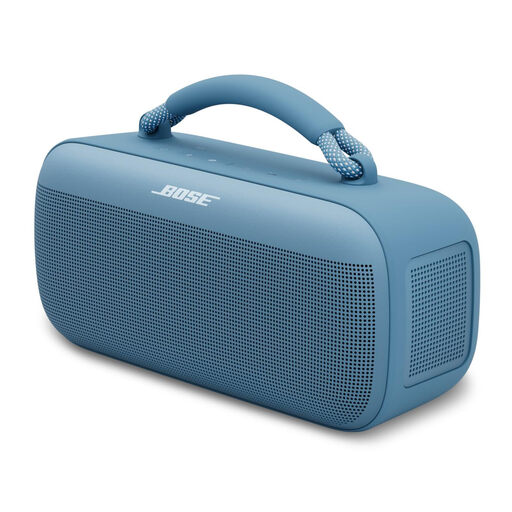
Why this choice suits this profile: This model targets users looking for generous bass, versatile connectivity and a format that can liven up gatherings with friends.
The IP67 rating clearly separates dust protection from water protection, while the AUX input means you’re not solely reliant on Bluetooth.
Up to 20 hours of claimed battery life, USB-C port for charging a device and an adjustable equaliser via the app.
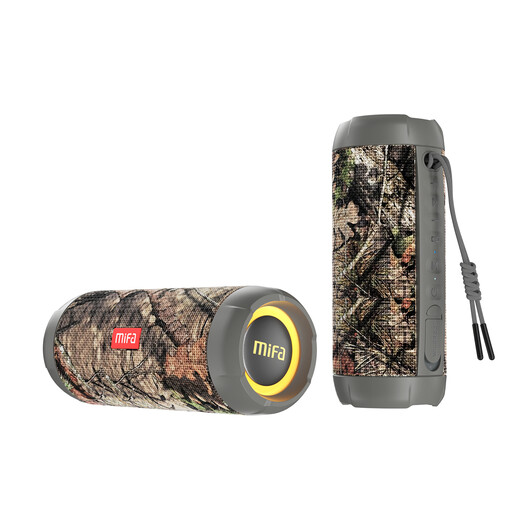
Why this choice suits this profile: Its IP67 design, 45-degree angled orientation and claimed 12-hour battery life make it a great companion for outdoor adventures.
The spec sheet mentions both IP67 dust protection and the ability to float. That makes it easier to use near water, without replacing the manufacturer’s instructions.
Bluetooth 5.3, playback from a microSD card, claimed 30 W power and PartyAdd function to link multiple compatible speakers.
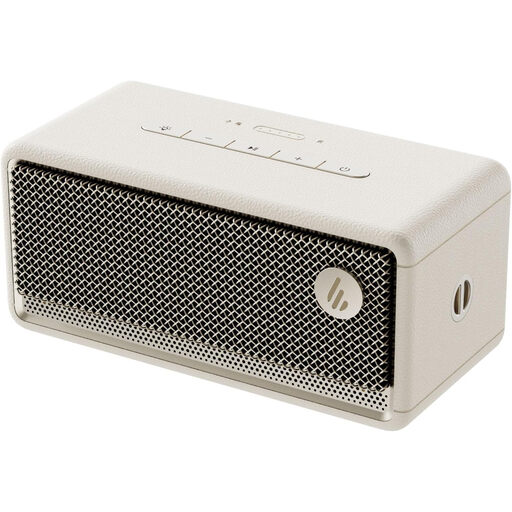
Why this choice suits this profile: This speaker works equally well for a party at home or a trip to the beach or camping, when power and the ability to connect two devices are top priorities.
The spec sheet details 34 W RMS, IP66 certification and stereo pairing – three pieces of information far more meaningful than a vague mention of ‘powerful sound’.
Bluetooth 5.4, dual connection, ambient lighting and a claimed 9-hour battery life.
We’ve put together a comprehensive, real-time updated selection of products that meet these demanding criteria as well as European safety standards.
To maintain a stable connection, keep your phone and the speaker at a reasonable distance and avoid large metal obstacles. Turn on Bluetooth, select the exact product name, then check the battery level before you head out.
Stereo pairing usually requires two identical speakers or ones compatible with the same system. Check the manual before you buy – TWS functionality isn’t necessarily universal across different brands.
After using the speaker at the beach, gently remove any sand and avoid harsh chemicals. Never force a port cover, and let the speaker dry completely before charging it.
For personal use or in a small room, moderate power can be enough. To fill a garden or a gathering, compare RMS power, driver design and sound projection rather than just the wattage figure.
No. The IPX6 certification covers resistance to water jets, not immersion. For temporary immersion, look for an IPX7 certification and follow the limits stated in the manual.
The main cost comes from charging the battery. It’s generally low, but varies depending on battery capacity, how often you charge it and your listening volume. Avoid incompatible chargers and stop using the device if the battery swells or gets unusually hot.