
Livraison le jour même ou le lendemain

Qualité garantie

Débloquez vos offres de bienvenue: Livraison GRATUITE | Jusqu'à -80 % | 30 jours d'essai gratuits à JoyPlus
Téléchargez l'application
A portable Bluetooth speaker is just as at home in the office as it is on the beach, while travelling or at a party with friends. But some purchases quickly lose their appeal: volume that's too quiet outdoors, battery life far shorter than advertised, or water resistance that's been misinterpreted.
Before comparing portable wireless speakers, it's worth separating genuinely useful features from marketing claims. Here are the criteria to consider, along with a selection of models suited to different needs.
The number of watts alone won't tell you about sound quality or listening volume. The type of driver, the enclosure, passive radiators and digital processing all affect the bass, vocal clarity and how stable the sound remains when you turn it up.
Indoors, moderate power can be perfectly adequate. For a Bluetooth speaker intended for outdoor use, what really matters is that it maintains a balanced sound when your surroundings get noisy. If you're looking for a Bluetooth speaker with powerful bass, check for passive radiators or a dedicated woofer.
A waterproof Bluetooth speaker isn't necessarily designed to stay underwater. The IP67 rating, for example, generally means total dust protection and resistance to temporary immersion, under the conditions set by the standard. The port covers must be properly closed.
An IP66-rated model resists powerful water jets and splashes, but doesn't offer the same level of protection against immersion. Always check the spec sheet before using it near a pool, in the rain or on the beach.
A portable speaker with long battery life may show a duration measured at moderate volume. Sound level, built-in lighting, Bluetooth connection and temperature all affect the battery. A "up to" 20 or 30-hour battery life doesn't guarantee the speaker will last that long in every situation.
To avoid disappointment, compare models based on your actual use: several hours at medium volume, an evening with the lights on, or a hike with no power socket nearby.
A waterproof Bluetooth speaker should be rinsed with fresh water after exposure to salt or sand, then dried before charging. Never plug in the USB-C cable if the port is still damp.
Don't just look at the stated duration: also check the charging type and any extra features. Some models can charge a phone via a USB port – a handy feature when you're out and about, but one that reduces the energy available for listening to music.
For everyday use, a stated battery life of 9 to 15 hours is usually plenty. For camping or long journeys, a larger battery offers more peace of mind, though the speaker will often be bulkier.
Bluetooth 5.3 or 5.4 can help maintain a stable connection with a recent smartphone, but range also depends on obstacles and your environment. Multipoint connection lets you keep two devices paired, while pairing two speakers can create a Bluetooth stereo speaker with true channel separation.
An AUX input is still useful for connecting a wired source, such as a laptop, MP3 player or certain turntables. Also check the mobile app compatibility and the equaliser settings available.
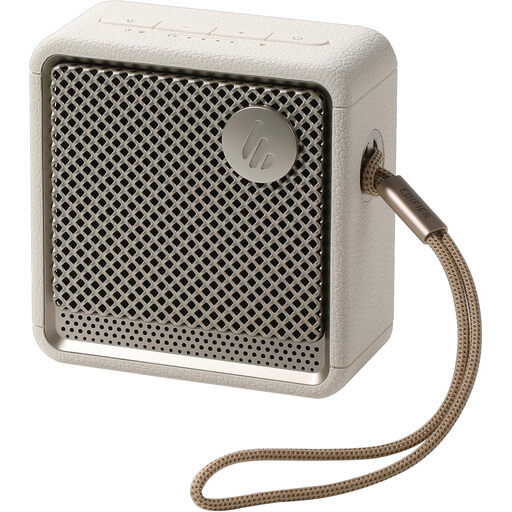
Why this choice suits this profile: Its compact size works well at home, in the office or for occasional outings. The spec sheet states 6 W RMS power, up to 15 hours of battery life and an IP67 certification.
The IP67 rating is clearly stated and the advertised battery life seems suitable for a day of moderate use. You can also pair a second unit for a stereo listening experience.
Bluetooth 5.4, two passive radiators, built-in microphone and EDIFIER ConneX app.
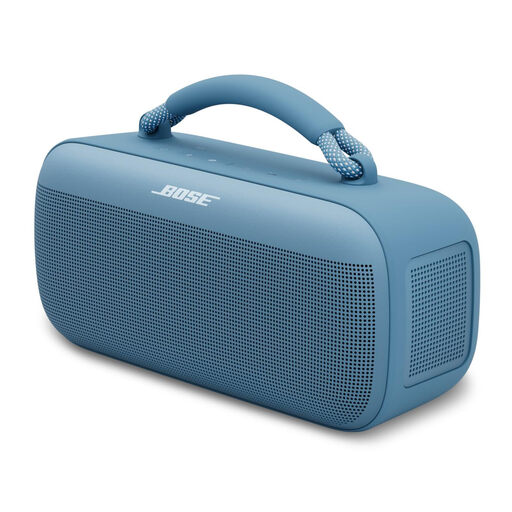
Why this choice suits this profile: This model is for those who want a speaker that's easy to move around and capable of delivering rich bass at home or during a party.
The spec sheet states up to 20 hours of battery life, IP67 protection and an AUX input. Concrete enough information to check the model matches your intended use.
Detachable handle, bass, mid and treble adjustment via the Bose app, and USB-C device charging.
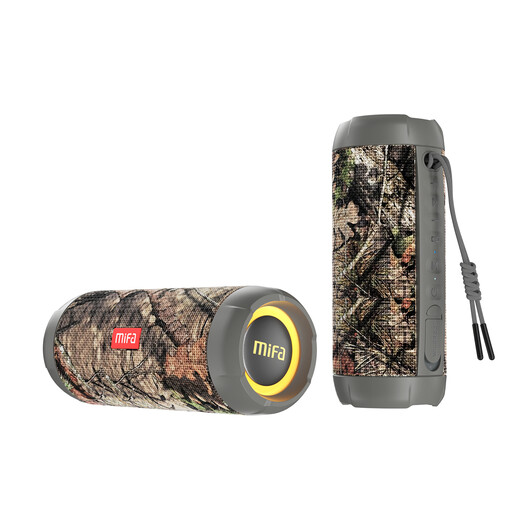
Why this choice suits this profile: Its 45-degree angled design, IP67 protection and claimed floating capability make it an interesting option for outdoor trips, camping and near water.
The spec sheet distinguishes IPX7 water resistance from IP67 dust protection. You still need to respect the immersion limits and ensure the ports are properly closed.
Stated 30 W power, up to 12 hours of battery life, Bluetooth 5.3, Micro SD card reader and RGB lighting.
We've put together a comprehensive, real-time updated list of products that meet these demanding selection criteria and European safety standards.
Go for a model that clearly states IP67 or IPX7 protection, with a well-designed port cover. A floating speaker can reduce the risk of losing it in the water, but it shouldn't stay submerged beyond the specified conditions. After a trip to the beach, rinse it with fresh water and dry it thoroughly before charging.
Avoid extreme temperatures, repeated full discharges and charging when the port is damp. If you rarely use your speaker, store it partially charged in a dry place. Its actual battery life will vary depending on listening volume, lighting and any features you have activated.
Not necessarily. Some models already deliver stereo sound on their own. Pairing two compatible speakers, however, lets you separate the left and right channels, or play the same content in multiple rooms. Check compatibility between the two devices before you buy.