
Livraison le jour même ou le lendemain

Qualité garantie

Débloquez vos offres de bienvenue: Livraison GRATUITE | Jusqu'à -80 % | 30 jours d'essai gratuits à JoyPlus
Téléchargez l'application
A portable Bluetooth speaker can easily slip into a bag for a picnic, into the boot for a get-together with friends, a camping weekend, or quiet listening at home. Yet some purchases disappoint from the very first use: volume that’s too weak outdoors, a battery that drains faster than expected, or water resistance that’s misunderstood.
Before choosing a wireless speaker, it’s worth looking beyond the design and marketing promises. Here are the criteria to examine, the pitfalls to avoid, and a selection tailored to different types of users in the UK.
The number of watts isn’t enough to judge musical performance. It tells you about the advertised electrical power, but not directly about vocal clarity, treble precision or bass depth. The design of the drivers, the digital signal processing and the size of the cabinet all matter just as much.
If you’re looking for a powerful portable speaker, check the RMS power when it’s stated, the number of drivers, and whether there’s a passive radiator or an equaliser.
Ingress protection ratings for water aren’t all the same:
A waterproof Bluetooth speaker is still subject to the limits of its certification. After use at the beach or by the pool, dry it according to the instructions and keep the port covers closed. A speaker advertised as waterproof isn’t necessarily designed to be exposed to salt water, chlorine or a high-pressure jet for long periods.
Battery life generally varies depending on volume, whether lighting is on, the connection used and the temperature. A long-lasting Bluetooth speaker rated for 20 or 30 hours can last significantly less at high volume.
To compare models fairly, check the measurement conditions and, where stated, choose a device with a common charging port like USB-C.
For a medium-sized room, a speaker with 5 to 20 W can be perfectly fine for everyday listening. On a terrace or during a party, a more powerful model with a larger cabinet will generally project sound better. Speakers with two drivers or a TWS pairing mode can also create a stereo speaker by linking two compatible units.
Well-defined bass is often enhanced by a passive radiator, digital signal processing or an equaliser. These technologies change the sound, but they can’t fully compensate for the acoustic volume of a larger system.
For hiking, camping or the beach, an IP67 rating offers protection against dust and temporary immersion. In a kitchen or on a covered terrace, simple splash protection may be enough.
Never charge a speaker if its port is wet. Also avoid leaving it in direct sunlight inside a car: excessive heat can accelerate the ageing of its lithium-ion battery.
Weight, handle, strap and overall shape directly affect how comfortable a portable speaker is to use. For a backpack, a model under one kilogram will generally be easier to carry. For a party speaker, USB, auxiliary or microphone inputs, along with lighting effects, may matter more than compactness.
Also check for a microphone for hands-free calls, a microSD card reader, dual-device connection mode or a control app. A Bluetooth soundbar, on the other hand, is better suited to a TV or fixed setup than to outdoor use.
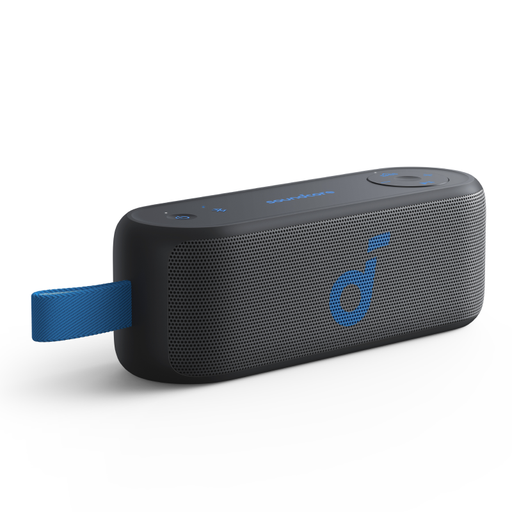
Why this choice suits this profile: At 575 g and with a claimed battery life of 20 hours, it’s ideal for first-time listening at home, in the garden or on the go.
The spec lists 16 W in stereo, two full-range drivers and an IPX7 rating – concrete details rather than just a promise of boosted bass.
Advertised BassUp technology, 20 hours of playback and an easy-to-carry design.
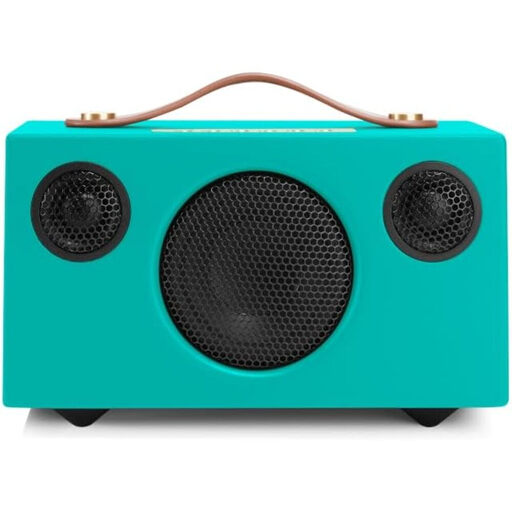
Why this choice suits this profile: Its larger size suits home listening and long sessions, especially for users who care about audio inputs and design.
The advertised battery life distinguishes 30 hours at medium volume from 12 hours at maximum volume – a far more realistic indication.
Advertised 25 W amplification, 3.5 mm auxiliary input and USB-A port for charging a device.
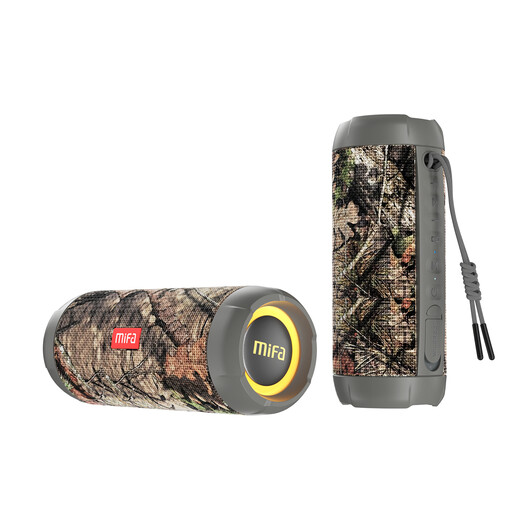
Why this choice suits this profile: Its IP67 rating, advertised floating design and RGB lighting make it ideal for outdoor trips and lively parties.
The IP67 rating specifies both dust protection and temporary immersion resistance, rather than just using the term “waterproof”.
Advertised 30 W power, Bluetooth 5.3, microSD card playback and claimed battery life of up to 12 hours.
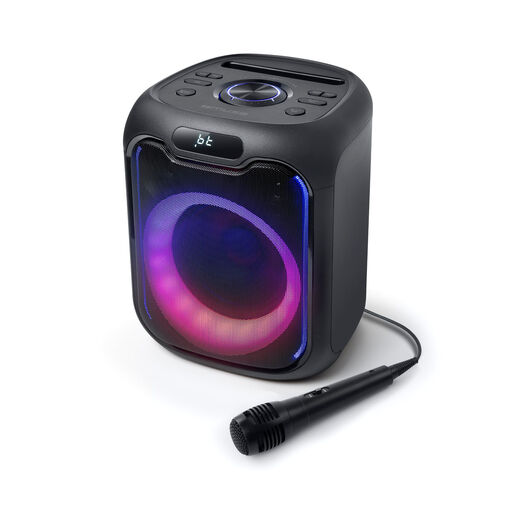
Why this choice suits this profile: At 3.4 kg and with microphone inputs, it’s aimed at parties, karaoke and gatherings where volume is the priority.
The spec sheet distinguishes battery use, rated at up to 5 hours, from mains operation. This model isn’t one to choose as a lightweight portable speaker.
Advertised 150 W power, bass and treble adjustment, dynamic lighting, USB port and two microphone inputs.
We’ve put together a comprehensive, real-time updated selection of products that meet these demanding criteria, while also taking European safety regulations into account.
Yes, as long as you choose a suitable IP rating and respect its limits. An IP67 or IPX7 certification is better for temporary immersion than an IPX4 one. However, sand, salt and chlorine can damage connectors and grilles: close the covers, avoid deliberate immersion and clean the device according to the instructions in the manual.
A claimed battery life of 5 to 10 hours is often enough for a day or an evening. For travel and camping, aim for 12 hours or more, bearing in mind that high volume and lighting effects will reduce the actual duration.
Place it on a stable, clear surface at a suitable height. Avoid covering the grilles or wedging it inside furniture. To widen the soundstage, check if the model supports TWS or stereo pairing with a second compatible speaker. You can then adjust the bass and vocals using the equaliser, depending on the room and your preferences.