
Livraison le jour même ou le lendemain

Qualité garantie

Débloquez vos offres de bienvenue: Livraison GRATUITE | Jusqu'à -80 % | 30 jours d'essai gratuits à JoyPlus
Téléchargez l'application
A portable Bluetooth speaker can accompany you to the beach, to a party with friends, during a work session, or simply at home. The trouble is that product descriptions often highlight figures that are difficult to compare: stated power, maximum battery life, or water resistance.
A few checks are all it takes to avoid an unpleasant surprise. A very compact wireless speaker won't necessarily fill a large room. A battery life quoted as "up to" 20 or 30 hours usually depends on the listening volume. And a waterproof Bluetooth speaker isn't necessarily designed to stay underwater for long.
High power doesn't guarantee balanced sound. The design of the drivers, digital signal processing, frequency response, and cabinet volume all matter just as much. If you listen to music regularly, look for concrete information about the drivers, supported formats, and available inputs, rather than focusing solely on the wattage.
Manufacturers typically measure battery life at moderate volume. As soon as you turn up the sound, the battery drains much faster. The Bose SoundLink Flex (2nd generation), for example, claims up to 12 hours of listening, but its spec sheet states that battery life drops to 3 hours at maximum volume. The same goes for the Audio Pro T3+: up to 30 hours at 50% volume, compared to 12 hours at full power.
The IP67 rating guarantees protection against dust as well as temporary immersion under the conditions specified by the standard. It does not mean the speaker can remain underwater or be used without care by the side of a pool. An IPX5 speaker, like the Hikers model, resists splashes and low-pressure water jets, but must not be submerged.
Before any contact with water, make sure the charging port cover is properly closed. After exposure to salt water or sand, a rinse with fresh water followed by thorough drying is recommended, if the manufacturer allows it.
For an outdoor speaker, look for a clearly stated certification: IP67 for more complete protection against dust and water, or IPX5 for splash resistance. Weight and carrying system also deserve your attention. A loop, strap, or handle makes it easier to move around, whether you're hiking, on the train, or away for the weekend.
A small portable speaker like the Bose SoundLink Micro (2nd generation) fits in one hand, a bag, or a pocket, depending on its dimensions. A larger model will generally offer more sound presence, but will be less easy to carry.
Compare the stated battery life with the test conditions: volume level, connection type, and features activated. A speaker with long battery life is practical for travel, provided you also check the charging time and whether you can use it while it's plugged in.
The Bose SoundLink Max offers up to 20 hours of listening and includes a USB-C port capable of charging a mobile device. The Audio Pro T3+ also has a USB-A output for powering a phone, as well as a 3.5 mm auxiliary input.
Bluetooth 5.3 or 5.4 represents a recent generation of the standard, but range also depends on obstacles and the source device. Multipoint functionality lets you manage several compatible devices without having to re-pair each time you switch.
For a Bluetooth speaker for the home or a Hi-Fi speaker, wired inputs, Wi-Fi, and AirPlay 2 compatibility can make all the difference. The Edifier S300 combines Bluetooth 5.4 with LDAC, USB-C, an auxiliary input, and AirPlay 2. The Edifier M60, meanwhile, offers Bluetooth 5.3 with LDAC, USB-C, and an AUX input, all in a format suited to a desk.
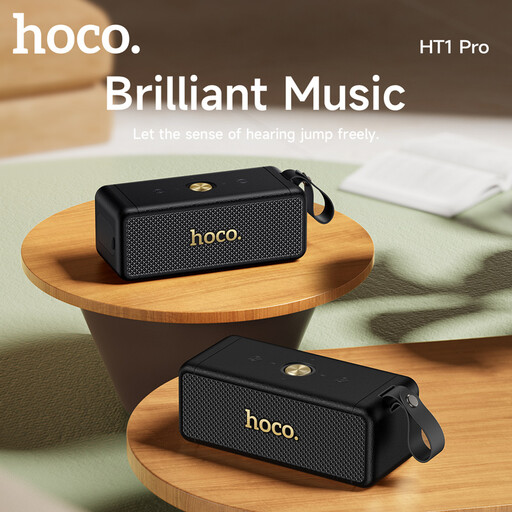
Why this choice suits this profile: With its two 52 mm drivers and stated power of 16 W, this model makes a good first wireless speaker for the home, an office, or small gatherings.
The spec sheet highlights measurable power and a dual-driver configuration, rather than a vague promise about volume.
Wireless format, two 52 mm drivers, and speakerphone function.
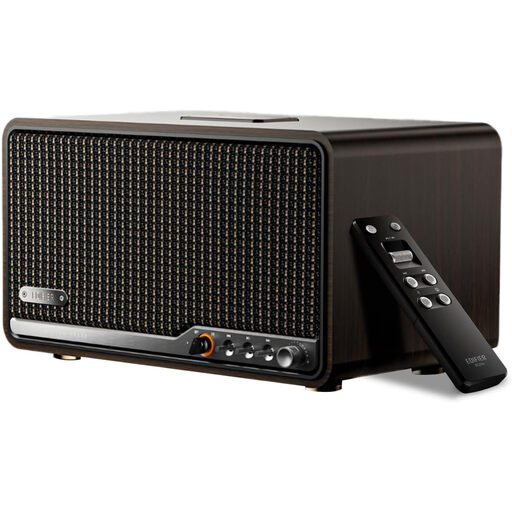
Why this choice suits this profile: With its 80 W RMS, this system is aimed at those seeking detailed listening in a living room, office, or stereo setup.
The spec sheet details audio formats, inputs, and RMS power, allowing for a more objective comparison.
Bluetooth 5.4 with LDAC, AirPlay 2, USB-C, AUX, and the ability to create a stereo pair.
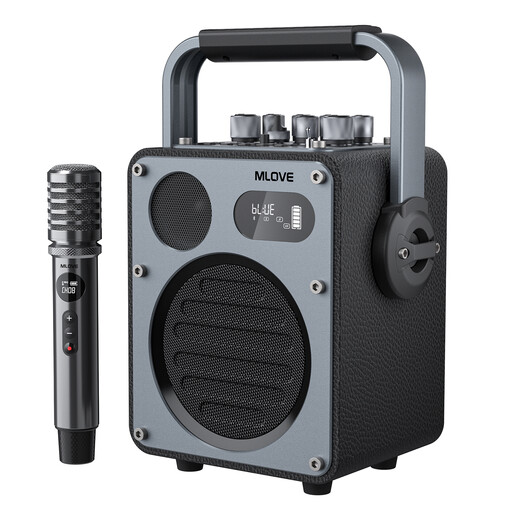
Why this choice suits this profile: Designed for karaoke, streaming, and party entertainment, this model includes a wireless microphone, several equalisation modes, and an instrument input.
The advertised features directly address karaoke needs: included microphone, vocal modes, recording, and dedicated connectivity.
Bluetooth 5.4, stated battery life of up to 12 hours in karaoke mode, and USB-C charging.
We've put together a comprehensive, real-time updated selection of products that meet these demanding criteria and European safety standards.
For the beach, the garden, or travel, choose a model certified IP67, with a loop or handle, and offering battery life suited to the length of your outings. The Bose SoundLink Flex (2nd generation) combines Bluetooth 5.3, IP67 protection, a carry loop, and a stated battery life of up to 12 hours. The SoundLink Max extends this to 20 hours and adds an AUX input.
It depends mainly on the battery, frequency of use, exposure to heat, and maintenance. Avoid leaving the speaker in direct sunlight, don't charge it when it's damp, and use a compatible cable. An integrated battery is generally not designed to be replaced by the user: before buying, check the warranty terms and the quality of after-sales service.
Consumption increases with volume, enhanced bass, and lighting effects. To space out recharges, reduce the volume slightly, turn off any lights you don't need, and choose a speaker suited to the size of the room. In a small space, a very large model won't necessarily deliver a sound improvement that justifies its power consumption.