
Livraison le jour même ou le lendemain

Qualité garantie

Débloquez vos offres de bienvenue: Livraison GRATUITE | Jusqu'à -80 % | 30 jours d'essai gratuits à JoyPlus
Téléchargez l'application
A portable Bluetooth speaker can accompany you to the beach, a party, a picnic or simply around the house. But the features highlighted on product pages are not always enough to help you make the right choice. High power does not guarantee balanced sound, any more than the word “waterproof” means that the speaker can be submerged without risk.
Here are the criteria to consider when comparing models, without getting swept up in the marketing claims.
The number of watts indicates the electrical power or stated output power. On its own, it says nothing about vocal clarity, treble detail or bass depth. A portable speaker can therefore play very loudly while becoming harsh or muddled as the volume increases.
Instead, look at the acoustic design: the number of speakers, whether it has a passive radiator, stereo reproduction, an equaliser and any dedicated bass enhancement mode. This information is far more useful than a simple wattage figure.
IP ratings follow a precise classification system. The first digit generally indicates the level of protection against dust and particles, while the second relates to water resistance.
The right rating therefore depends on how you plan to use the speaker: light rain, by the pool, at the beach or where there is a risk of dropping it into water. Also remember to close the covers on the various ports properly.
A long-battery-life Bluetooth speaker may achieve the stated duration under very specific conditions, generally at moderate volume. Sound level, lighting effects, temperature and the use of additional features can significantly reduce this time.
For a camping weekend, also check the charging time, the type of port used and whether it can charge a smartphone. A high-capacity battery provides greater endurance, but it often makes the device heavier.
For a bedroom, home office or small terrace, moderate power is usually sufficient. For a party speaker or use in the garden, greater power reserves can be useful: outdoors, sound disperses quickly.
If you are looking for a speaker with powerful bass, check whether it has a passive radiator or a dedicated mode. Bass enhancement can give the sound more impact, but it can never replace the acoustic volume of a larger speaker.
The term stereo speaker may refer to two built-in speakers or the pairing of two compatible speakers. The difference matters, as these two configurations do not offer the same soundstage width.
A portable speaker should be light enough to carry without a second thought. A model weighing less than one kilogram will generally be more practical in a rucksack, while a heavier speaker may deliver greater volume and deeper bass.
In particular, compare the following:
Bluetooth is enough to stream music from a smartphone, tablet or computer. However, the version used, simultaneous connection of multiple devices and stereo pairing can make the speaker more flexible to use.
An auxiliary input, microphone socket, USB port or memory card reader can be useful if you want to play files without a smartphone or host a party. For more advanced musical use, an instrument input may be more useful than an impressive maximum volume.
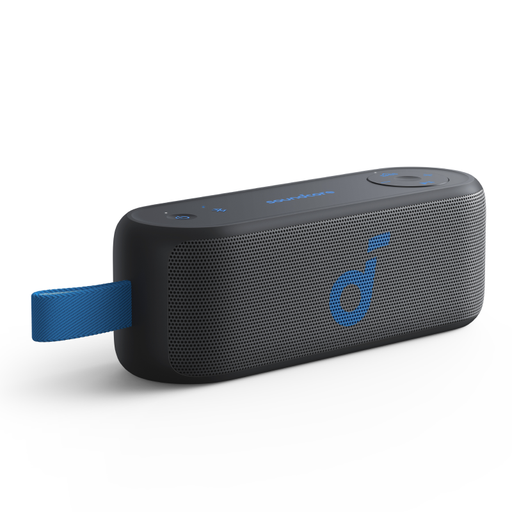
Why it suits this profile: Weighing 575 g and offering up to 20 hours of quoted battery life, it is an easy-to-use first wireless speaker for the home, garden or days out.
The product page highlights two full-range speakers, 16 W stereo output and an IPX7 rating, rather than relying solely on the power claim.
Advertised BassUp technology, 20 hours of playback and a manageable weight of 575 g.
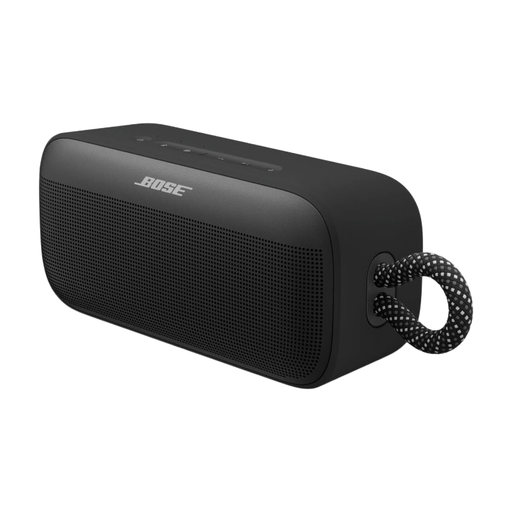
Why it suits this profile: This model is designed for users looking for a robust outdoor Bluetooth speaker whose sound can be customised through an app.
Its IP67 rating clearly separates dust protection from water protection. The USB-C port also acts as an output for charging a mobile device.
Up to 20 hours of quoted battery life, pairing for two speakers, and adjustment of bass, midrange and treble through the Bose app.

Why it suits this profile: This powerful portable speaker is ideal for karaoke parties, rehearsals and users who want to connect an instrument or microphone.
The product page details the AUX, USB and instrument inputs, as well as microphone compatibility. You can therefore immediately see whether the connections you need are available.
Two 3.5-inch full-range speakers, Bluetooth 5.4, a wireless microphone included and a quoted battery life of 10 to 13 hours at medium volume.
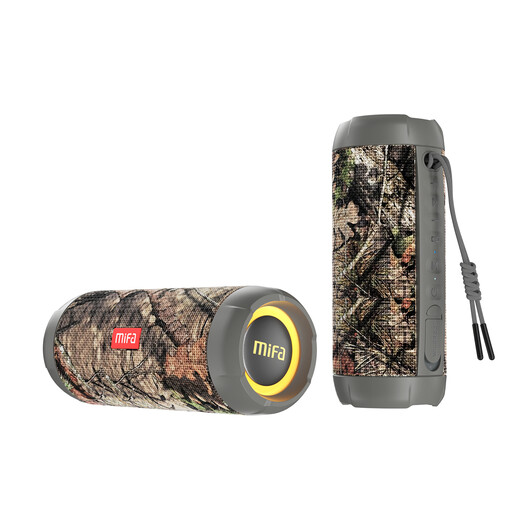
Why it suits this profile: Its 45-degree orientation and advertised dust- and water-resistant design make it well suited to outdoor use, whether by the water or on the trails.
The product pages state IP67 protection against dust and IPX7 water resistance. Even so, check the immersion limits before use.
Advertised 30 W power, Bluetooth 5.3, up to 12 hours of battery life, a MicroSD card reader and PartyAdd pairing function.
Discover a complete, regularly updated selection of models that meet these demanding criteria while complying with European safety regulations.
It all depends on its IP rating. An IPX5 or IPX6 speaker can generally withstand water splashes under the conditions specified, while an IPX7 model is designed to withstand temporary immersion as defined by the standard. However, no device should be exposed to water unnecessarily, especially while charging. Carefully close the covers and dry the connectors before plugging in the cable.
Battery life varies depending on the volume, lighting effects, temperature and features in use. Manufacturers’ quoted figures are often measured at medium volume. For regular use, choose a model whose battery life exceeds your daily needs and use a compatible adaptor for charging.
Place it on a stable surface, do not cover its grilles and avoid putting it in a corner if the bass becomes too overwhelming. When available, the app’s equaliser lets you fine-tune the sound. To widen the soundstage, you can also pair two compatible speakers in stereo mode. Finally, keep the volume at a reasonable level to reduce the risks associated with prolonged exposure to sound.