
Livraison le jour même ou le lendemain

Qualité garantie

Débloquez vos offres de bienvenue: Livraison GRATUITE | Jusqu'à -80 % | 30 jours d'essai gratuits à JoyPlus
Téléchargez l'application
A portable Bluetooth speaker should fit seamlessly into your everyday life: listening to music at home, enjoying podcasts in the kitchen, making hands-free calls, taking it away for weekends in the great outdoors or spending days at the beach. However, the features highlighted on product pages do not always tell you everything you need to know about a model.
Before choosing a wireless speaker, pay particular attention to its battery life under the stated conditions, its level of water protection and how easy it is to carry. Here are the key criteria to consider, followed by a selection suited to different needs.
The term ‘waterproof’ does not necessarily mean that a speaker can remain underwater. The IPX4 rating found on several compact models guarantees protection against water splashes, but not against immersion.
An outdoor Bluetooth speaker with an IP67 rating offers protection against dust as well as increased water resistance, within the limits defined by the manufacturer. The charging-port cover must also be properly closed. Before using it near a swimming pool, in the rain or on the sand, take the time to read the instructions.
An advertised power output of 5 W, for example, indicates the electrical power delivered, but it is not enough to predict sound quality. Maximum volume, the balance between bass and treble, speaker size and cabinet design also matter.
A compact Bluetooth speaker will work perfectly well in a room or during a quiet picnic, but it may not be suitable for providing sound across a large outdoor space. To create a fuller sound, some models offer TWS pairing, which lets you connect two compatible speakers.
An advertised battery life of ‘up to 12 or 16 hours’ generally depends on listening volume, the type of content being played and the connection used. At higher volume, the battery will often run down more quickly. For everyday use, also check the type of port, whether it has a rechargeable battery and the stated charging time.
The IP rating consists of two numbers or letters. The first indicates protection against dust and particles, while the second relates to water. For example, IP67 means protection against dust and resistance to temporary immersion, under the conditions specified by the manufacturer. IPX4 indicates protection against water splashes only; it provides no information about dust resistance.
For the beach or hiking, choose a waterproof portable speaker based on its precise rating rather than a vague marketing promise.
If you regularly carry your speaker with you, choose a speaker with a rechargeable battery and, where possible, a USB-C port. An advertised battery life of 5 to 7 hours is suitable for a short outing or occasional use. Models advertised as lasting up to 12 or 16 hours give you more flexibility for travelling or spending a full day outdoors.
Avoid exposing the device to high temperatures. Stop using it if the battery swells, the casing cracks or the speaker becomes unusually hot.
A range of 10 metres is generally sufficient in a home, provided there are not too many walls or obstacles. Models equipped with Bluetooth 5.3 benefit from a newer version of the wireless connection and may be able to manage several devices, depending on the functions included.
Weight and accessories can also make a difference: a wrist strap or carabiner makes it easier to carry. If you often take calls, look for a speaker with a hands-free kit and an easily accessible multifunction button.
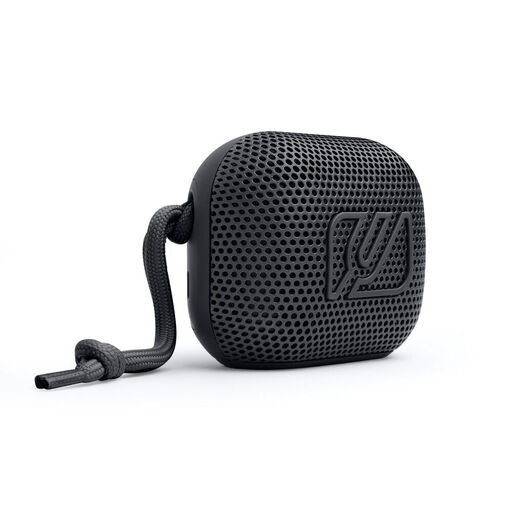
Why this model suits this profile: Measuring 78 × 95 × 53 mm and weighing 0.28 kg, it is well suited to everyday listening, both at home and when travelling short distances.
The product details clearly state IPX4 protection: it is splash-resistant, but is not designed to be immersed.
Advertised 5 W output, battery life of up to 5 hours, USB-C charging, hands-free function and TWS stereo pairing.
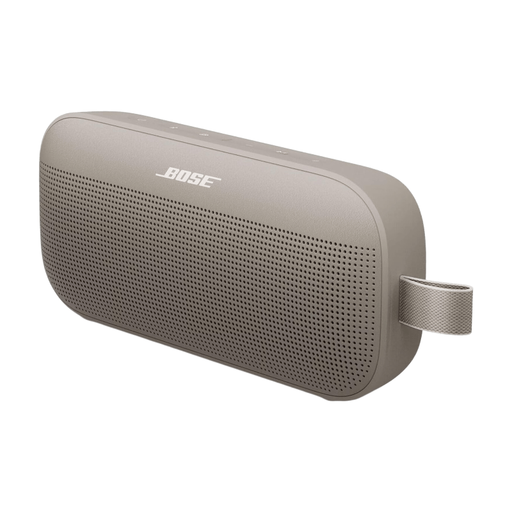
Why this model suits this profile: Its carabiner and outdoor-focused design make it easy to carry when hiking, travelling or spending time near water.
The IP67 rating is clearly stated. However, the USB-C cover must be closed before exposing the speaker to water or dust.
Advertised battery life of up to 12 hours, Bluetooth 5.3, multipoint connection, Bose app and pairing modes for connecting two speakers.
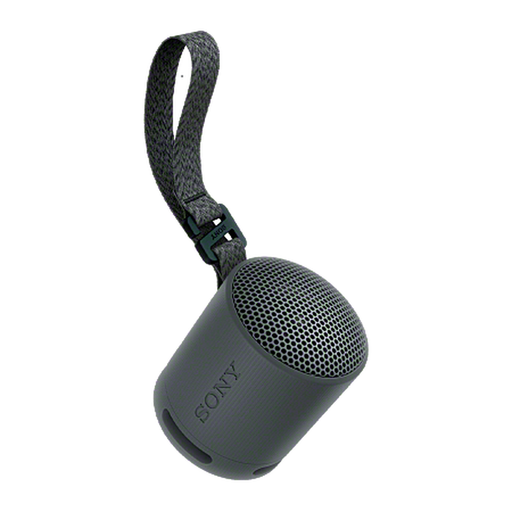
Why this model suits this profile: Weighing 274 g and fitted with a wrist strap, this portable Bluetooth speaker slips easily into a bag for travelling and outdoor activities.
The IP67 certification covers water and dust. However, you must still follow the charging and care instructions.
Advertised battery life of up to 16 hours, dimensions of 8,6 × 12 × 8,6 cm, wrist strap and Bluetooth connection for a smartphone or tablet.
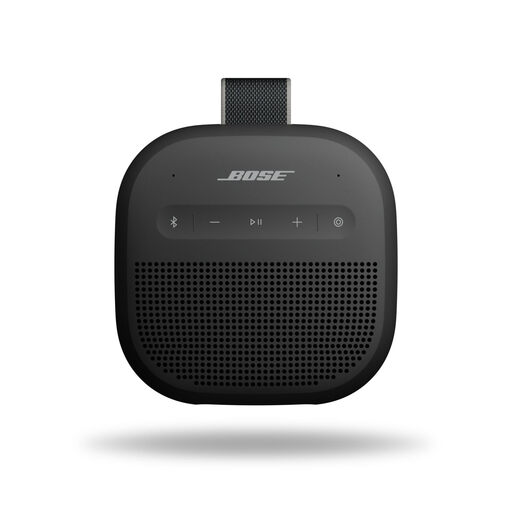
Why this model suits this profile: Its strap lets you attach it to a bag or piece of equipment, while its compact design takes up minimal space.
The IP67 rating is clearly stated, unlike products that settle for a vague ‘water-resistant’ claim.
Advertised battery life of up to 12 hours, water and dust protection, practical strap and equaliser adjustment via the Bose app.
We have put together an up-to-date selection of speakers suited to different needs, including size, battery life, connectivity and outdoor use.
For first-time pairing, switch on Bluetooth on your phone, turn on the speaker and select its name from the list of available devices. A range of 10 metres may be reduced by walls and other obstacles.
To help preserve the battery, use a charger compatible with the specifications stated in the instructions. Clean the casing regularly with a soft cloth and allow the speaker to dry before closing the charging port. Also take care not to block the grilles.
For use in the garden, while hiking or near water, start by checking the IP rating. An IP67 certification offers much more comprehensive protection than IPX4, which is limited to splashes. Weight, the presence of a wrist strap and advertised battery life should also be taken into account.
TWS pairing connects two compatible speakers so that they play sound simultaneously. Depending on the model, it may separate the left and right channels to create true stereo sound, or simply play the same audio through both devices. The speakers generally need to be identical or belong to a compatible range.
Playback time varies according to volume, the content being played, temperature and battery condition. The advertised figures — 5, 7, 12 or 16 hours — correspond to test conditions defined by the manufacturer. For regular use, allow some leeway and recharge the speaker before a long outing.