
Livraison le jour même ou le lendemain

Qualité garantie

Débloquez vos offres de bienvenue: Livraison GRATUITE | Jusqu'à -80 % | 30 jours d'essai gratuits à JoyPlus
Téléchargez l'application
The portable Bluetooth speaker market is overflowing with models, each with more enticing promises than the last. Between soaring wattage claims and marketing jargon, it's easy to get lost and regret your purchase. As the head of buying guides at Joybuy, my mission is simple: to help you see things more clearly and choose the speaker that's truly right for you, while avoiding the most common pitfalls.
Before you fall for a slick design or a special offer, be wary of these three issues that often lead to disappointment down the line.
A high watt number is often touted as the sole guarantee of quality. This is a misleading oversimplification. A powerful Bluetooth speaker is about more than just watts. The quality of the drivers, the presence of passive radiators for bass, and software optimization (the famous DSP) play a much more crucial role in the clarity and richness of the sound. A well-designed 20W speaker will often sound better than a poorly made 40W model.
Terms like "waterproof," "water-resistant," or "waterproof speaker" are often used interchangeably, but they hide very different realities. An IPX4-certified speaker will withstand a few splashes but won't survive a dip in the pool. For peace of mind outdoors, it's essential to know how to read Ingress Protection (IP) ratings.
A speaker with long battery life is a huge selling point. However, the advertised durations (sometimes over 20 hours) are almost always measured in lab conditions: volume at 50%, no light shows, and a perfect connection. In the real world, for a party speaker, for example, with the volume cranked up and the bass pumping, expect that battery life to be cut in half.
To ensure you make the right decision, focus on these three technical criteria, which don't lie.
The IP rating consists of two digits. The first relates to protection against solids (dust), and the second against liquids (water). For an outdoor speaker, the second digit is the most important.
Rather than trusting the advertised duration in hours, take a look at the battery's capacity, expressed in mAh. All else being equal, a 5000 mAh battery will logically last longer than a 3000 mAh battery. It's a much more reliable indicator of your speaker's real-world battery life.
Look under the hood. A good portable speaker often combines:
To illustrate our points, here are three models that stand out for their honest spec sheets, each suited to a different user profile.
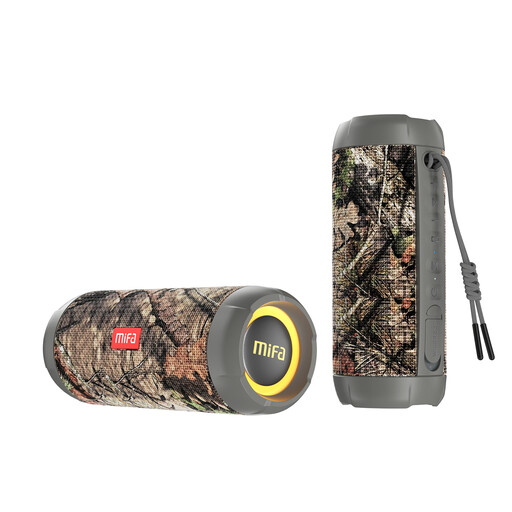
Why this one? For those who take their music everywhere, from hiking trails to paddleboarding sessions. Its rugged design and ability to float make it a prime companion for all outdoor activities.
It doesn't just claim to be vaguely "water-resistant." Its IP67 certification is a clear guarantee: it's fully protected against dust and can be submerged, which eliminates any ambiguity.
Its ability to float and its IP67 ruggedness make it nearly indestructible for outdoor use. The 5000 mAh battery ensures solid battery life.
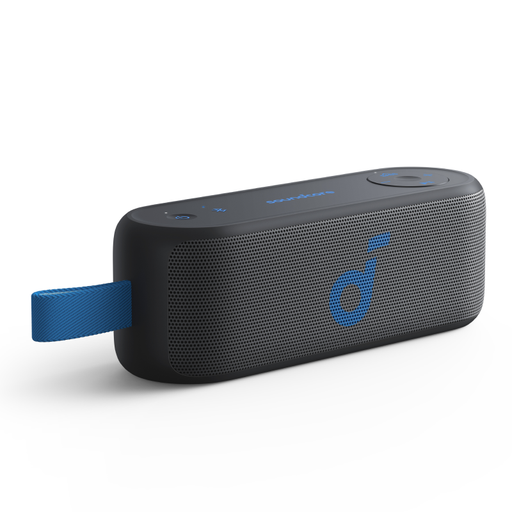
Why this one? For versatile use, from the office to the garden to a weekend picnic. It offers an excellent balance of portability, battery life, and sound quality for everyday use.
It doesn't fall into the trap of unrealistic battery life claims. Its 20 hours are measured under realistic listening conditions. Its IPX7 waterproof rating is a real bonus, where many competitors at this price point only offer basic splash protection.
Its marathon 20-hour battery life and BassUp technology, which audibly boosts the bass, all in an ultra-portable package (575 g).
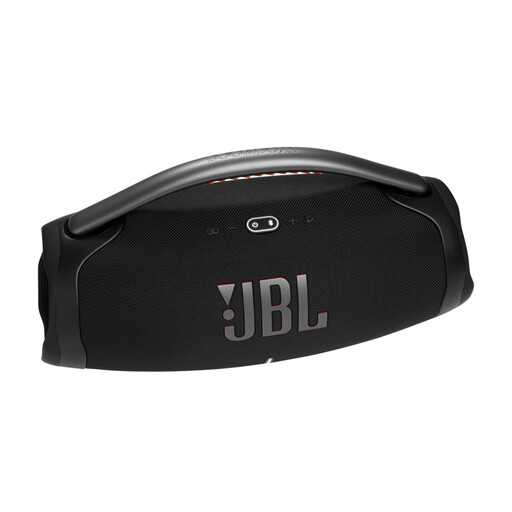
Why this one? For those who need power to liven up outdoor parties or fill large spaces with sound. This is a device designed for audio performance above all else.
Here, there are no vague wattage figures. The manufacturer details the power output by mode (180W on AC power, 136W on battery) and by driver type (subwoofer, mids, tweeters)—a rare level of transparency that justifies its power claims.
Phenomenal sound power with deep bass and a 24-hour battery life. Its IP67 certification and sturdy handle make it perfectly suited for outdoor parties.
We have selected a full range of products that meet our criteria for quality and durability.
An IPX7 rating means the device is protected against immersion in water up to 1 meter deep for a maximum of 30 minutes. This is far superior protection compared to an IPX5 or IPX6 rating, which only guarantee resistance to water jets. With an IPX7 device, an accidental drop into a pool or lake won't end in disaster.
It depends on the environment. For personal listening or a small group (on a balcony, at a picnic), a well-designed 10 to 20-watt speaker will do the job perfectly. To liven up a small party in a garden or at the beach, you should look for models in the 30 to 60-watt range. Models over 80 watts are intended for providing sound for larger gatherings and open spaces.
A few simple steps can extend your listening time. Keep the volume at a moderate level (around 60-70%). Disable any light effects (RGB) if you're not using them, as they consume a lot of power. Finally, to preserve your battery's long-term health, avoid frequent complete discharges and don't leave it plugged in permanently once it's 100% charged.