
Livraison le jour même ou le lendemain

Qualité garantie

Débloquez vos offres de bienvenue: Livraison GRATUITE | Jusqu'à -80 % | 30 jours d'essai gratuits à JoyPlus
Téléchargez l'application
The desire to take your music everywhere, from a mountain hike to a party on the beach, has made the portable Bluetooth speaker a must-have accessory. However, in a market saturated with models making often misleading claims, the risk of making the wrong choice is very real. Between exaggerated power ratings and vague waterproof specs, it's hard to know what to believe.
As a product expert at Joybuy, my mission is to help you cut through the noise. Let's forget the marketing jargon and focus on what really matters. Here are the pitfalls to avoid and the features to look for to find the speaker that will perfectly meet your needs.
Marketing is getting more creative, but some claims just don't hold up to real-world use.
To avoid falling into these traps, focus on a few key technical specifications.
The IP rating is an international standard that defines a device's level of protection against solids (dust) and liquids (water). It consists of two digits:
For on-the-go use, battery life is crucial. Look at the battery capacity (expressed in mAh) and check user reviews for real-world battery performance.
Connectivity is another key point. A Bluetooth 5.3 or newer version ensures a more stable connection, better range, and optimized power consumption. It also enables features like TWS (True Wireless Stereo), which allows you to pair two identical speakers to create true stereo sound.
Rather than focusing on the wattage, examine the speaker's sound architecture:
To illustrate how these criteria apply in practice, here are a few models that check all the boxes, suited for different user profiles.

Why this model? Perfect for those who want quality sound in an ultra-compact form factor. Its strap and feather-light weight make it ideal for clipping to a backpack during a city walk or a trip to the park.
It boasts a certified IP67 rating, guaranteeing real protection against dust and immersion, far beyond a simple "water-resistant" promise.
Its Sound Diffusion Processor and passive radiator deliver clear audio and surprisingly present bass, a remarkable performance for its size.
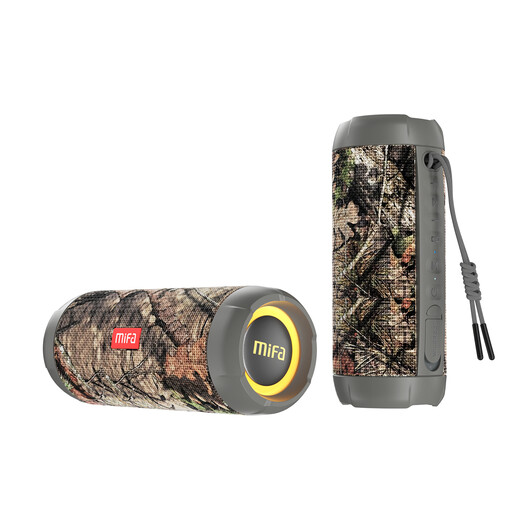
Why this model? Designed for adventure, it's perfect for kayaking, beach days, or dusty hikes. Its robust design and ability to float make it a reliable companion for the most demanding environments.
The IP67 rating and its ability to float (thanks to its IPX7 certification) leave no room for doubt: it's built for immersion, not just splashes.
Its ruggedness is complemented by PartyAdd technology, which allows you to connect over 100 compatible speakers for powerful, synchronized sound.
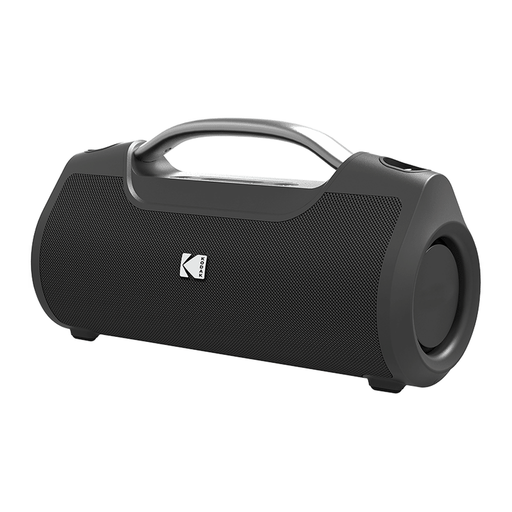
Why this model? For those who need to provide the soundtrack for a garden party or a large living room. Its 60W power and TWS function make it a smart choice for creating a festive atmosphere with sound that packs a punch.
Here, power isn't just a marketing gimmick. It's paired with TWS technology, which lets you create a true stereo system by linking two speakers for a richer, more immersive experience.
Its 60W output is a real asset for large spaces, and its 3600 mAh battery ensures enough runtime to last all evening.
We've curated a full range of products that meet our standards for quality and durability.
The difference lies in the dust protection. An IPX7 speaker is protected against immersion but has not been certified for dust resistance (the "X" means no test was performed for that criterion). An IP67 speaker, on the other hand, offers the same level of water protection (immersion up to 1m) AND is completely dustproof. For the beach or hiking trails, the IP67 rating is therefore a guarantee of peace of mind.
Yes, if the speakers are compatible with TWS (True Wireless Stereo) technology. This feature allows you to pair two identical speakers via Bluetooth. One will play the left audio channel and the other the right, creating a true stereo soundstage, which is far more immersive than a single speaker.
Absolutely not. High wattage may guarantee a potentially louder volume, but it in no way guarantees better sound. The quality of the drivers, the presence of passive radiators for deep bass, and a good Digital Signal Processor (DSP) to prevent distortion are far more important for achieving clear, balanced, and pleasant sound, even at full volume.