
Livraison le jour même ou le lendemain

Qualité garantie

Débloquez vos offres de bienvenue: Livraison GRATUITE | Jusqu'à -80 % | 30 jours d'essai gratuits à JoyPlus
Téléchargez l'application
Choosing a portable Bluetooth speaker can often feel like a daunting task. Between promises of seismic bass, record-breaking battery life, and all-weather waterproofing, it's hard to navigate the options without risking disappointment. Our mission: to help you decode the marketing jargon to find the speaker that truly fits your needs and, most importantly, to avoid the most common pitfalls.
The market is flooded with models, but behind the bold claims often lie flaws that only reveal themselves once you unbox the product. Here are the three key points to watch out for.
To make the right choice, forget the marketing hype and focus on these few technical specifications. They are the true reflection of your future wireless speaker's performance.
The IP (Ingress Protection) rating is an international standard that classifies a device's level of protection against solids (dust) and liquids (water). It consists of two numbers:
For total peace of mind at the beach, by the pool, or on a hike, aim for an IPX7 or, even better, an IP67 rating.
As we've seen, the manufacturer's advertised figure should be taken with a grain of salt. For a more reliable estimate, look at the battery capacity, expressed in mAh. A battery of 3000 mAh or more is a good starting point to last a full day. Also, consider the charging connector: USB-C is the standard today, offering much more convenience and speed.
Instead of focusing on power, pay attention to the audio architecture:
To help you see how these criteria apply in practice, here are a few options tailored to different user profiles.
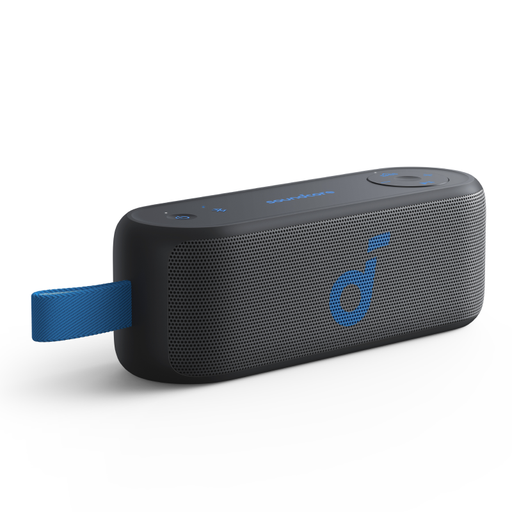
The ideal user: For everyday adventurers who want to take their music everywhere, from the park to the pool. Ultra-portable and rugged, it's the perfect companion for spontaneous outings.
Thanks to its IPX7 certification, it's not just splash-proof—it can survive full immersion. This avoids the "fake" waterproofing pitfall. Its 20-hour battery life is a real bonus in this price range.
Its feather-light weight (575g) and IPX7 certification make it the king of portability, for absolute peace of mind by the water. The BassUp technology boosts the lows for a more punchy sound.
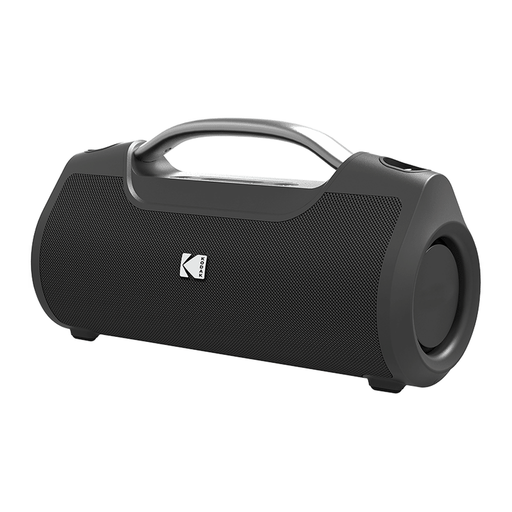
The ideal user: For the party starter who wants to provide the soundtrack for a get-together, a backyard barbecue, or drinks with friends. Here, power is essential to fill the space without sacrificing portability.
It doesn't just boast a big number. Its 60W of power is smartly complemented by TWS technology, allowing you to pair it with a second speaker for true stereo sound. Raw power is thus transformed into an immersive listening experience.
Its 60W of power, rare in this category, is its main selling point. Combined with the TWS function and an IPX6 certification, it becomes the secret weapon for successful parties, both indoors and out.
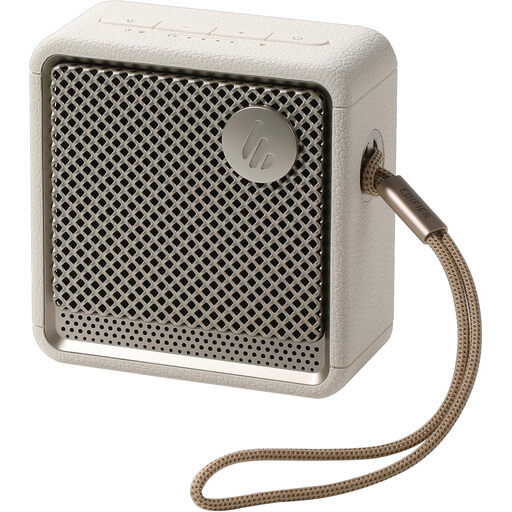
The ideal user: For the city dweller looking for a mini Bluetooth speaker to slip into their bag. Ideal for the office, at home, or clipped to a bike, it's all about compactness and durability.
It makes a strong statement with an IP67 rating, which is extremely rare for a speaker of this size. Fully dust-tight and waterproof, it offers rock-solid durability, surpassing much more expensive models.
Its IP67 rating makes it virtually indestructible for daily use. Add 15 hours of battery life and Bluetooth 5.4, and you get a powerhouse of reliable, modern technology.
Explore our complete selection, where every product has been rigorously chosen for its performance and reliability.
The lifespan of a portable speaker depends on two pillars: its battery and its build quality. The lithium-ion battery, like a smartphone's, loses capacity after a few hundred charge cycles (typically 2 to 4 years with regular use). To prolong its life, avoid full discharges and extreme heat. The speaker's ruggedness depends on its materials and IP rating. A model with an IP67 certification will naturally be more resilient to daily hazards (drops, dust, water).
A few simple tricks can make all the difference.
The short answer? No. The stereo pairing function, known as TWS (True Wireless Stereo), is almost always proprietary. To use it, you will need two identical speakers of the same brand and model. Multi-room audio, which allows you to connect different brands, is another technology, usually reserved for more complex, stationary home speakers.