
Livraison le jour même ou le lendemain

Qualité garantie

Débloquez vos offres de bienvenue: Livraison GRATUITE | Jusqu'à -80 % | 30 jours d'essai gratuits à JoyPlus
Téléchargez l'application
The portable Bluetooth speaker has become the essential accessory for setting the mood, whether at home, on holiday, or at a get-together with friends. Faced with a saturated market, making a choice can quickly become a headache. Between promises of "super-powerful" bass and "bulletproof" waterproofing, the risk of making the wrong choice is high. This guide is here to help you see things more clearly, avoid marketing traps, and find the portable speaker that's truly right for you.
Marketing hype can be misleading. Here are three red flags to watch out for to avoid regretting your purchase a few weeks later.
To avoid falling for the hype, focus on objective characteristics. They are the true indicators of the quality and durability of your future speaker.
Rather than an overwhelming catalogue, we've selected models that cater to specific uses. The goal: to help you find the speaker that will fit perfectly into your lifestyle.
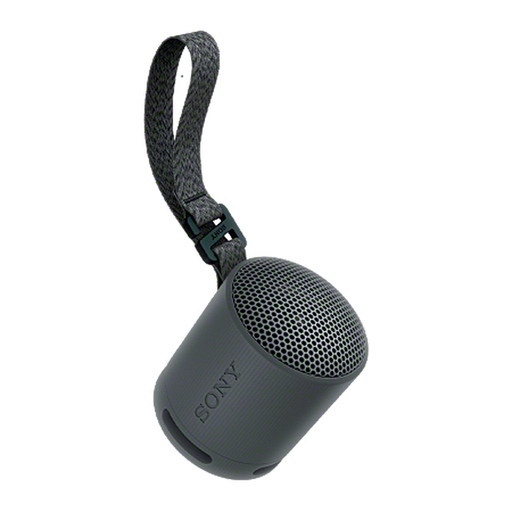
Why It's a Match: Ideal for those who are always on the go. Ultra-light (274 g) and compact, it slips into any bag or hangs by its strap. Perfect for a hike, a day at the beach, or simply to provide a soundtrack for a picnic in the park.
Its IP67 rating offers real peace of mind: it's not only waterproof against immersion but also fully protected against dust and sand. Its 16-hour battery life is very respectable for its size, enough to avoid running out of juice in the middle of the day.
The perfect balance of extreme portability and ruggedness. Its Sound Diffusion Processor delivers a surprisingly wide soundstage for such a small device.
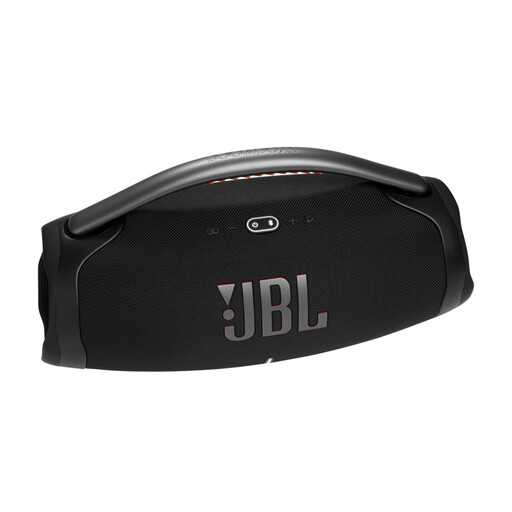
Why It's a Match: Engineered for those who want to fill large spaces with sound. It's the quintessential party speaker, ideal for a garden barbecue or an outdoor event. Its power and bass you can feel make it a reliable choice for getting the party started.
Here, bass isn't just a promise. It's delivered by a 3-way architecture that includes a dedicated subwoofer. The 24-hour battery life is backed by a massive 10,000 mAh battery, enough to last all night long, even at full volume.
Serious firepower (up to 180W on AC power) and deep bass you can physically feel. The PartyBoost function allows you to connect multiple JBL speakers to multiply the sound power.
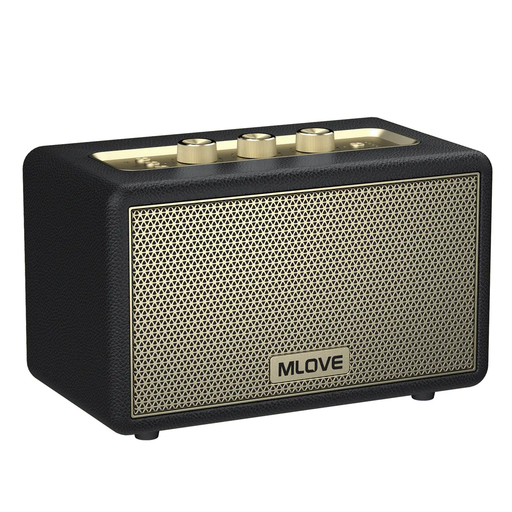
Why It's a Match: For those looking for an audio device that is also a beautiful design piece. Its retro look will naturally find its place in a living room or office, while still being portable enough to be moved from the kitchen to the patio.
It doesn't try to be a rugged, outdoor speaker, and it owns it. Its strength lies in its style and home audio quality. Its 80W power is genuine, driven by a true subwoofer/tweeter combo for a balanced and customisable sound.
An unapologetically retro look with refined finishes. The physical knobs for bass and treble allow for ‘old-school’ sound adjustment, a real plus that has become rare in the all-touch era.
Explore our full selection of speakers tested and approved by our editors, meeting strict criteria for quality and reliability.
Its longevity depends on two factors: the battery and its overall durability. A lithium-ion battery, like in a smartphone, begins to lose capacity after 300 to 500 charge cycles. In practical terms, this corresponds to 3 to 5 years of regular use. To preserve it, avoid frequent full discharges. Physical durability depends on the materials and the IP rating. A well-designed, IP67-certified model can last for many years.
The short answer is no. The feature that allows you to pair two speakers in stereo, often called TWS (True Wireless Stereo), is a proprietary technology. Therefore, you can only pair two JBL speakers with each other, two Sony speakers with each other, and so on. There is no universal standard for this feature yet.
Absolutely not. It's an indicator, but it's far from sufficient. Sound quality relies much more on the acoustic architecture: the size and number of drivers, the presence of passive radiators for full, distortion-free bass, and the Digital Signal Processing (DSP) that optimises the output. A well-engineered 20W speaker will often sound better (clearer, more balanced) than a poorly designed 40W model.