
Livraison le jour même ou le lendemain

Qualité garantie

Débloquez vos offres de bienvenue: Livraison GRATUITE | Jusqu'à -80 % | 30 jours d'essai gratuits à JoyPlus
Téléchargez l'application
The portable Bluetooth speaker has become the essential accessory for bringing music to our beach days, hikes, or simply our moments of relaxation at home. The problem? The market is saturated with models making tempting promises that, when put to the test, don't always hold up. A battery that dies in two hours, a supposedly "waterproof" speaker that gives up the ghost after a single splash... these disappointments are unfortunately all too common. To help you see things more clearly and avoid marketing traps, here are the technical criteria you should never overlook.
Marketing can often be misleading. Before you let yourself be swayed, beware of these three claims that lead straight to disappointment.
To make an informed choice, forget the slogans and focus on the technical specifications that truly matter for the performance and durability of your future speaker.
The Ingress Protection (IP) rating is an international standard that classifies a device's level of protection against solids (dust) and liquids (water). It consists of two digits.
For worry-free outdoor use, aim for a certified IP67 waterproof speaker. This standard guarantees that it is not only completely dust-tight but can also withstand temporary immersion in up to 1 metre of water for 30 minutes. In comparison, an IPX4 or IPX5 rating only protects against simple water splashes.
To judge the real-world battery life, never rely on the marketing figure alone. Dive into the spec sheet to find the battery capacity, expressed in milliampere-hours (mAh), and if possible, the testing conditions (e.g., "12 hours of playback at 50% volume"). A large-capacity battery (over 3000 mAh for a compact model) is a much better indicator of its endurance.
Power, expressed in watts (W), indicates the maximum sound volume but in no way guarantees sound clarity. For true audio quality, these are the elements you need to examine closely:
Because every user has different needs, here is our selection of models that excel in their category while avoiding the most common pitfalls.
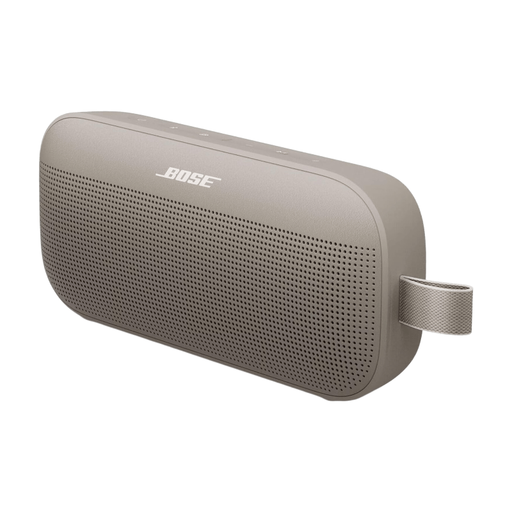
Why it's the perfect match: Perfect for hikes, beach days, or poolside lounging. Its rugged design and convenient strap make it the ideal travel speaker, easy to clip onto a backpack.
Unlike models that are merely splash-resistant, its IP67 certification guarantees it's truly waterproof and dustproof. It even floats, which prevents many a waterside disaster.
PositionIQ technology that adapts the sound to its orientation; ultra-rugged, shock- and rust-resistant design.
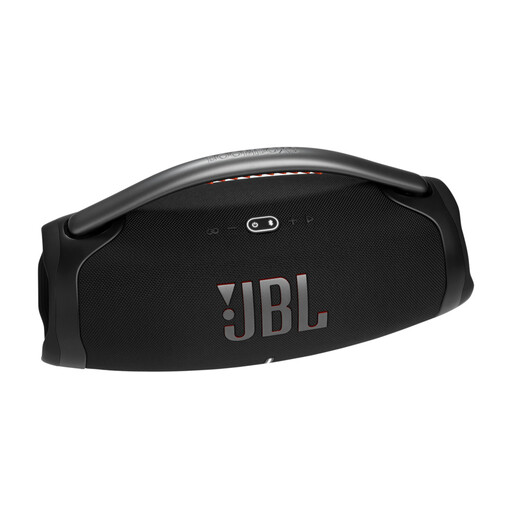
Why it's the perfect match: Built to set the mood in large spaces, both indoors and out. It's the ultimate party speaker, capable of filling an entire garden with powerful, deep bass.
No empty promises here: it delivers a real-world battery life of up to 24 hours, and its power is well-controlled. Its 3-way speaker system delivers clear, distortion-free sound, even at full volume.
Massive sound and ultra-deep bass (JBL Original Pro Sound); PartyBoost function to connect multiple JBL speakers; IP67 certification.
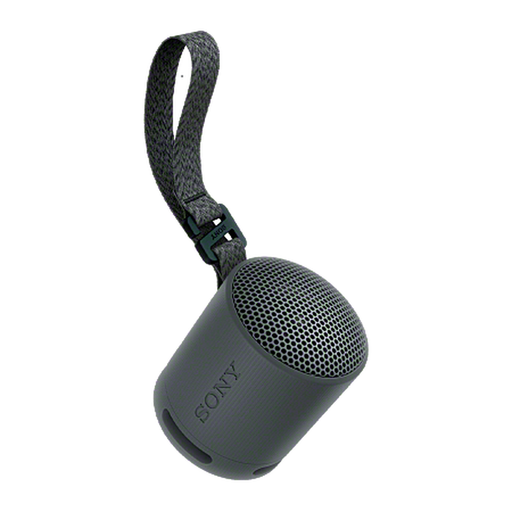
Why it's the perfect match: Ideal for those who want an ultra-portable, reliable, and affordable solution for their everyday music, from the park to the office. It's the small Bluetooth speaker that slips into any bag without being noticed.
Proof that a mini size doesn't mean fragile. With its IP67 certification and 16 hours of real-world battery life, it outperforms many more expensive models on the essential criteria of ruggedness and endurance.
Feather-light and ultra-compact (274g); Sound Diffusion Processor for a surprisingly wide soundstage; clever multi-way strap.
Our complete and regularly updated selection features products that meet our demanding selection criteria.
Both ratings guarantee protection against immersion in up to 1 metre of water for 30 minutes. The difference lies in the dust protection. An IP67 speaker is completely dust-tight (the "6"), whereas an IPX7 speaker has not been tested for dust resistance (the "X" replaces the digit). For use at the beach or on a hike, the IP67 rating is therefore preferable.
Generally, no. Stereo pairing technologies (like TWS, JBL's PartyBoost, or Sony's Stereo Pair) are proprietary. To create a stereo pair or sync multiple speakers, you will need to opt for compatible models from the same brand. Check the product page to see if the speaker offers a pairing function and which other models it is compatible with.
To preserve your speaker's lithium-ion battery, avoid letting it fully discharge too often. It's advisable to recharge it when it reaches around 20%. Also, avoid exposing it to extreme temperatures (very hot or very cold) for long periods, whether it's charging or in use. Finally, if you don't plan to use it for several months, store it with a charge of about 50%.