
Livraison le jour même ou le lendemain

Qualité garantie

Débloquez vos offres de bienvenue: Livraison GRATUITE | Jusqu'à -80 % | 30 jours d'essai gratuits à JoyPlus
Téléchargez l'application
A flat car tire, an air mattress for last-minute guests, or the unicorn float that needs inflating before hitting the beach... In all these situations, a portable air pump proves to be an invaluable ally. But the market is flooded with models making tempting promises, and the risk of ending up with an unsuitable, unreliable device that dies after just a few uses is very real. To avoid buyer's remorse, it's crucial to know the pitfalls to avoid and invest in a product that will truly meet your needs.
Faced with an overwhelming number of options, it's easy to make a mistake. Here are the two classic traps that lead straight to disappointment:
To avoid falling into these traps, three technical specifications deserve your full attention. They will determine if the product is right for you.
This is the non-negotiable criterion that dictates everything else. Your choice will depend exclusively on what you need to inflate.
Your need for mobility and your usage habits will dictate the most relevant power source.
It's often the accessories that make the difference. Ensure the model comes with a complete set of nozzles to fit different valves: Schrader (cars, mountain bikes), Presta (road bikes), and tapered adapters for mattresses and floats. The game-changing extras? Automatic shut-off at the target pressure, a built-in LED light for nighttime emergencies, or a power bank function to charge a smartphone in a pinch.
Rather than an endless list, here are a few models that stand out from the crowd, each tailored to a specific need.
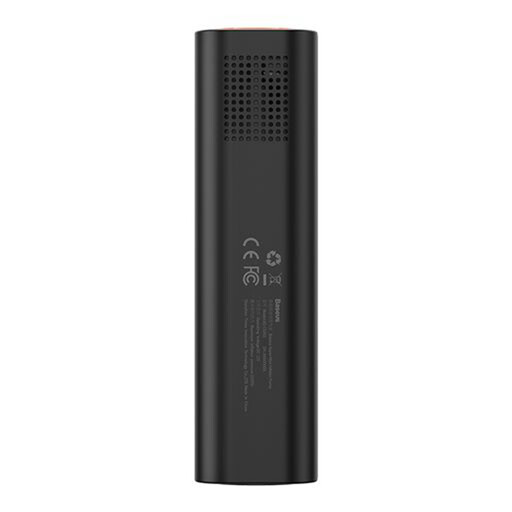
Why it's a great choice: Designed to be forgotten in the glove box or trunk. This 12V mini-compressor is the ultimate safety tool for checking and adjusting tire pressure before a long trip or when a dashboard warning light comes on. Its compact size doesn't sacrifice performance for its primary mission: automotive maintenance.
It bypasses the weak battery trap by plugging directly into the vehicle's 12V socket. The result: reliable, continuous power as long as the engine is running.
Pressure up to 150 PSI, perfect for all passenger vehicle tires. Built-in LED light, very handy for nighttime use.
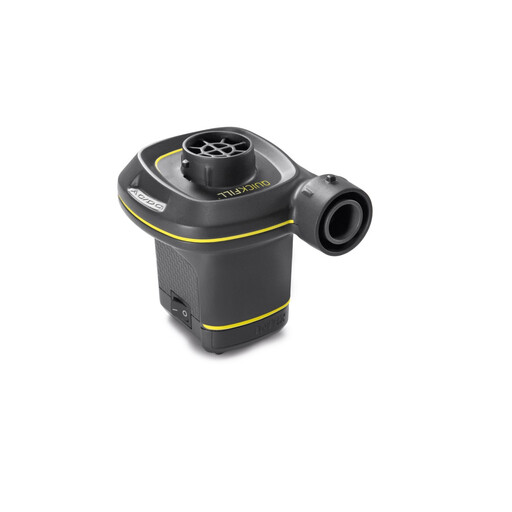
Why it's a great choice: The camper's best friend, or for any family that needs to quickly inflate (and deflate!) mattresses, inflatable boats, and other pool toys. Its dual power supply makes it as practical at home as it is on vacation, provided you have a car or an outlet handy.
It is specifically designed for high-flow, low-pressure use, thus avoiding the incompatibility trap. It doesn't pretend to inflate tires and focuses on what it does best: filling large volumes with air in record time.
Dual power with 12V DC and 230V AC for maximum versatility. Deflate function is very practical for packing up.
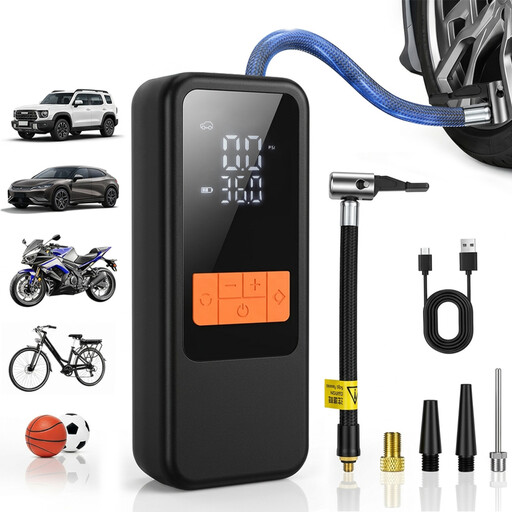
Why it's a great choice: For anyone looking for the Swiss Army knife of inflation: topping up car tires, inflating a bike before a ride, or bringing the kids' ball back to life. Its built-in battery and compact size make it an excellent travel and leisure companion.
It pre-empts the battery life pitfall by being transparent: its 4000 mAh battery can, for example, fully reinflate 2 car tires. Its preset modes (car, motorcycle, bike, ball) prevent any user error.
High pressure (150 PSI), 5 inflation modes, digital display, and power bank function to charge a smartphone.
Explore our full selection of portable inflators and compressors, tested and approved by our editors against strict criteria.
It's all about pressure and flow. A portable air compressor (for tires) generates high pressure to overcome the resistance of the air in a tire. An air mattress pump, conversely, delivers a large volume of air (high flow) at very low pressure. Trying to use one for the other is at best ineffective, at worst destructive.
This depends heavily on the model, its battery, and the size of the tire. With a good device, topping up a few PSI only takes a minute or two. Inflating a completely flat tire can take between 7 and 10 minutes. Rely on the manufacturer's data, which is often based on a standard tire size.
It's not recommended. While most 12V sockets turn off with the ignition, this isn't a universal rule. To avoid draining your car's battery, it's wisest to only plug in the compressor when you're using it. The rest of the time, its place is in its case, stored safely in the trunk or glove box.