
Livraison le jour même ou le lendemain

Qualité garantie

Débloquez vos offres de bienvenue: Livraison GRATUITE | Jusqu'à -80 % | 30 jours d'essai gratuits à JoyPlus
Téléchargez l'application
A portable air conditioner lets you cool a bedroom, living room or office without any permanent installation work. It’s a particularly practical solution for tenants, remote workers and households that want to move the unit around as needed. The trick is decoding the spec sheets, which sometimes mix theoretical power, noise levels and claimed room coverage.
Before buying a portable air conditioner, take the time to check a few concrete details. High power won’t make up for a poorly thought-out hot air exhaust, a unit that’s awkward to move, or underestimated electricity consumption.
A 12000 BTU portable air conditioner is often presented as the ideal solution for large rooms. In reality, the actual area it can cool also depends on ceiling height, sun exposure, insulation quality, the number of occupants and any electrical appliances already heating the room.
A loft bedroom or a south-facing room may need more power than a north-facing room of the same size. Claims like “up to 35 m²” or “up to 50 m²” should therefore be taken as guidelines, not as a promise that works for every home.
The noise level shown on a spec sheet usually corresponds to a very specific measurement condition. It can vary depending on the selected mode, fan speed and the distance between the unit and your bed or desk.
For a bedroom, choose a quiet portable air conditioner with a night mode, a timer and gradual adjustment. Pay attention to the decibel value rather than relying on a marketing phrase.
A single-hose unit uses a duct to push heat outside. Without a window kit, some of the hot air can flow back into the room, significantly reducing comfort. Check that the system is compatible with your window – whether it slides vertically or horizontally – and note the length of the hose.
The supplied kit isn’t always a perfect fit for your window frame. In some cases, an additional sealing solution will effectively limit hot air ingress.
Cooling capacity is expressed in BTU/h or kilowatts. Models with 9000 BTU generally suit small to medium rooms, while a 12000 BTU unit can handle larger spaces, depending on your home’s characteristics.
Airflow, measured in m³/h, tells you about air circulation in the room. It isn’t enough on its own to judge cooling performance, but it’s a useful indicator for comparing units on a concrete basis.
An air conditioner with a dehumidifier can be especially useful in a damp room, a poorly ventilated living area or a home near the coast. Dehumidification capacity is given in litres per day, but it varies with ambient temperature and humidity levels.
A reversible portable air conditioner adds a heating function for cooler periods. This versatility means you don’t have to store the unit between seasons, but remember to compare the heating power and the energy rating for cooling separately.
With a Wi-Fi connected air conditioner, you can programme the unit from your smartphone. Handy for cooling the house before you get home or adjusting the temperature from the sofa. That said, it’s still worth checking that the built-in controls are simple to use.
The energy rating provides a regulated basis for comparing units under the measurement conditions set by the label. A Class A or A+ rating on the spec sheet doesn’t guarantee a low bill in every situation. Daily usage time, the temperature you choose and your home’s insulation also play a big part.
R290 refrigerant is a natural coolant used in several newer models. Never puncture the circuit or attempt to work on the compressor yourself. Clean the filters regularly, make sure the air intakes and outlets aren’t blocked, and use a socket that meets the manufacturer’s recommendations.
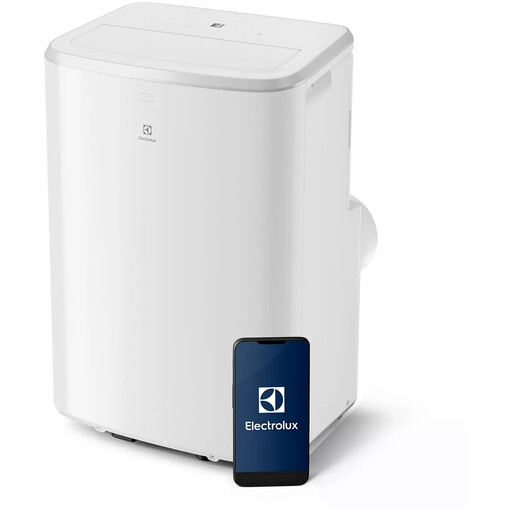
Why this choice suits this profile: With its 9000 BTU, single-hose design and included exhaust duct, it’s well suited to a first installation in a small to medium room. Wi-Fi and the heating function add a welcome dose of everyday flexibility.
The power, airflow of 380 m³/h, noise level of 64 dB and Class A rating are all listed separately. That means you can compare the model without being guided by a single figure.
Cooling, ventilation, dehumidification and heating are all included. Dehumidification is rated up to 28 L/24 h, while spare parts remain available for 15 years from the date of manufacture.
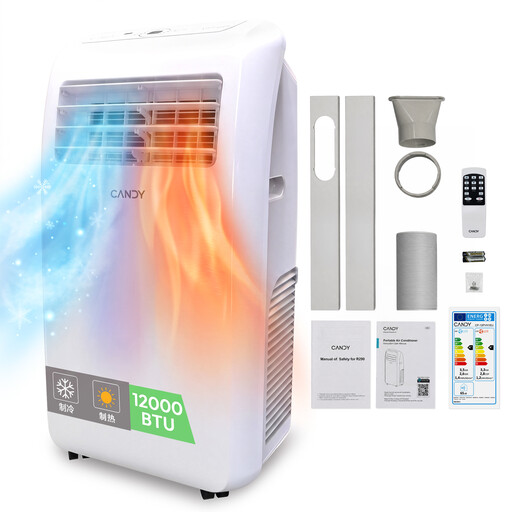
Why this choice suits this profile: This reversible model is aimed at households that want a single unit for summer and cooler periods alike. It includes a remote control, a timer and a window kit.
The cooling and heating capacities are detailed separately, as are the EER and COP values. The spec sheet also states the claimed room coverage areas.
Cooling power of 3.5 kW, heating of 3.3 kW, A+ energy rating claimed for both functions and dehumidification up to 33.6 L/day.
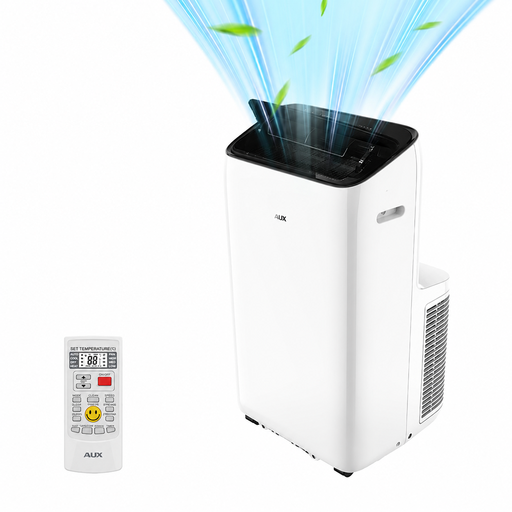
Why this choice suits this profile: With a claimed airflow of 450 m³/h, Wi-Fi, a remote control and a 24-hour timer, it’s aimed at living rooms, offices and regularly occupied spaces.
The spec sheet mentions 64 dB, even though the product has a night mode. That’s a useful detail for reserving this unit for users who can tolerate a clearly measurable noise level.
Three modes, washable filter, R290 refrigerant, castors and a carry handle. The window kit is included according to the product spec.
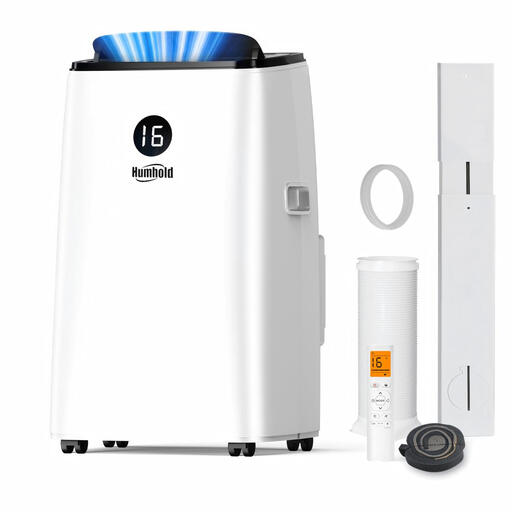
Why this choice suits this profile: Its sleep mode, claimed at under 48 dB, its timer and its castor-mounted design can suit a bedroom or an office used for several hours a day.
The sealing kit, exhaust hose and drainage hose are all included in the box. The spec sheet also states the required clearance distances and filter maintenance.
12000 BTU capacity, three functions, airflow of 380 m³/h, R290 refrigerant and dehumidification claimed up to 42 L/day.
We’ve put together a complete, real-time updated selection of products that meet these strict criteria and European safety requirements.
It depends on the power consumption, the number of hours of use, the temperature you set and your home’s insulation. To get an estimate, multiply the electrical power in kW by the usage time, then by your supplier’s rate. A sensible temperature setting and a properly sealed window help to limit losses.
The window needs to let the exhaust hose pass through, but it doesn’t have to stay wide open. A window kit or sealing device limits hot air from coming back in. While cooling, keep other windows and the room door closed.
It varies depending on build quality, how often you use it and how well you maintain it. Cleaning the filters, not blocking the grilles and storing the hose properly at the end of the season all help to preserve the unit. Before buying, also check the availability of spare parts and the warranty terms.