
Livraison le jour même ou le lendemain

Qualité garantie

Débloquez vos offres de bienvenue: Livraison GRATUITE | Jusqu'à -80 % | 30 jours d'essai gratuits à JoyPlus
Téléchargez l'application
A portable air conditioner lets you cool a bedroom, office or living room without any permanent installation work. Whether you’re a tenant, someone working from home, or a homeowner who wants to move the unit from room to room, this format offers welcome flexibility compared to a fixed system. But you need to look beyond the marketing claims to choose a model that’s genuinely right for you.
Three mistakes crop up time and again:
So before you order, take a close look at the area you need to cool, the power rating, installation constraints, noise levels, and the features that will genuinely be useful to you.
BTU stands for the cooling capacity of the unit. As a rough guide, the power levels available typically cover the following uses:
These floor areas are guidelines provided for the products. A room in the loft, one with large patio doors, or a south-facing space may need more power. Conversely, an oversized unit in a small bedroom is likely to cycle on and off repeatedly, while taking up unnecessary floor space.
A single-hose portable air conditioner usually needs to vent hot air outside. The hose should be kept as straight as possible, without sharp bends. Also, place the unit on a stable surface and leave enough space around the air intake and outlet grilles.
A portable air conditioner with a window kit makes setup easier, but check that the supplied kit fits your window type: sliding or casement, the dimensions available, and whether you can close the seal properly. To replace a worn accessory or improve the seal, a window seal strip for a portable air conditioner can make all the difference. Lengths of 3 and 4 metres cover most setups:
For a bedroom or office, compare the noise level in decibels rather than relying on phrases like “ultra-quiet”. The Humhold models claim under 49 dB for the 7,000 BTU version, under 51 dB for the 9,000 BTU version, and under 48 dB in night mode for the 12,000 BTU version. As always, the actual level depends on the operating mode you select.
A 3-in-1 unit typically combines cooling, fan and dehumidification. A portable air conditioner with a dehumidifier can be handy in a damp room, but you may still need to empty its tank when humidity is high or when using the dehumidification mode.
The refrigerant R290 is used in several models in this selection. This gas is employed in some domestic air conditioning units. Never puncture the refrigerant circuit and always follow the manufacturer’s instructions carefully.
A remote control, a 24-hour timer or Wi-Fi make the unit more convenient to use, but these extras won’t compensate for a poorly chosen power rating or an installation that lets hot air back in. A reversible air conditioner can also provide heating in the mid-season, provided this function is clearly stated in the model’s specification sheet.
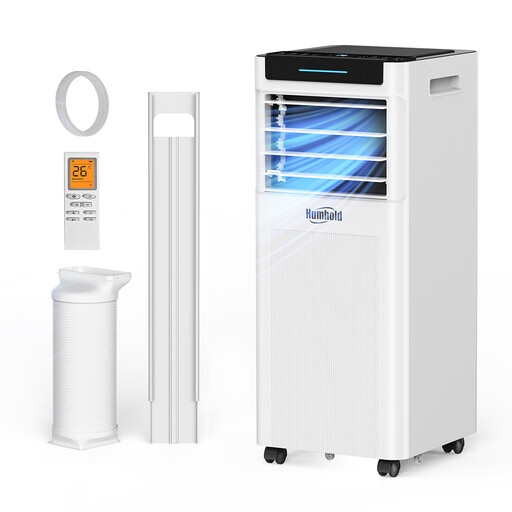
Why this model suits this profile: Its compact size and castors make it a practical choice for a bedroom, small home office, or a home where the unit needs to be moved around regularly.
Its stated 2.0 kW capacity and included window kit help you avoid choosing an unnecessarily powerful unit or having to buy exhaust accessories straight away.
Cooling, fan and dehumidification, remote control, 24-hour timer and R290 refrigerant.
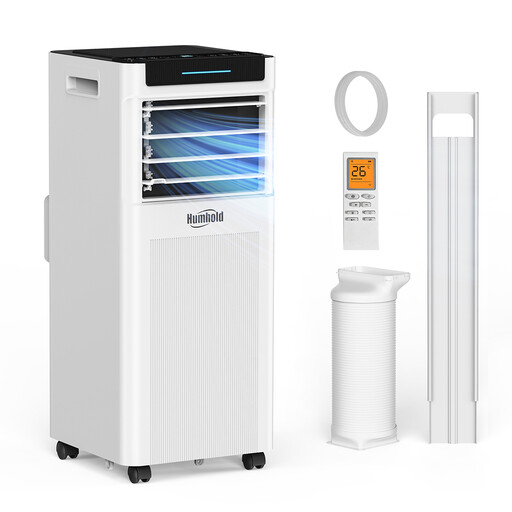
Why this model suits this profile: With its 2.6 kW output and night mode, it meets the needs of a home office or a room of up to around 30 m², depending on insulation.
The stated level of under 51 dB in night mode, plus the remote control and timer, reduce the need for adjustments during work or rest hours.
Three modes, washable filter, automatic evaporation under normal conditions and window kit supplied.
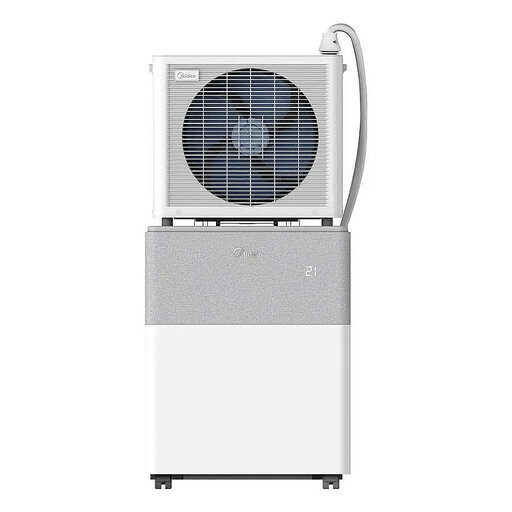
Why this model suits this profile: This reversible split-type air conditioner is designed for larger spaces up to around 42 m² and offers a heating function as well as cooling.
The specification sheet separates the noise levels, from 39 to 59 dB(A), and details the dimensions and weight of both the indoor and outdoor units.
12,000 BTU power, heat pump heating, dehumidification, Wi-Fi, silent mode and window kit included.
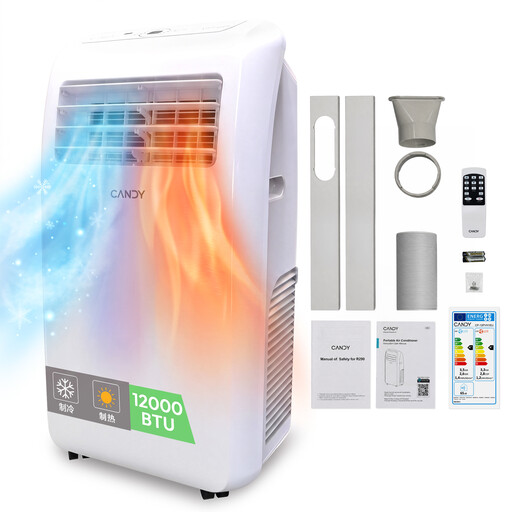
Why this model suits this profile: Its four modes can suit a living room, a professional space, or a home that’s occupied all year round.
The specification sheet states the cooling and heating capacities, the stated consumption per hour, and the kit’s compatibility with sliding windows.
Cooling, heating, fan and dehumidification, A+ energy rating, 24-hour timer and remote control.
We’ve put together a comprehensive, real-time list of products that meet these demanding selection criteria and European safety standards.
Place the unit near a window, on a level floor, keeping the recommended clearance around the air intakes and outlets. Plug it into an earthed socket and avoid extension leads or multi-socket adaptors if the manual advises against them.
Clean the washable filter regularly, then let it dry completely before putting it back. In very humid conditions, keep an eye on the indicator that shows the tank is full and use the drainage hose provided. If the unit has been transported on its side, wait for the time stated in the manual before switching it back on.
Energy consumption varies depending on the unit’s power rating, its energy class, the temperature you set, the insulation of your home, and how long you use it. To get an estimate, check the power consumption in watts, multiply it by the number of hours of use, then multiply by the price per kilowatt-hour on your electricity tariff.
A kit or seal isn’t essential in every setup, but it does limit hot air coming in through the opening. Start by checking what’s in the box and the dimensions of your window. A 3 or 4 metre seal strip can complete the installation if it’s compatible with your window type.
This depends on how often you use it, how well you maintain the filter, whether you respect the clearances needed for ventilation, and how you store it out of season. Regular cleaning, handling the unit without tilting it excessively, and following the safety instructions all help to keep it working well.