
Livraison le jour même ou le lendemain

Qualité garantie

Débloquez vos offres de bienvenue: Livraison GRATUITE | Jusqu'à -80 % | 30 jours d'essai gratuits à JoyPlus
Téléchargez l'application
A portable air conditioner can cool a bedroom, living room or office without the need for any permanent installation work. It’s a particularly practical solution for tenants, remote workers and anyone living in a flat where fitting a fixed unit simply isn’t an option. But two models with a similar power rating can offer a very different level of comfort day to day.
So before you buy a portable air conditioner, it’s worth looking beyond the simple BTU figure. Here are the criteria you need to examine to avoid nasty surprises and choose a unit that suits your room, your window and your lifestyle.
The maximum room size quoted by the manufacturer is a guide, not a universal guarantee. A room under the roof, facing south or poorly insulated will need more power than a shaded, well-insulated bedroom.
A 9000 BTU portable air conditioner is generally suitable for a medium-sized room, while a 12000 BTU portable air conditioner will be more comfortable in a large space or one that’s particularly exposed to heat. Also consider ceiling height, the number of people in the room and any appliances that generate heat.
A single-hose unit can only work properly if the hot air is vented outside. If the hose is poorly installed, some of the heat will return to the room and the cooling performance will drop.
So check that the unit comes with a window kit compatible with your window type. Models supplied with a panel, hose and sealing components are easier to set up. However, it’s still essential to measure your window before placing your order.
A portable air conditioner contains a compressor and a fan – even a model marketed as a quiet air conditioner will produce a noticeable noise when running. Noise levels given in decibels should be compared under similar conditions, distinguishing between normal operation and night mode.
In a bedroom, a sleep mode, a timer and a reduced fan speed can prove far more useful than a vague promise of silence.
Cooling capacity is expressed in BTU/h or kilowatts. As a rough guide, models from 7,000 to 9,000 BTU are generally intended for a bedroom, office or medium-sized room. Units of 12,000 BTU are better suited to a large living room or a space that’s harder to cool.
Airflow, given in m³/h, gives you an idea of air circulation, but it isn’t enough on its own to predict the comfort you’ll achieve. The insulation, the seal of the window kit and the position of the unit all play a decisive role too.
A 3-in-1 air conditioner typically combines cooling, fan and dehumidification. The dehumidifier mode can improve the feeling of comfort on humid days, but it won’t replace a dedicated unit designed to tackle a structural damp problem.
A remote control, a 24-hour timer, a clear display and automatic oscillation make using the unit much simpler. A reversible air conditioner adds a heating function, but check its heating capacity and energy rating separately.
Class A or A+ provides a standardised indication of energy efficiency. However, actual consumption depends on how long you use the unit, the temperature you set and your home’s insulation. Also check the power consumption in watts and the EER where these are given.
The R290 refrigerant is used in several of the units featured here. This is a flammable refrigerant – never pierce the circuit and follow the manufacturer’s instructions to the letter. To install the unit, place it on a stable surface, leave the recommended ventilation space and plug it into a suitable socket. Avoid using an extension lead or multi-socket adapter if the manual advises against it.
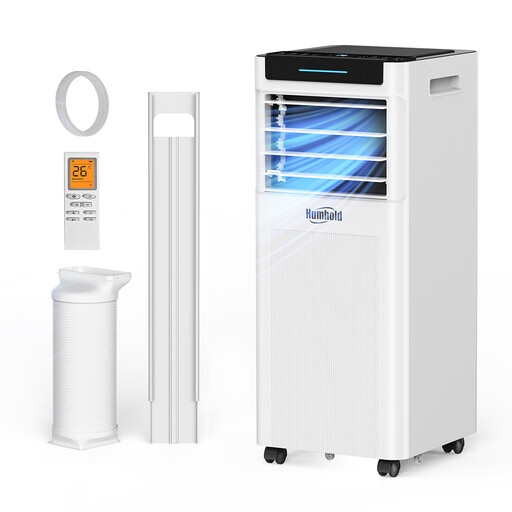
Why this choice suits this profile: With its 2.0 kW, weight of 19.7 kg and castors, this model is suitable for a bedroom or office of up to 28 m², depending on the room’s characteristics.
The window kit, exhaust hose and self-evaporation system make setup simple and reduce the need for daily draining.
Cooling, fan and dehumidification, remote control, night mode rated below 49 dB and a 24-hour timer.
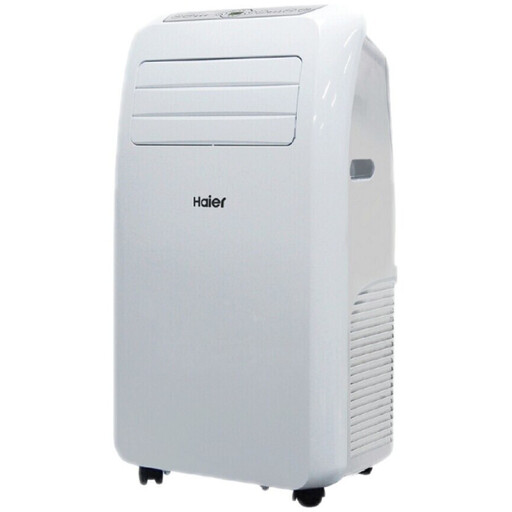
Why this choice suits this profile: With its 2.6 kW output and stated coverage of up to 25 m², this model is a consistent option for a living room or medium-sized home office.
The spec sheet gives an airflow of 350 m³/h, a noise level of 54 dB and a dehumidification capacity of 0.9 L/h – all data you can compare before buying.
Class A, R290 refrigerant, automatic oscillation, remote control and a digital timer adjustable up to 24 hours.
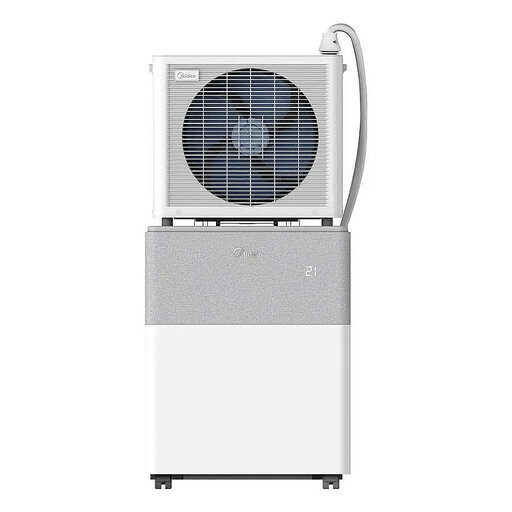
Why this choice suits this profile: This portable split system is aimed at those looking for 3.5 kW of power, a heating function and smart control for a room stated at up to 42 m².
The connection between the units and the window kit are supplied – but do check the available space and total weight before opting for this format.
Cooling and heating, dehumidification and fan modes, Wi-Fi, remote control, quiet mode and a stated SEER rating of 6.1.
We’ve put together a comprehensive, real-time selection of products that meet these exacting criteria, while complying with European safety regulations.
It depends on the power consumption, how long you use it, the temperature you set and your home’s insulation. The energy rating and EER allow you to compare models, but they aren’t enough to calculate your bill directly. For an estimate, multiply the power consumption in kilowatts by the number of hours of use, then by your supplier’s rate.
Yes. Most single-hose models use a hose connected to a window kit. Installation usually doesn’t require any permanent drilling, but the window opening must be compatible with the accessories supplied. A tilt-and-turn, sliding or particularly narrow window may need a specific sealing solution.
It depends on how often you use it, how well you maintain the filters, how you store it over winter and whether you follow the electrical safety instructions. Regular cleaning, never moving the unit while it’s running and allowing the compressor to stabilise after each move all help to extend its life.