
Livraison le jour même ou le lendemain

Qualité garantie

Débloquez vos offres de bienvenue: Livraison GRATUITE | Jusqu'à -80 % | 30 jours d'essai gratuits à JoyPlus
Téléchargez l'application
A portable air conditioner can cool a bedroom, living room or office without the need for major installation work. It’s a particularly practical solution for tenants who can’t install an outdoor unit. However, there are a few often-overlooked details to watch out for: noisy appliances, excessive energy consumption, or units that aren’t very user-friendly day to day.
Before comparing models, it’s worth looking beyond the list of features printed on the box.
A 9000 BTU portable air conditioner can suit a room of 14 to 25 m², depending on its insulation, sun exposure, ceiling height and the number of occupants. A south-facing room with lots of windows may need more power than a shaded bedroom of the same size.
The area stated by the manufacturer should be treated as a rough guide, not an independent guarantee. In a typical UK home, also make sure that doors and windows can stay relatively closed while the unit is running.
An air conditioner without an outdoor unit isn’t necessarily free of installation requirements. Monobloc models usually use a hose to vent hot air outside. Without this extraction, the heat released back into the room significantly reduces cooling efficiency.
Check the hose length, whether a drainage kit is included, and whether you can set up an outlet through a window. For tenants, a window kit that avoids permanent alterations can be ideal, as long as it complies with your tenancy agreement.
The stated noise level depends on the mode used and the measurement method. A unit described as quiet can be noticeably louder when running at full power. Decibel values should therefore be compared under similar conditions.
For a bedroom, look at the minimum noise level, night mode, timer and the ability to schedule the unit to switch off. A quiet portable air conditioner isn’t necessarily silent, but certain settings can reduce disturbance during sleep.
For a room of 14 to 25 m², models with 9000 BTU/h (around 2.6 kW) are a common choice. The airflow rate tells you how much air the unit moves, but on its own it doesn’t determine how quickly the room will cool.
Also check:
A portable air conditioner with dehumidifier can be useful in a damp room. However, bear in mind that the stated capacity in litres per day varies depending on the ambient temperature and humidity level.
The energy class A label corresponds to a specific classification. It should be considered alongside the power consumption, the energy label and the test conditions. Two units with the same cooling capacity can use different amounts of electricity depending on their efficiency and how they’re used.
To keep your bills down:
Heating, fan-only mode, dehumidification and Wi-Fi connectivity can all be useful, provided you’ll actually use them. A reversible portable air conditioner can come in handy during cooler periods, while a smart model lets you adjust settings remotely, depending on the app’s compatibility.
A remote control is still handy when the unit is placed near a sofa or bed. Bear in mind, though: Wi-Fi connectivity doesn’t automatically mean a physical remote is included. Always check the product specification.
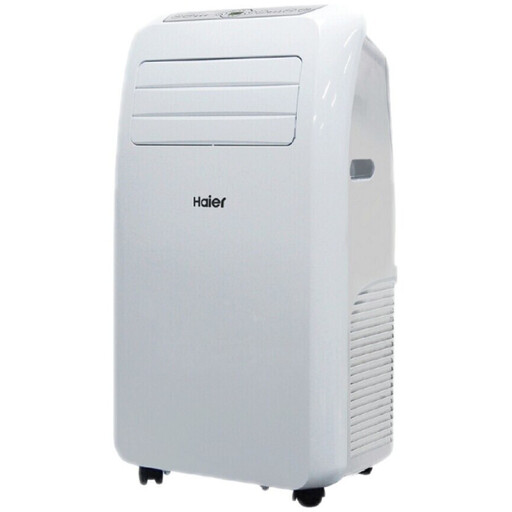
Why this suits this profile: Its portable design and four castors make it easy to move from a bedroom to a home office. It offers cooling, fan and dehumidification modes for versatile use.
The spec clearly states 9000 BTU/h power, class A efficiency, a noise level of 54 dB and a recommended room size of up to 25 m². This makes for a more concrete comparison.
Maximum airflow of 350 m³/h, 24-hour timer, remote control included and automatic condensate drainage, according to the product spec.
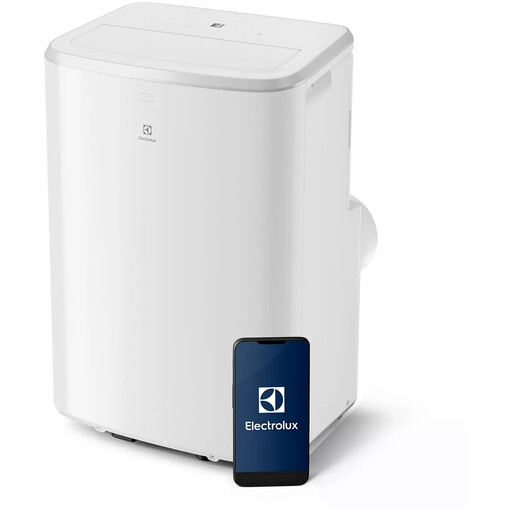
Why this suits this profile: This model combines cooling, heating, fan and dehumidification in a single monobloc unit, designed for those who want year-round versatility.
The spec clearly distinguishes between Wi-Fi connectivity and a physical remote control, the presence of which isn’t stated. The drainage kit and exhaust hose are mentioned for installation.
Cooling capacity of 9000 BTU/h, heating output of 2.6 kW, airflow of 380 m³/h, class A efficiency and dehumidification stated at up to 28 L/24 h.
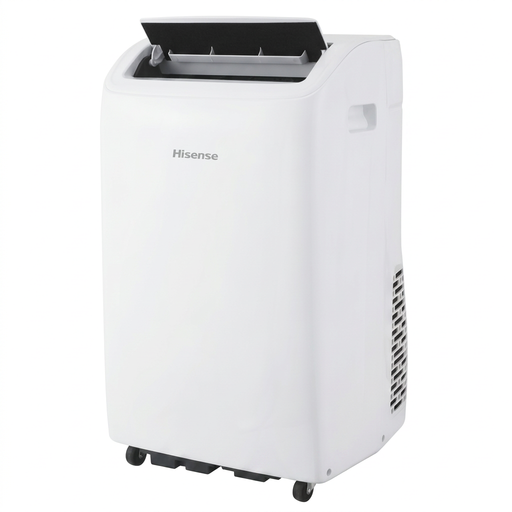
Why this suits this profile: Wi-Fi control, voice commands and night mode are aimed at those who want to manage their unit remotely, in a bedroom or small space.
The spec states that installation requires no outdoor unit, while clarifying that the hose must vent hot air outside. This nuance prevents the misconception that it’s a completely vent-free appliance.
Cooling power of 2.6 kW, heating output of 2.4 kW, class A cooling efficiency, 24-hour timer and a stated minimum noise level of 50 dB.
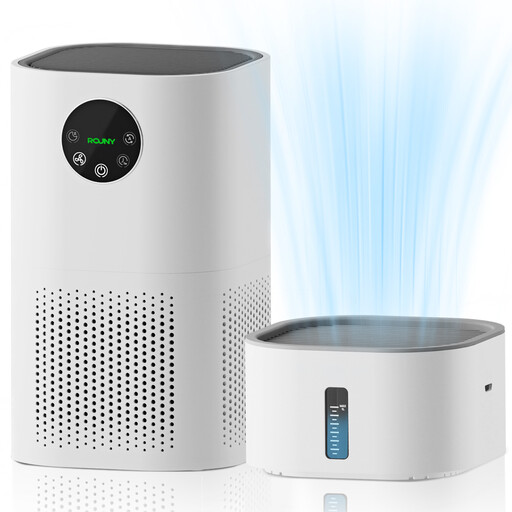
Why this suits this profile: This purifier with humidifier can complement an air conditioner in a bedroom, office or space where pets live. However, it does not provide cooling.
The spec clearly separates the filtration and humidification functions. The H13 filter, CADR airflow of 150 m³/h and stated coverage of 20 to 50 m² should be treated as product features, not medical claims.
Night mode stated at ≤ 25 dB, four fan speeds, air quality indicator and a timer of 2, 4 or 8 hours. The filter should be replaced every 6 to 8 months depending on use, according to the spec.
We’ve curated a comprehensive, real-time updated list of products that meet these exacting criteria, as well as European safety regulations.
Place the portable air conditioner on a level floor, away from walls and curtains. The hose should be as short and straight as possible to minimise losses. Never block the air intakes or outlets.
Clean the filters according to the manufacturer’s instructions, and unplug the unit before any maintenance. If your model uses R290 refrigerant, never puncture the cooling circuit and strictly follow the safety instructions in the manual.
If you use a purifier, remember to replace its filter too. In a home with a dog or cat, a HEPA filter for pets can trap certain particles and odours, depending on its design. Always check exact compatibility before buying a replacement filter, especially when it’s intended for a specific purifier model.
Yes, in most cases. ‘No outdoor unit’ usually means the compressor is built into the indoor unit. A hose is still needed to vent hot air outside.
This depends on how often you use it, how well you maintain it, how you store it over winter, and whether you follow the manufacturer’s instructions. Cleaning the filters, not blocking the grilles and avoiding sudden movements while the unit is running all help to extend its lifespan.
The cost depends on the power consumption, how long you use it, your electricity tariff and your home’s insulation. The energy rating gives you a starting point, but actual consumption should be estimated based on the wattage and the number of hours of use.