
Livraison le jour même ou le lendemain

Qualité garantie

Débloquez vos offres de bienvenue: Livraison GRATUITE | Jusqu'à -80 % | 30 jours d'essai gratuits à JoyPlus
Téléchargez l'application
A portable air conditioner lets you cool a bedroom, living room or home office without building work or installing a fixed unit. It is a real advantage for tenants and anyone who wants to move the appliance around as needed. However, certain details, often buried at the bottom of product specifications, can turn a great deal into a nuisance to use every day.
Before comparing models, focus on three criteria: power suited to the room, effective hot-air extraction and a realistic noise level. Heating, dehumidification and Wi-Fi are useful, but they come afterwards.
A 12000 BTU portable air conditioner is not automatically suitable for every large room. Insulation, exposure to sunlight, ceiling height and the number of occupants all directly affect how cool the room feels. Conversely, a 7000 BTU portable air conditioner may be perfectly adequate for a bedroom or small home office, but struggle in a very sunny living room.
The room sizes stated by manufacturers are only guidelines. Also compare the power output in kilowatts, airflow rate and the operating conditions used in the technical specifications.
A portable unit expels hot air through a hose. If this extraction is poorly installed, the heat returns to the room and performance drops dramatically. An air conditioner with a window kit makes installation easier, but check that the system is compatible with your opening: vertical sliding window, horizontal sliding window or a more unusual configuration.
The hose must not be sharply bent, crushed or extended with an accessory not approved by the manufacturer. Also leave enough space around the appliance to allow air to circulate properly.
A quiet air conditioner still contains a compressor and a fan. The noise level in decibels must therefore be understood in relation to the mode being used: night mode, minimum speed or normal operation. A figure below 49 or 51 dB may apply to a specific setting rather than every situation.
For a bedroom, prioritise sleep mode, a timer and a reduced fan speed. Place the appliance on a stable floor to minimise vibrations.
Here are some useful guidelines to compare with the layout and characteristics of your home:
An oversized appliance reaches the desired temperature quickly, but may then operate in short cycles. Conversely, a model that is not powerful enough will run for a long time without providing the expected level of comfort.
A 3-in-1 air conditioner generally combines cooling, fan and dehumidification functions. Fan mode circulates the air without activating the compressor. Dehumidification mode can be useful when the air is humid, but it does not replace suitable ventilation for the property.
The amount of water extracted, expressed in litres per day, depends on the temperature and humidity level. In dehumidification mode, you may need to empty the tank even when the appliance has an auto-evaporation system.
When comparing a low-consumption air conditioner, look at the energy class, rated power input and, where provided, the EER or COP values. However, the energy class alone is not enough to estimate the actual cost: this also depends on how long the appliance is used, the selected temperature and the price of electricity.
The models featured here use R290 refrigerant, as stated in their product specifications. Follow the manufacturer’s recommendations: connect the appliance to an earthed wall socket, do not use an extension lead or multi-socket adaptor where this is advised against, and clean the filter at the recommended intervals.
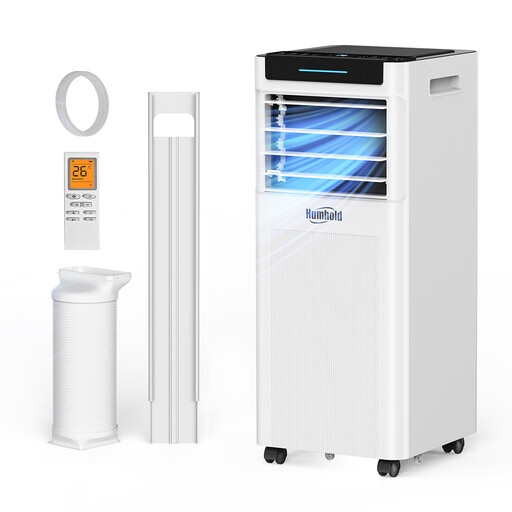
Why this choice suits this type of user : Weighing 19.7 kg and fitted with castors, it is suitable for a bedroom, home office or small room of up to 28 m², depending on the property’s characteristics.
The 7000 BTU output is paired with a clear recommended room size, and the window kit is included, avoiding the need for additional purchases.
Cooling, dehumidification and fan modes, sleep mode rated below 49 dB, 24-hour timer and washable filter.
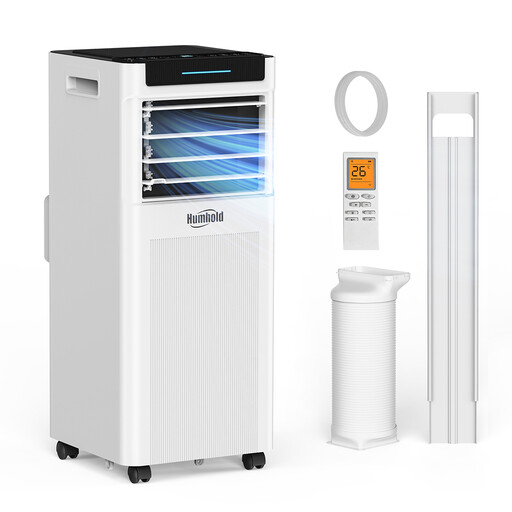
Why this choice suits this type of user : Its 2.6 kW output and recommended coverage of up to 30 m² make it suitable for a compact living room, spacious bedroom or home office used for several hours each day.
The stated noise level of below 51 dB in sleep mode should be compared with the settings used day to day. The hose and window kit are included.
Three modes, dehumidification of up to 28 L/day, 24-hour timer, remote control and washable high-density filter.
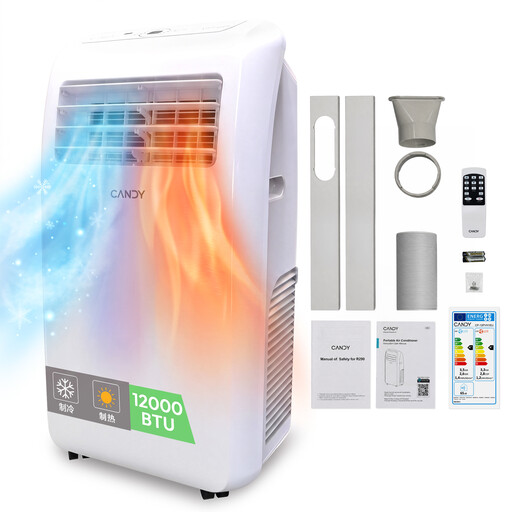
Why this choice suits this type of user : This model provides both cooling and heating, so it can be used all year round in a room of up to 35 m², according to the technical specifications.
The specifications detail the cooling and heating outputs, as well as the stated A+ rating for both functions. The window kit can be positioned in two ways.
Four modes, stated airflow of 400 m³/h, 24-hour timer, remote control and dehumidification of up to 33.6 L/day.
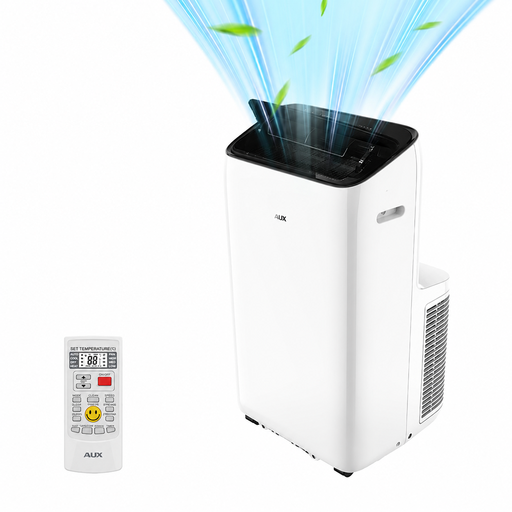
Why this choice suits this type of user : Wi-Fi, remote control and the stated airflow of 450 m³/h make it easier to manage a frequently occupied room, provided you can accommodate its 32 kg weight.
The Wi-Fi app complements the physical controls. Auto-evaporation and the timer can also reduce the need for intervention during extended use.
Cooling, dehumidification and fan modes, stated A energy rating, washable filter and window kit included. The noise level indicated in the technical specifications is 64 dB.
We have compiled a comprehensive, real-time updated selection of products that meet these demanding criteria and European safety standards.
The cost depends on the rated power input, the number of hours it is used, the selected temperature and the price per kilowatt-hour. To estimate it, multiply the consumption shown in kW by the usage time, then by your electricity tariff. A timer and a sensible target temperature can help avoid unnecessary operating hours.
Yes. Most models expel hot air through a window using a sealing kit. However, you need a compatible opening and must keep the hose completely unobstructed. Without an outlet to the outside, cooling performance drops significantly.
This depends on build quality, frequency of use, filter cleaning and off-season storage. Store the appliance in a dry place, follow the draining instructions and never attempt to work on the refrigerant circuit yourself. Before buying, also remember to check the length of the warranty and the contact details for the after-sales service.