
Livraison le jour même ou le lendemain

Qualité garantie

Débloquez vos offres de bienvenue: Livraison GRATUITE | Jusqu'à -80 % | 30 jours d'essai gratuits à JoyPlus
Téléchargez l'application
Summer is here, and with it, heatwaves are turning our apartments into virtual ovens. For those without central air conditioning, the portable air conditioner stands out as the simplest and most accessible solution. But be warned: the market is flooded with often misleading marketing claims. To ensure you invest in a unit that lives up to its promises, you need to know how to decode the labels and sidestep the traps.
Our mission is to help you see things more clearly. Let's break down the mistakes to avoid and the essential criteria to check before you make a purchase.
To avoid making a mistake, rely on concrete data. Here are the three key points you absolutely must verify.
An air conditioner's cooling power is measured in BTU (British Thermal Unit). The higher this value, the larger the area the unit can cool. To put it simply, here are some guidelines:
Choosing the right power guarantees optimal comfort without sending your electricity bill through the roof.
Noise is the Achilles' heel of a monoblock air conditioner. The sound level is expressed in decibels (dB). Here are some benchmarks to help you navigate:
A modern portable air conditioner does more than just cool. 3-in-1 air conditioner models offer fan and dehumidifier functions—valuable features for circulating air or combating humidity, even outside of summer.
Finally, take a look at the energy label. A Class A portable air conditioner ensures controlled electricity consumption, a crucial factor for your wallet. On the environmental side, most recent models use R290 refrigerant, which is much less polluting than its predecessors.
To help you make your choice, here are a few models selected based on the criteria we've just discussed.
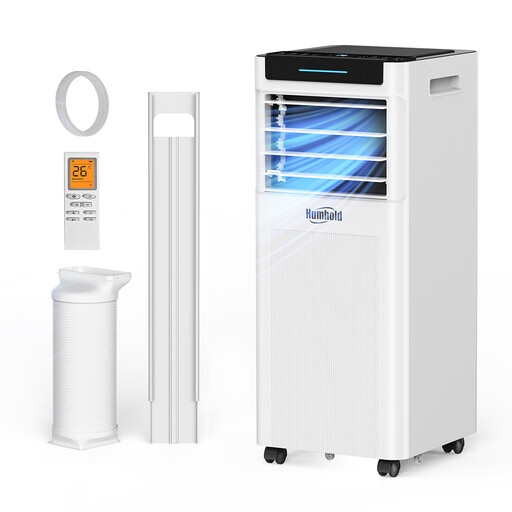
Why it stands out: With its 7,000 BTUs, it's perfectly sized to cool a bedroom or office up to 25 m? (270 sq ft). Its compact design is a bonus for saving space. It's the ideal, hassle-free solution for a first-time buyer.
This model is upfront about its capabilities, advertising a power level suitable for a specific area. Most importantly, its Night mode, operating under 49 dB, meets the number one requirement for a bedroom: silence.
Truly quiet Night mode (<49 dB) and an auto-evaporation system so you (almost) never have to empty the condensate tray.
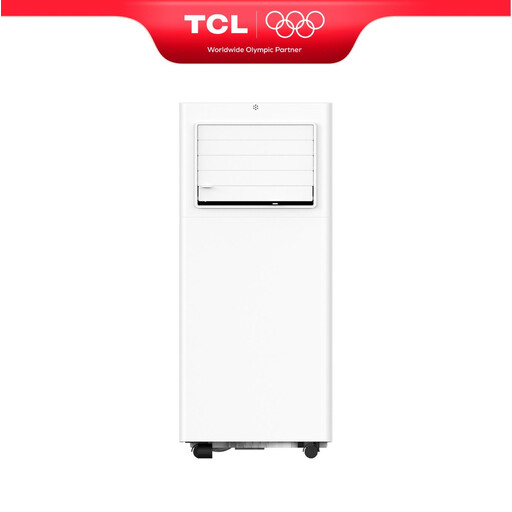
Why it stands out: The perfect compromise for effectively cooling a living room or large bedroom (up to 35 m? / 375 sq ft). Its 9,000 BTUs ensure a rapid drop in temperature, while its 3-in-1 versatility makes it useful all year round.
No empty promises: this model highlights concrete benefits like its Class A energy rating and "Sleep" mode. These are tangible, reassuring arguments, a far cry from flashy marketing.
Class A energy rating for a controlled electricity bill and 3-in-1 versatility (AC, Fan, Dehumidifier) for near-constant use.
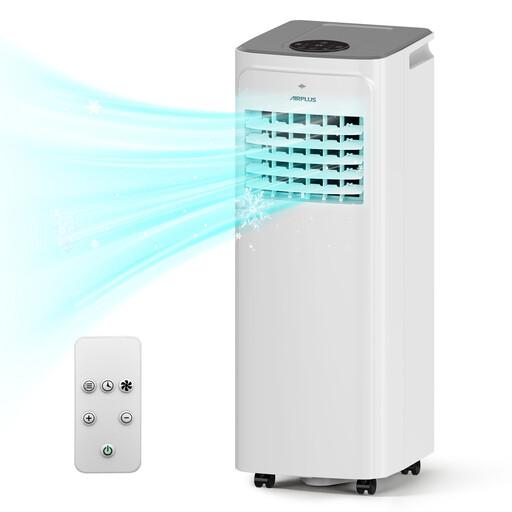
Why it stands out: More than just a summer air conditioner, this 4-in-1 model is reversible thanks to its heating function. It transforms into a true year-round comfort ally, thus fully maximizing your investment.
It avoids the trap of being a seasonal appliance that spends 9 months a year in the basement. With its heating function, it remains useful even when the cold returns, making it a much smarter and more sustainable investment.
4-in-1 reversible function (with heating) for 365 days of comfort and a Class A energy rating for optimal performance in the summer.
If our selection doesn't check all your boxes, don't worry. Other solutions exist to keep you cool. Explore our full range to find the perfect unit.
Most recent models feature an auto-evaporation system that expels the collected moisture (condensate) with the hot air. Under normal conditions, you will very rarely need to empty the tray manually. However, in dehumidifier mode or in a very humid environment, you will need to empty it from time to time. Don't worry, an indicator light will alert you when the tank is full.
It all depends on its energy class, its power, and, of course, your usage. A Class A portable air conditioner is a guarantee of controlled consumption. A few tips to lower the bill: use the timer to target the hottest hours, properly seal the room (doors and windows closed!), and remember to clean the filters regularly so the unit can breathe properly.
With regular maintenance (cleaning filters, storing it in a dry place during winter), a good quality portable air conditioner has a lifespan of 5 to 10 years. Its longevity will depend on the quality of its components (especially the compressor) and the diligence of your maintenance.