
Livraison le jour même ou le lendemain

Qualité garantie

Débloquez vos offres de bienvenue: Livraison GRATUITE | Jusqu'à -80 % | 30 jours d'essai gratuits à JoyPlus
Téléchargez l'application
When the mercury soars, a portable air conditioner 9000 BTU can prove far more flexible than a fixed installation. You can move it from room to room, it generally doesn’t require major building work, and it fits easily into a bedroom, office or small, well-insulated space.
But be wary of the promises on product listings. A unit that looks powerful on paper can quickly become a nuisance if the window kit isn’t suitable, the hot air exhaust is poorly thought out, or the noise keeps you awake at night. Here are the criteria to check before buying a portable air conditioner.
BTU figures indicate cooling capacity, but they don’t tell the whole story when it comes to comfort. Insulation, sun exposure, ceiling height, the number of occupants and the presence of electrical appliances can all make a significant difference.
A portable air conditioner 9000 BTU can suit a small to medium-sized room. However, always check the recommended room size from the manufacturer and consider your home’s layout. A room that gets a lot of sun or is poorly insulated will need a higher capacity.
A portable air conditioner isn’t just a fan on wheels. In cooling mode, it has to push hot air outside. A hose that’s too long, has too many bends, or isn’t properly secured will slow down airflow and can noticeably reduce the unit’s effectiveness.
The window kit also needs to be compatible with your window type: vertical sliding, horizontal sliding, or a different configuration. Before you order, measure the available space and check exactly what’s included in the box.
An energy rating of A is a useful indicator, but on its own it won’t tell you how much the unit will cost to run. That depends on the electrical power draw, how long you use it, the temperature you set, and your energy supplier’s rate.
To estimate the running cost, look at the power consumption stated on the label or in the technical specifications. A timer and a sleep mode also let you tailor operation to your schedule, rather than leaving the unit running unnecessarily.
For everyday use, choose a unit whose capacity is clearly stated in BTU/h or kilowatts. A 3-in-1 air conditioner typically offers the following functions:
An air conditioner with dehumidifier can be useful in a poorly ventilated room or during humid spells. However, this function doesn’t replace proper ventilation, and you may need to empty the water tank when it’s full.
The noise level, measured in decibels, deserves your full attention, especially if the unit is going in a bedroom. The noise you actually hear also depends on the distance between the air conditioner and the bed, the fan speed, and the type of flooring.
A sleep mode can limit sudden changes in operation and automatically adjust certain settings. Still, it’s better to check the noise level stated by the manufacturer than to rely on a marketing promise.
A unit designed to be moved around needs stable castors and a cable long enough to reach a suitable socket. A remote control makes it easy to adjust settings from your bed or desk. A 24-hour timer lets you programme a delayed start or stop.
Also check the following points:
Never block the air intakes or outlets. Unplug the unit before cleaning it, and don’t use an extension lead or multi-socket adapter if the manual says not to.
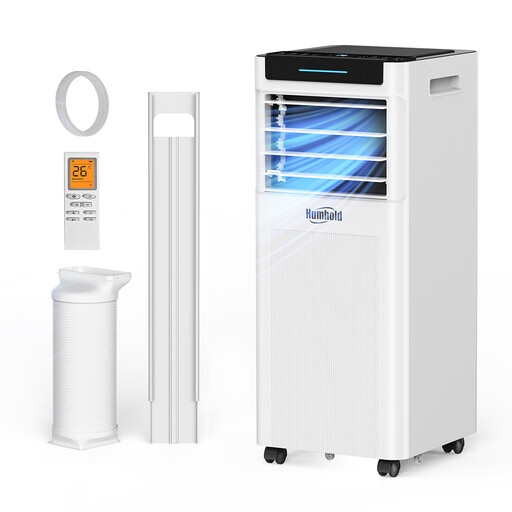
Why this choice suits this profile: its compact size and three modes make it ideal for a bedroom or office where every centimetre counts.
The window kit, remote control and 24-hour timer are all included, so you don’t need to buy extra accessories separately.
7000 BTU power, three fan speeds, sleep mode and washable filter.
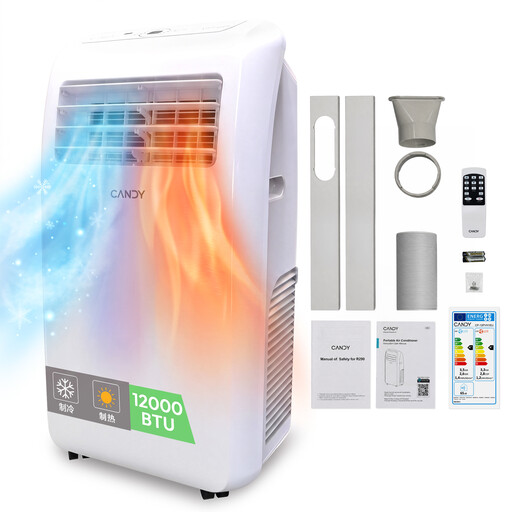
Why this choice suits this profile: this model is for those who want a unit that can cool, ventilate, dehumidify and heat.
Its dimensions, power and consumption data are all detailed, making it easy to compare before you buy.
12,000 BTU capacity, A+ energy rating, remote control, window kit and heating function.
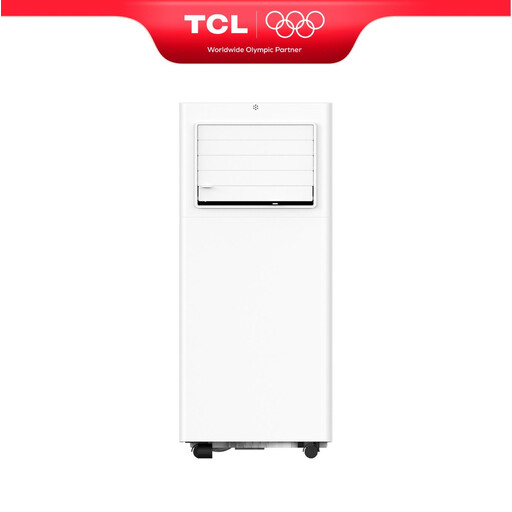
Why this choice suits this profile: its 9000 BTU capacity and dedicated functions make it suitable for regular use in a living room, bedroom or home office.
The manufacturer specifies a kit for sliding windows, a washable filter and two fan speeds – all things to check before choosing a portable model.
We’ve put together a comprehensive, real-time updated list of products that fully meet these strict selection criteria and European safety regulations.
The window needs to accommodate the exhaust hose, but it shouldn’t be left wide open. Use the supplied kit or a compatible sealing solution to limit hot air coming back in. The hose should be kept as straight as possible.
The cost depends on the unit’s electrical power draw, how long you use it, and the price per kilowatt-hour. To estimate it, multiply the power consumption in kilowatts by the number of hours of use, then by your tariff. Sleep mode and the timer can help reduce unnecessary running time.
It depends on build quality, how often you use it, and how well you maintain it. Clean the filter regularly, keep the grilles clear, and store the unit in a dry place when it’s not in season. Always follow the manual, especially regarding the refrigerant circuit and maintenance tasks.