
Livraison le jour même ou le lendemain

Qualité garantie

Débloquez vos offres de bienvenue: Livraison GRATUITE | Jusqu'à -80 % | 30 jours d'essai gratuits à JoyPlus
Téléchargez l'application
A flat tire at the worst possible time, a grimy computer keyboard, a patio buried under fallen leaves... The solution to these everyday hassles? The portable air compressor. Once confined to professional garages, this tool has become a multifunctional accessory for everyone. But with a jungle of available models, making the wrong choice is a real risk. To help you navigate this landscape, let's review the common pitfalls to avoid and the key criteria for finding the perfect device for your needs.
Marketing teams are experts at highlighting impressive numbers... which can sometimes hide disappointing real-world performance. Here are three red flags to watch out for to ensure you don't regret your purchase.
To make the right choice, ignore the marketing jargon and focus on the features that truly matter for your specific use case.
These two values are crucial and serve different needs.
The type of power source directly determines your freedom of action.
A good portable compressor is a true Swiss Army knife. The inclusion of a multifunction auto accessory kit is often a good sign. Ensure the package includes the essential nozzles for your activities: a needle for sports balls, conical adapters for air mattresses, and precision nozzles for dusting.
Rather than an endless catalogue, we've selected three models that meet specific needs, applying the criteria we've just discussed.
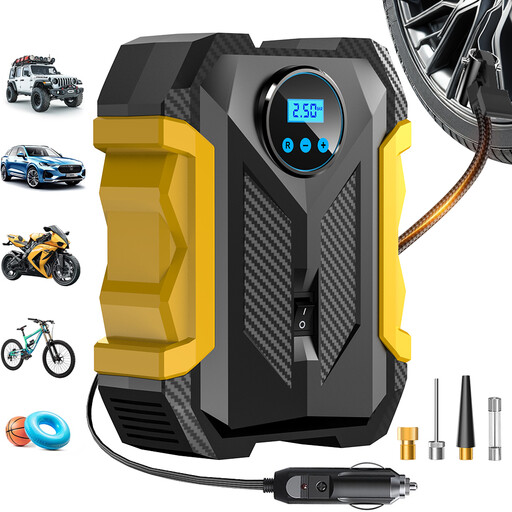
Why we chose it: The ideal companion to keep in your glove box. Its mission is clear: manage tire pressure (for cars, motorcycles, and bikes) under any circumstances, without ever worrying about a dead battery.
Its 12V power source via the cigarette lighter eliminates the risk of a dead battery. Its function is focused on inflation, ensuring its power is perfectly suited for the task.
Digital display for precise pressure, automatic shut-off, and a long 3m cord to easily reach all four tires.
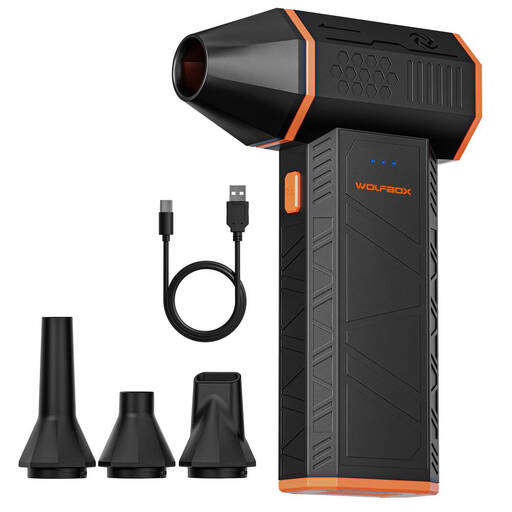
Why we chose it: Its specialty: dislodging dust from the tightest corners (keyboards, PC components, air vents...). It's the eco-friendly and cost-effective alternative to disposable canned air.
It doesn't rely on pressure but on high airflow (motor up to 110,000 RPM), which is what matters for dusting. It thus avoids the misleading spec sheet trap.
Cordless, rechargeable, and equipped with 3 adjustable speeds to adapt the power to the fragility of the surfaces being cleaned.
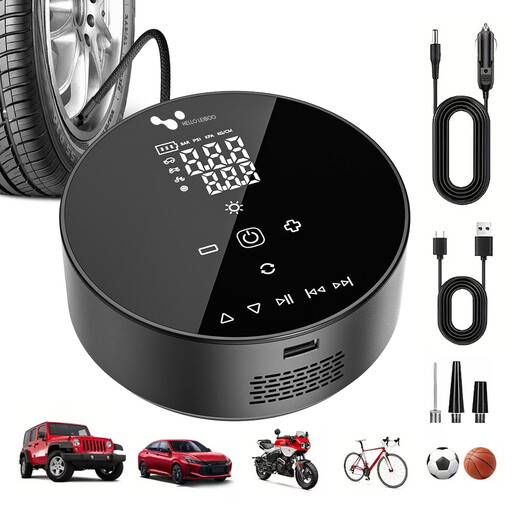
Why we chose it: For those who want to make every square inch of their trunk space count. It's an inflator, Bluetooth speaker, external battery (power bank) for your smartphone, and a flashlight all in one.
It bypasses the "incomplete kit" trap by integrating multiple functions into a single device, maximizing its utility and justifying its spot in your trunk.
Extreme versatility. The dual power option (battery or 12V) combines the freedom of cordless operation with the reliability of direct power from the vehicle.
Discover our full selection of products, all rigorously chosen based on our performance and safety criteria.
Pressure (bar/PSI) vs. Airflow (L/min): What's the difference? Imagine a stream of water. Pressure (bar/PSI) is the force of the stream, its ability to "push." This is crucial for inflating a tire. Airflow (L/min) is the amount of water coming out of the hose, which is what matters for cleaning a large area quickly. In short: high pressure for inflating, high airflow for blowing and cleaning.
Can a battery-powered compressor really inflate a car tire? Yes, absolutely. Provided you choose a model with a substantial battery (aim for at least 4000 mAh) and the ability to reach 7 to 8 bar (around 100-120 PSI). It will be perfect for a pressure top-up or a full reinflation in an emergency, but it will simply be a bit slower than a 12V model.
How do I maintain my air duster blower? Maintenance is minimal. Ensure the motor's ventilation grilles are kept clean to prevent overheating. If your model has a filter, clean it regularly. For battery-powered models, a golden rule: never store them completely discharged for long periods to preserve the battery's health.