
Livraison le jour même ou le lendemain

Qualité garantie

Débloquez vos offres de bienvenue: Livraison GRATUITE | Jusqu'à -80 % | 30 jours d'essai gratuits à JoyPlus
Téléchargez l'application
An underinflated tire isn't just an inconvenience: it's a genuine safety risk and a cause of increased fuel consumption. To solve this problem, the portable air compressor has quickly become an essential tool for many drivers, motorcyclists, and cyclists. However, the market is saturated with models making tempting promises that often hide deal-breaking flaws.
Before you buy, watch out for these common pitfalls:
To avoid these disappointments, here are the technical specifications that truly make a difference.
The power source determines how you'll use your device.
Technology has made inflation safer and simpler. Two features have become nearly essential.
The performance of a compressor is also measured by its ability to deliver air. The air flow rate, expressed in litres per minute (L/min), indicates the inflation speed. A rate above 20?L/min is good for a car tire. The maximum pressure (often around 150?PSI / 10?Bar) is generally sufficient for all common uses, from an electric bike pump to a car tire. Also, check for multiple nozzles to fit different valves (Schrader for cars, Presta for some bikes) and other inflatables (balls, air mattresses).
Every user has different needs. Here are a few options that cater to distinct user profiles while avoiding the pitfalls we've mentioned.
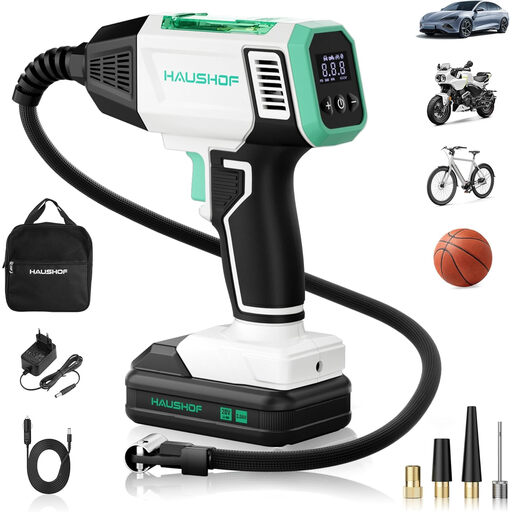
Why it's a great choice: Ideal for anyone seeking a reliable solution for occasional top-ups and emergencies without breaking the bank. Its dual power supply offers peace of mind: battery power for convenience, and the 12V cable as a foolproof backup plan.
It sidesteps the "phantom battery" pitfall by offering a 12V corded mode. If the battery is dead, the device remains fully functional, ensuring you're never caught off guard.
Power Versatility: Operates on its 2000 mAh battery or via the 4m 12V cable. The digital display and auto shut-off ensure precise inflation.
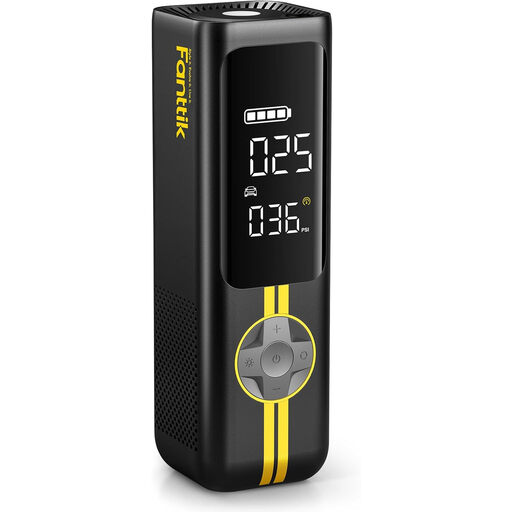
Why it's a great choice: Designed for those who regularly check their tire pressure and for whom time is precious. Its high inflation speed makes it particularly effective for routine checks before a long trip.
It directly tackles the "discouragingly slow" pitfall. According to the manufacturer, it can take a tire from 28 to 33 PSI in under a minute, which is significantly faster than many standard models.
Speed and Endurance: Its cooling system reportedly allows it to handle multiple inflations in a row without overheating. The preset modes and auto shut-off simplify operation.

Why it's a great choice: Perfect for motorcyclists, cyclists, and scooter riders who need an ultra-compact device to slip into a backpack or saddlebag. Its feather-light weight (460 g) and small size make it a discreet yet powerful travel companion.
It tackles the "inaccurate gauge" pitfall. According to AstroAI, its improved sensors ensure a highly accurate pressure reading, a crucial point for safety, especially on a two-wheeler.
Compactness and Precision: A pocket-sized design that doesn't sacrifice performance. Its 4000 mAh battery provides good runtime for its size, and it includes useful features like an LED light and a power bank function.
We have compiled a comprehensive and up-to-date selection of products that meet our strict selection criteria and current safety standards.
The lifespan of a lithium-ion battery, typical in these devices, is measured in charge cycles (usually between 300 and 500). For occasional use, this translates to several years. To preserve its longevity, it's best not to let it discharge completely and to recharge it at least once every 3 to 6 months, even if you don't use it.
It is strongly discouraged to leave a 12V mini compressor permanently plugged in. Only connect it when you need to use it. In most vehicles, the cigarette lighter socket turns off with the ignition, but in others, it remains powered and could slowly drain your car's battery. Store the device in its case after each use.
Most modern portable compressors, with a maximum pressure of 150?PSI, are technically capable of inflating an SUV tire. However, because the air volume is larger, inflation will take longer and put a heavy strain on the battery. For regular use on an SUV or utility vehicle, a more robust 12V corded model or a cordless compressor with a high-capacity battery (6000?mAh or more) and a good air flow rate is a wiser choice.