
Livraison le jour même ou le lendemain

Qualité garantie

Débloquez vos offres de bienvenue: Livraison GRATUITE | Jusqu'à -80 % | 30 jours d'essai gratuits à JoyPlus
Téléchargez l'application
An underinflated tire can turn any trip into a hassle, or even a dangerous situation. Keeping a portable air compressor in your trunk is the common-sense solution. However, the market is saturated with models making enticing promises that, quite literally, don't always hold up. To avoid ending up with a useless gadget in an emergency, it's essential to know how to sidestep the most common pitfalls.
As the Head of Product Recommendations at Joybuy, my mission is to help you gain some clarity. Let's break down the mistakes to avoid and the criteria that truly matter to find the perfect inflator for your needs.
On forums and in customer reviews, complaints about disappointing devices are common. These letdowns can often be traced back to three weaknesses cleverly hidden by marketing.
To avoid falling for these traps, focus on a few objective technical specifications that define the real performance of a portable compressor.
The choice depends entirely on your use case.
Nearly all compressors on the market advertise a maximum pressure of 150?PSI (about 10.3?bar), well beyond the 2.5?bar typically required for a car tire. Don't be fooled?: the criterion that truly makes a difference is the airflow, measured in liters per minute (L/min).
Modern features add real user convenience. The most indispensable is undoubtedly the auto-shutoff?: you program the desired pressure on the screen, and the electric air pump stops on its own once the target is reached. No more risk of over-inflation, and you can go about your business in the meantime. Preset modes (car, motorcycle, bike, ball) are also a welcome bonus for dead-simple operation.
To illustrate how these criteria translate into real-world performance, here are a few models that meet specific needs.

Why it's the right choice : This is the perfect all-rounder for the car, the whole family's bikes, and weekend sports balls. Its cordless design and preset modes make it incredibly easy to use, no matter the task.
Its 4000 mAh battery ensures real-world runtime for several top-ups, avoiding the phantom battery syndrome. Its 5 smart modes with auto-shutoff guarantee a pressure that is always accurate and safe.
Impressive versatility thanks to its 5 modes and 4 pressure units. The little extras that make a difference : the LED light and the power bank function.

Why it's the right choice : For the driver who leaves nothing to chance and prioritizes performance for peace of mind. They need a fast, powerful tool capable of getting them out of a tight spot on the side of the road, day or night.
With its extra-large 7500 mAh battery and 35 L/min airflow, it demolishes issues of battery life and slowness. It's designed to deliver when it really counts.
Its very large battery allows for multiple inflations and also serves as a power bank. Its high airflow is a true guarantee of peace of mind in an emergency.
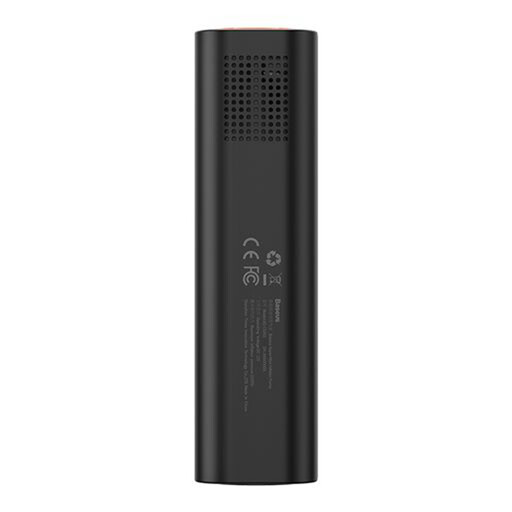
Why it's the right choice : Perfect for motorcyclists, cyclists, and city car drivers where every square inch is precious. Its ultra-compact size allows it to slip into a saddlebag or glove box, going unnoticed.
As a corded 12V model, it completely eliminates the battery life problem. As long as the vehicle's battery is working, so is the inflator. Reliability comes first for occasional use.
Its featherweight design and record-breaking compactness. The 12V power supply guarantees permanent availability, without ever worrying about recharging an internal battery.
We've selected a full range of compressors that meet our quality and safety criteria.
The lifespan of a cordless tire inflator depends on its lithium-ion battery. Generally, it will maintain good capacity for 3 to 5 years, or several hundred charge/discharge cycles. To preserve it, avoid storing it completely empty and remember to recharge it every 3 to 6 months, even when not in use.
Yes, absolutely. A 12V mini-compressor is perfectly capable of doing the job. Its speed will, of course, depend on its airflow (L/min). An entry-level model will take longer than a more powerful device to go from 2.0 to 2.5?bar, but it will get the job done. It's primarily designed for top-ups and emergencies, not for reinflating all four flat tires.
Quality models offer sufficient accuracy for everyday use (typically within ±0.1?bar). However, when you first use it, it's smart to compare the reading from your digital inflator with that of a trusted pressure gauge (like one at a gas station) to check its calibration. Afterward, you can rely on your device to maintain consistent pressure.