
Livraison le jour même ou le lendemain

Qualité garantie

Débloquez vos offres de bienvenue: Livraison GRATUITE | Jusqu'à -80 % | 30 jours d'essai gratuits à JoyPlus
Téléchargez l'application
An underinflated tire at the wrong time can turn your daily commute into a nightmare. Faced with this risk, more and more drivers, motorcyclists, and cyclists are equipping themselves with a portable air compressor. Compact and practical, this tool is becoming the go-to solution. But be warned: the market is flooded with models making tempting promises that often hide critical flaws.
As the Head of Product Recommendations at Joybuy, my mission is to guide you through this jungle. Let's cut through the marketing jargon: together, we'll break down the common pitfalls and identify the real criteria for making a smart, long-lasting purchase.
Some features, touted as selling points by manufacturers, prove to be very disappointing in practice. Here are the marketing traps to watch out for to avoid buyer's remorse.
To ensure you choose a reliable and suitable model, focus on these three essential points.
This is the first question to ask yourself, as it determines everything else.
Don't be blinded by the maximum pressure advertised.
It's these features that turn a simple gadget into a true safety ally.
To illustrate these tips with concrete examples, here are some models that check all the right boxes, suited for different user profiles.
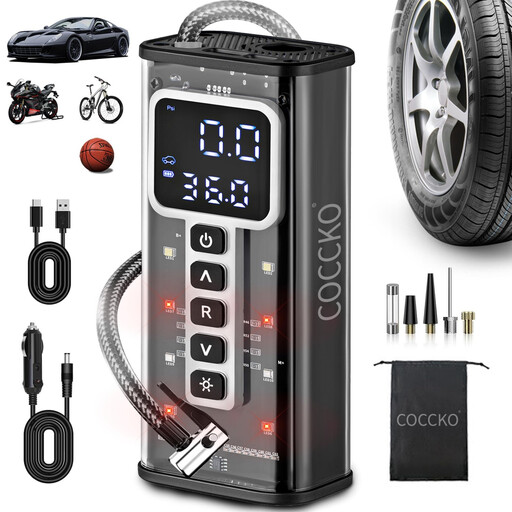
Why it stands out: This is the ideal cordless solution for the driver who leaves nothing to chance. It combines solid battery life to handle any situation with emergency features (light, power bank) that make it a truly reassuring travel companion.
Its 6000 mAh battery delivers on its promise of real-world autonomy, where many others fall short. Its 35 L/min airflow ensures rapid inflation, avoiding the trap of underpowered compressors.
Auto-shutoff, 5 preset modes, a power bank function, and a 3-mode LED light. It's the complete car safety toolkit in a compact package.
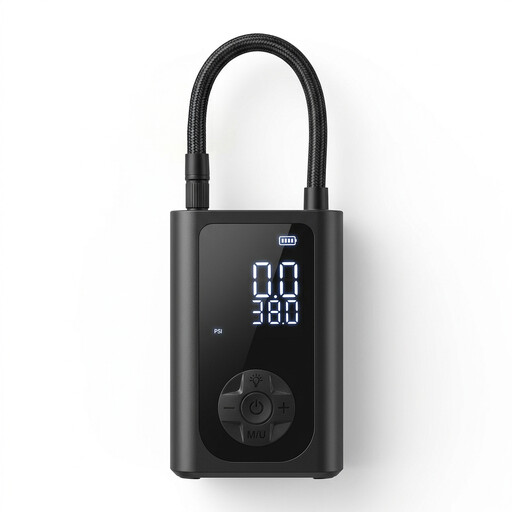
Why it stands out: Perfect for anyone who juggles between car, motorcycle, and bicycle tires, as well as the kids' sports balls. Its preset modes make it incredibly easy to use, and its compact size means you can take it anywhere.
It sidesteps the "superficial versatility" trap with its 5 dedicated modes (car, motorcycle, bike, ball, custom) that automatically set the ideal pressure. Its 26 L/min airflow is an excellent compromise for all these uses.
4000 mAh battery, power bank function, and an ultra-compact design (123x79x48.5mm) that slips into any bag.
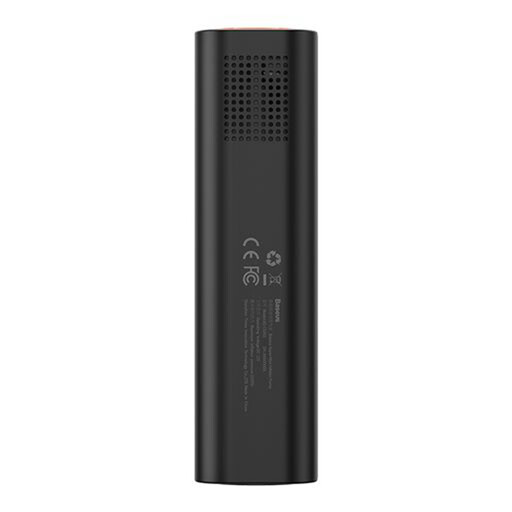
Why it stands out: For those who prioritise reliability and a tight budget. Always ready in the glove box, you never have to worry about battery level: just plug it in, and it works.
As a 12V compressor, it completely bypasses the battery life trap. Plugged into the 12V socket, it delivers constant, unwavering power.
Ultra-compact design, limitless 12V power, and up to 150 PSI of pressure. The ultimate simple, effective, and smart solution.
Explore our full selection of portable compressors that meet our selection criteria and safety standards.
1. How long does it take to inflate a car tire with a portable compressor? It all depends on the device's airflow (L/min) and the size of the tire. For a simple top-up (e.g., going from 2.2 to 2.5 bar), a good model with 25-35 L/min airflow will take between 1 and 3 minutes. For a completely flat tire, expect it to take between 7 and 10 minutes.
2. Can a 12V compressor drain my car's battery? That's an excellent question. To be safe, the best practice is to always start your car's engine before plugging in and using a 12V compressor. This way, the alternator provides the power, not the battery. Cordless models, of course, are completely self-powered.
3. Can I leave a portable compressor in my car permanently? Yes, they are designed for that. However, you should check the manufacturer's recommended storage temperatures. Extreme heat (summer heatwaves) or cold (winter freezes) can damage the battery on cordless models. For these, it's good practice to recharge them every 3 to 4 months to maintain battery health.