
Livraison le jour même ou le lendemain

Qualité garantie

Débloquez vos offres de bienvenue: Livraison GRATUITE | Jusqu'à -80 % | 30 jours d'essai gratuits à JoyPlus
Téléchargez l'application
An underinflated tire isn't just an inconvenience: it's a real safety hazard, not to mention a drain on your fuel economy. If you're tired of relying on gas stations, a portable air compressor is the perfect tool for you. But be warned—the market is a jungle of models with often exaggerated marketing claims. As a product expert at Joybuy, my mission is to help you navigate the options.
This guide breaks down the pitfalls to avoid and the essential technical criteria for making an informed choice, whether you're a driver, motorcyclist, or cyclist.
Packaging and product descriptions can be tempting, but some design flaws only become apparent with use. Here are the main red flags to never overlook.
To avoid falling into these traps, focus on these key technical specifications.
The choice of power source depends entirely on your primary use case.
Don't be dazzled by a very high maximum pressure (often 150 PSI). Most car tires require between 30 and 40 PSI (or 2 to 2.8 bar). The number that really matters is the airflow, measured in liters per minute (L/min).
Quality-of-life features are a real plus for everyday use.
Here are a few options that meet different needs, keeping our objective selection criteria in mind.
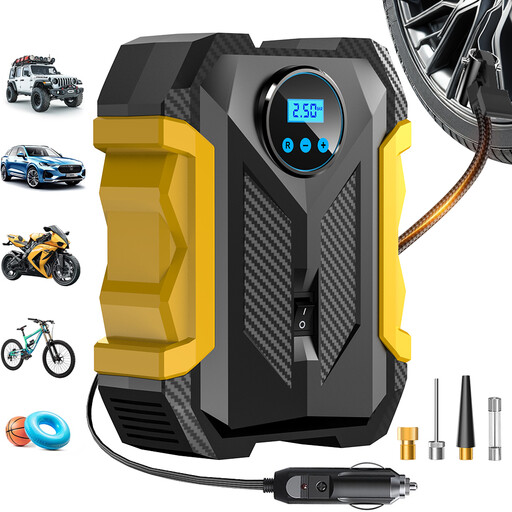
Why we chose it: Ideal for those looking for a reliable and budget-friendly solution to keep in the glove box. Its 12V power supply ensures it's always ready for an emergency, without worrying about a battery's charge level.
This corded model completely sidesteps the overstated battery life pitfall. As long as your car has power, it works. Its digital display provides a much more reliable pressure reading than entry-level analog gauges.
Direct 12V compressor power for foolproof reliability; digital display for easy pressure presetting.
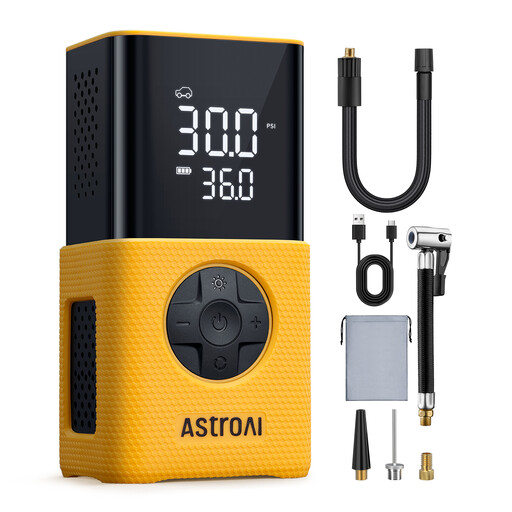
Why we chose it: Perfect for the user who juggles between their car, motorcycle, and recreational activities. Its cordless design and 4000 mAh battery offer great freedom, while its smart modes simplify inflating different items.
It tackles the misleading inflation speed pitfall by advertising a clear airflow rate (17 L/min) and quantified performance. Its sensor technology aims to provide accurate pressure readings, countering the unreliability of low-end gauges.
High-capacity battery (4000 mAh) with a power bank function; smart inflation modes and auto-shutoff.
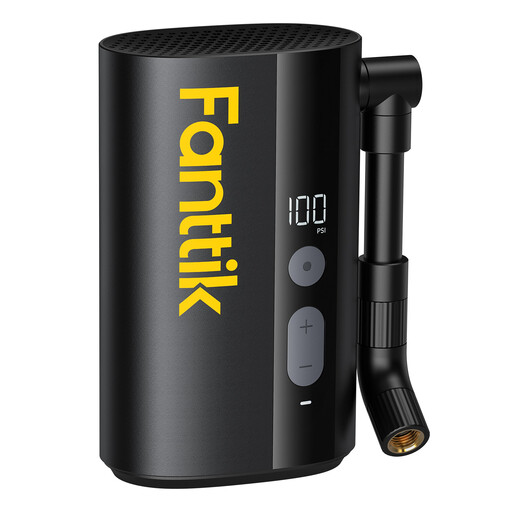
Why we chose it: Designed for portability, this mini-inflator fits in a backpack or mounts on a bike frame. It's the ideal solution for the cyclist or motorcyclist who needs a lightweight, efficient tool for on-the-go pressure adjustments.
This highly specialized model is clear about its primary use (bike tires), avoiding broad marketing generalizations. It promises a fast reinflation (32s for a 700x23C tire), a concrete and meaningful metric for cyclists.
Ultra-compact and lightweight; integrated hose and Presta/Schrader valves for simplified use with a bike pump.
We have tested and compiled a complete selection of products that meet our demanding specifications.
The lifespan depends on the quality of the lithium-ion battery and its maintenance. Generally, a well-maintained battery can handle between 300 and 500 full charge cycles. To preserve its longevity, our advice is to recharge it every 2 to 3 months, even if you don't use it, and to avoid storing it completely discharged.
It all depends on the model. Most mini-compressors are designed for standard passenger car tires. For the larger tires on SUVs and light trucks, which require a greater volume of air, it's imperative to scrutinize the technical specifications. Some more robust models will do the job, but many are not suitable for heavy vehicles. When in doubt, always refer to the manufacturer's instructions.
That's a valid concern. To avoid any issues, the golden rule is to keep your car's engine running while using the 12V compressor. The alternator will then take over and prevent the battery from draining. The power consumption is moderate and poses no problem for occasional use.