
Livraison le jour même ou le lendemain

Qualité garantie

Débloquez vos offres de bienvenue: Livraison GRATUITE | Jusqu'à -80 % | 30 jours d'essai gratuits à JoyPlus
Téléchargez l'application
An underinflated tire is more than just an inconvenience; it's a genuine safety risk and a drain on your fuel economy. The portable air compressor has become an essential accessory to keep in your trunk, whether you're a driver, motorcyclist, or cyclist. The problem? The market is flooded with models making tempting promises that often fall flat. Before you pull out your credit card, it's crucial to know the pitfalls to avoid so you don't regret your purchase.
As the Head of Product Recommendations at Joybuy, my mission is to help you navigate the options. Here are the key things to watch out for before choosing your next tire inflator.
The 3 Pitfalls to Avoid When Buying a Portable Air Compressor:
To avoid these traps, focus on the technical specifications that really make a difference.
The choice depends entirely on your needs.
Pressure is the force; airflow is the speed. One is useless without the other.
Some features can turn a simple inflator into a true roadside multi-tool.
Instead of an endless list, here are a few models that check all the boxes for reliability and convenience, each tailored to a specific user profile.
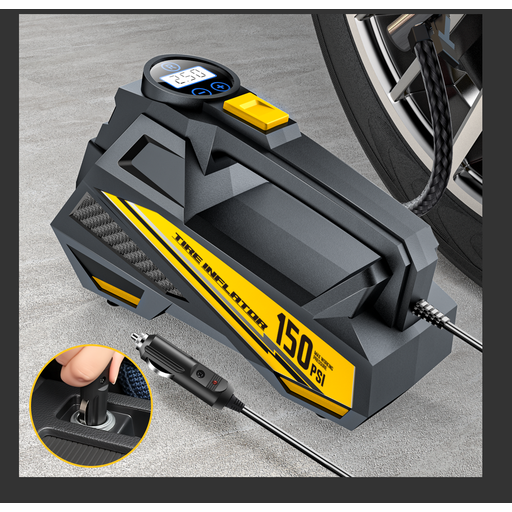
Why it's perfect for this user: This is the ideal solution for those who want a simple, reliable device to leave in the trunk. No battery to charge—just plug it into the 12V socket for help anytime. Peace of mind, without breaking the bank.
As a 12V corded model, it eliminates the risk of a dead battery at the worst possible moment. Its performance is consistent, no matter the situation.
Reliable 12V power source, simple operation with a clear interface and a readable pressure gauge.
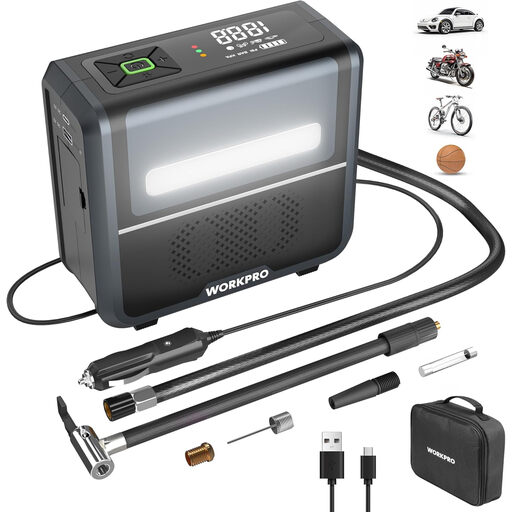
Why it's perfect for this user: For those who need flexibility. You can use it cordlessly for routine maintenance on your car, motorcycle, or the family's bikes, and plug it into the 12V outlet if the battery is low. The power bank function is a real bonus on the go.
Its dual power supply (battery + 12V plug) combines the best of both worlds and solves the battery life problem. You're never caught off guard.
3-in-1 versatility (inflator, power bank, flashlight), dual power source, and smart modes with automatic shut-off.
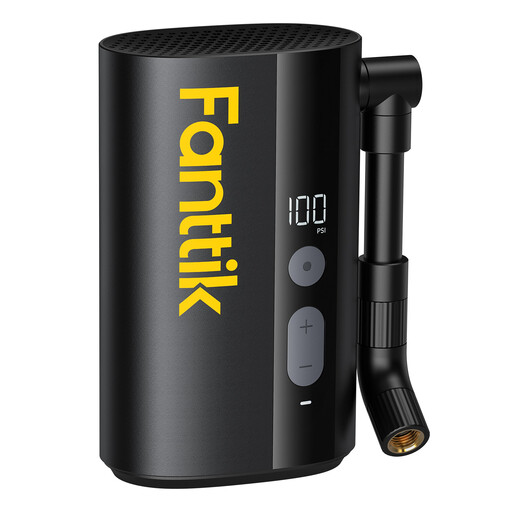
Why it's perfect for this user: Specifically designed for bikes (road, MTB, e-bike), this model is ultra-compact and lightweight. Its integrated hose with both Presta and Schrader valve connectors is a model of convenience. It's powerful enough to quickly reach the high pressures required by road bike tires.
It doesn't pretend to be a one-size-fits-all solution. Its design is optimized for bike tires, ensuring fast and efficient inflation where more versatile models would be slow and bulky.
Ultra-compact all-in-one design, 360° rotating hose with integrated valves, and fast inflation suited for bike tires.
We've curated a complete selection of products that meet our standards for reliability and safety.
How long does a battery-powered inflator last? It all depends on the quality of its lithium-ion battery and how often you use it. Generally, a well-made battery will retain most of its capacity for 3 to 5 years (or several hundred charge cycles). To preserve it, avoid deep discharges and don't store it in a car in direct sunlight or extreme cold.
Will a 12V compressor drain my car battery? The risk is minimal. Inflating a car tire only takes a few minutes and consumes very little power. However, as a precaution, it's a good idea to leave the engine running during the process. The alternator will then take over and compensate for the power draw, preventing too much strain on the battery, especially if it's an older one.
How can I ensure my inflator's pressure gauge is accurate? The easiest way is to compare the reading from your digital compressor with that of a professional gauge at a gas station or a mechanic's shop. Always measure the pressure on cold tires (that haven't been driven on for at least two hours). A small discrepancy (0.05 Bar / 0.7 PSI) is acceptable. If the difference exceeds 0.15 Bar (2 PSI), trust the external gauge and adjust your inflator's target pressure accordingly.