
Livraison le jour même ou le lendemain

Qualité garantie

Débloquez vos offres de bienvenue: Livraison GRATUITE | Jusqu'à -80 % | 30 jours d'essai gratuits à JoyPlus
Téléchargez l'application
Maintaining correct tyre pressure across seasons in France is essential for fuel economy, vehicle handling, and tyre tread longevity. Seasonal temperature drops and regular motorway driving can quickly cause tyre pressures to drift below manufacturer recommendations. Relying exclusively on service station forecourt air lines often leads to wasted detours, out-of-order equipment, or paying unexpected coins for basic pressure adjustments. Keeping a reliable portable compressor stowed in your car boot or motorcycle pannier ensures you can check and correct pressures whenever your vehicle warning indicator appears.
The modern portable tyre inflator market ranges from pocket-sized cordless units designed for bicycles and scooters to robust 12V plug-in compressors capable of handling sustained roadside demands. Finding the right balance involves assessing your preferred power method, whether you need complete freedom from trailing wires around an estate car, and how frequently you plan to inflate tyres, sports equipment, or leisure gear.
Many drivers purchase a cordless inflator, place it into the spare wheel compartment, and leave it untouched for months. Lithium-ion batteries naturally lose charge over time, particularly during cold European winters. Discovering a flat battery during a roadside pressure drop creates unnecessary delay. Cordless models require a quick top-up every few months, whereas 12V wired inflators draw power directly from the vehicle and are always primed for immediate use.
Miniature compressors generate noticeable friction and heat as their small pistons compress air. Expecting an ultra-compact pump to inflate multiple completely flat commercial vehicle or large SUV tyres back-to-back without a cooling break can trigger thermal protection cut-outs or cause premature wear. Matching cylinder capacity to your typical vehicle type ensures smooth, reliable performance.
Basic inflators equipped with small analogue dial gauges force motorists to squat in the rain, squinting at a vibrating needle to guess when to stop. Accidental over-inflation strains tyre sidewalls and causes uneven tread wear. Selecting a digital unit with target pressure presets and automated shut-off eliminates human error and guarantees balanced inflation on every wheel.
Your inflation environment dictates whether an onboard battery or an auxiliary vehicle plug serves you best. Corded 12V models provide uninterrupted pumping directly from your car, while cordless units offer total independence away from parking bays.
Standard passenger cars operate between 2.0 and 2.8 bar (around 30 to 40 PSI), whereas performance road bikes frequently require upwards of 7 bar (100 PSI). A versatile compressor needs broad pressure headroom alongside secure valve connections.
Roadside maintenance frequently occurs in low-light conditions or bad weather. Built-in automation and illumination turn an air pump into a dependable safety device.
These three portable compressors offer dependable tyre care, ranging from plug-and-play vehicle simplicity to versatile cordless solutions.
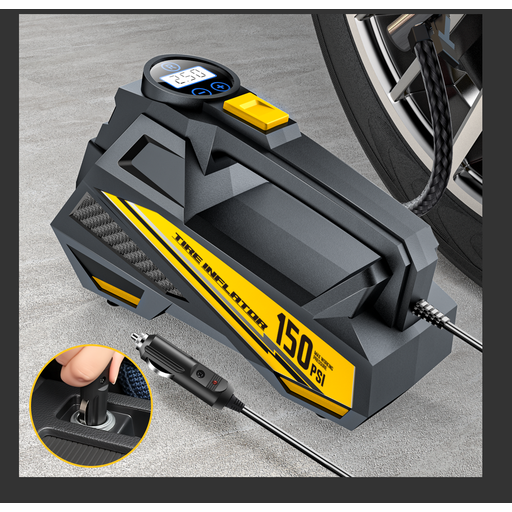
Why This Fits Their Persona: This corded 12V compressor plugs straight into your car cigarette lighter socket to deliver up to 150 PSI of inflation pressure. Because it operates directly from your vehicle battery, it never suffers from depleted internal cells after spending months stored in the boot.
It bypasses the common pitfall of finding an uncharged battery during a roadside pressure alert, providing dependable power whenever the car engine or ignition is active.
Its robust 12V corded setup delivers continuous operating availability without needing USB recharging breaks between wheels.
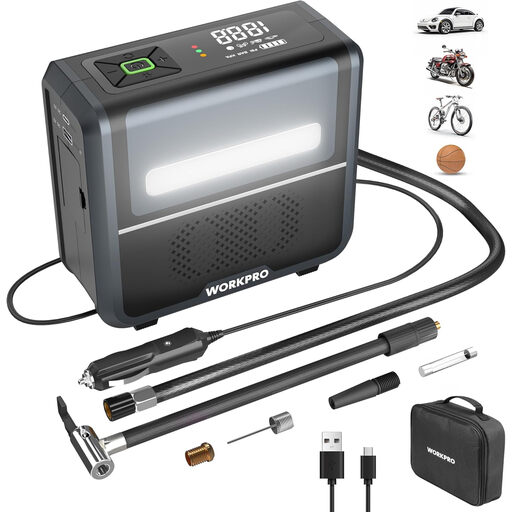
Why This Fits Their Persona: Equipped with a 3 x 2500 mAh rechargeable battery and a secondary 12V car plug connection, this multi-functional inflator excels on both home driveways and longer road trips. A clear digital display pairs with automatic cut-off to inflate car, motorcycle, and bicycle tyres with exact accuracy.
It resolves the dilemma between wired reliability and cordless convenience by supporting both onboard lithium power and direct 12V auxiliary vehicle input.
The high-capacity battery serves dual purposes as an emergency power bank for mobile devices and includes a built-in LED torch for night-time checks.
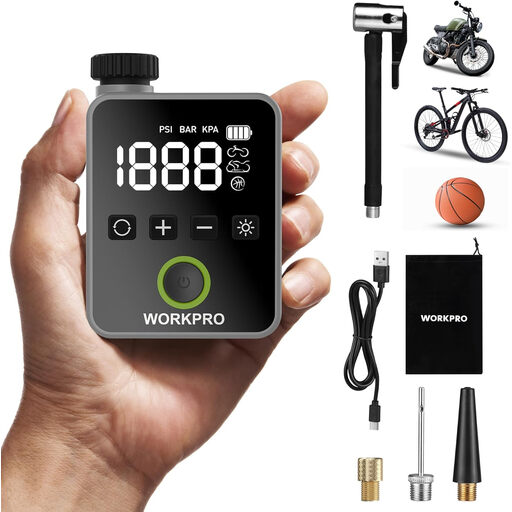
Why This Fits Their Persona: Featuring a compact handheld design powered by an 8V rechargeable battery, this lightweight inflator delivers up to 140 PSI (9.78 bar) via modern USB-C charging. It slides easily into a commuter rucksack, scooter under-seat storage, or bicycle pannier for quick routine top-ups.
It spares two-wheel commuters the inconvenience of carrying bulky wired hardware while still providing digital pressure precision and auto shut-off.
The pocket-sized form factor integrates a bright emergency light, power bank output, and high-pressure capacity for effortless portable travel.
A corded 12V inflator is well suited for drivers who keep their pump in the boot purely for vehicle emergencies, as it requires zero battery upkeep and runs as long as your car battery has charge. Cordless rechargeable models are far more practical if you regularly maintain bicycles, motorbikes, or wheelbarrows, giving you complete mobility without trailing wires around the driveway.
Digital compressors use internal electronic pressure sensors to monitor pressure levels in real time. You select your vehicle manufacturer recommended figure in bar or PSI on the display screen before starting. The internal controller continuously tracks rising pressure and automatically turns off the pump motor the instant your preset target is met, protecting your tyre from strain.
Yes, a compact portable inflator can inflate a completely flat standard car tyre, although it takes several minutes longer than a routine pressure top-up. Because small internal cylinders produce heat during sustained operation, inflating a large volume from zero places substantial demand on the motor. Allowing the unit a brief rest period between tyres protects the internal components.