
Livraison le jour même ou le lendemain

Qualité garantie

Débloquez vos offres de bienvenue: Livraison GRATUITE | Jusqu'à -80 % | 30 jours d'essai gratuits à JoyPlus
Téléchargez l'application
A flat tyre in the middle of nowhere, a stubborn air mattress after a long day of hiking... We've all been there, and these hassles can quickly turn a trip or holiday into a nightmare. In the face of these unexpected events, the portable air compressor has become an indispensable tool. The problem is, the market is flooded with models making tempting promises that often hide serious flaws.
As a product expert at Joybuy, my mission is to help you see things more clearly. Let's cut through the marketing jargon and get down to business! Here are the pitfalls to avoid and the essential criteria for making the right choice.
Too many buyers end up with a disappointing, or even useless, device because they ignored a few crucial details. Here are the most common mistakes.
The Battery Life Mirage: A "long-lasting" battery on paper that gives up the ghost after inflating a single car tyre. The real-world battery life, especially in cold weather, is often a far cry from the advertised figures. A poorly calibrated portable battery-powered compressor quickly becomes dead weight.
Confusing Pressure (PSI) with Flow Rate (L/min): The classic trap? Focusing on a high maximum pressure (150 PSI), which is indeed essential for a car tyre inflator. However, if the air flow rate (in litres per minute) is anaemic, inflation will take an eternity. For an air mattress or a pool float, it's the flow rate that matters, not the pressure.
Nozzle Incompatibility and Overheating: Nothing is more frustrating than a device that comes with cheap plastic nozzles that are incompatible with your tyre valves (Presta/Schrader) or your recreational gear. Another common issue: entry-level models without effective cooling overheat in minutes, forcing you to take endless breaks.
To avoid these disappointments, three parameters must be scrutinised. They are what will make all the difference in the performance and usefulness of your portable tyre inflator.
This is the first choice to make, as it dictates how you'll use it.
12V mini compressor (corded): Plugged into the cigarette lighter, its main advantage is its continuous and reliable power supply. No battery-related stress. It's the safe option to keep in your boot for emergencies. The only drawback: it depends on the vehicle, and the cable length can sometimes restrict movement.cordless electric inflator (battery-powered): It offers complete freedom of movement. Perfect for bikes, motorbikes, balls, or for moving away from the car when camping. The crucial point: the battery capacity, in milliampere-hours (mAh). Aim for at least 4000?mAh to have a realistic chance of inflating several car tyres or a large air mattress.These two values are inseparable.
Beyond the raw numbers, certain features can be life-changers in day-to-day use.
Rather than an endless list, here are products that tick all the boxes for specific user profiles.
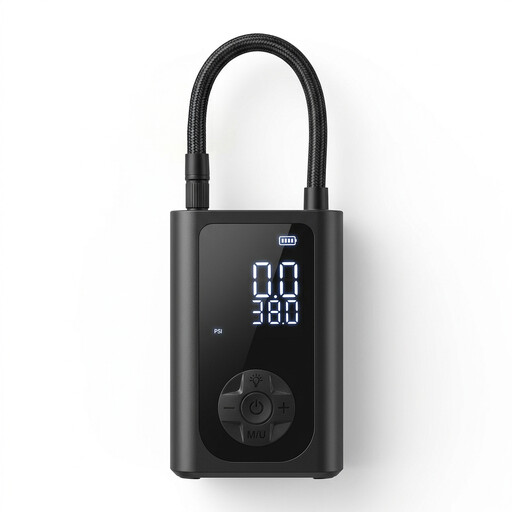
Why it's the right fit: For those seeking a reliable, self-contained solution to keep in their glove box. This cordless model is perfect for regular tyre maintenance and emergencies, without relying on a 12V socket.
Its 4000 mAh battery provides real-world autonomy, capable of fully re-inflating two car tyres. Its 26 L/min flow rate saves you from an endlessly long inflation process.
Preset inflation modes (car, motorbike, etc.) with automatic shut-off. Power Bank function (5V/2A) to give a smartphone a boost in a pinch.
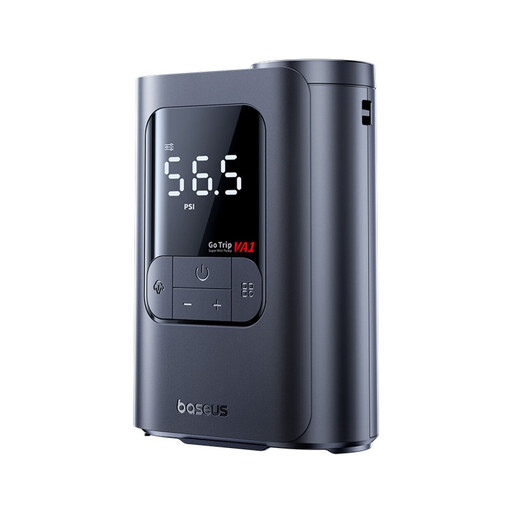
Why it's the right fit: The perfect companion for cyclists, motorcyclists, and campers who prioritise a compact and versatile device. Its mini format and light weight (around 459 g) mean you can take it anywhere without being weighed down.
Supplied with 3 nozzles, it ensures good compatibility. Its 2500 mAh battery is designed for quick top-ups and inflating recreational gear: a clear promise that prevents any disappointment.
Ultra-compact and lightweight. Its standard USB-C port simplifies charging on the go with any phone charger.
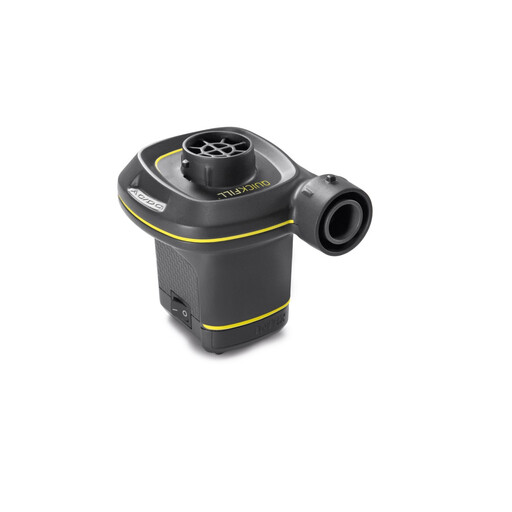
Why it's the right fit: Ideal for home, camping, or the pool. This pump specialises in inflating large, low-pressure items: mattresses, floats, paddling pools, etc.
This model doesn't try to be a jack-of-all-trades: it's built for volume, not pressure. It focuses entirely on a very high air flow rate to inflate a mattress in record time, where a tyre compressor would be excruciatingly slow.
Dual power supply (220V mains and 12V cigarette lighter) for total versatility. Its deflation function is a real plus for packing everything away quickly.
Discover our full selection of products that meet our criteria for performance and safety.
Yes, most quality models can, but the process takes time and puts a heavy strain on the battery of a cordless model. For example, expect it to take 7 to 8 minutes for a standard tyre with the Porbi Q19. With a 12V model, it is strongly recommended to leave the car engine running to avoid draining its battery.
It depends on the build quality and usage. For battery-powered models, the longevity of the battery is the critical factor. Avoid storing it completely discharged. For all compressors, follow the usage cycles recommended by the manufacturer to prevent motor overheating, which is the main cause of failure.
No, absolutely not. An electric air pump for mattresses is designed to move a large volume of air at very low pressure. It is incapable of generating the high pressure required for a car tyre (usually between 2 and 3 bars, or 30 to 45 PSI). Attempting to do so is not only useless but also risks damaging the pump. Every tool has its purpose.