
Livraison le jour même ou le lendemain

Qualité garantie

Débloquez vos offres de bienvenue: Livraison GRATUITE | Jusqu'à -80 % | 30 jours d'essai gratuits à JoyPlus
Téléchargez l'application
An underinflated tyre is more than just an annoyance?— it's a real safety hazard and a cause of increased fuel consumption. Having a portable air compressor in your boot can turn a major headache into a minor, minutes-long delay. The only problem is that the market is flooded with models making tempting promises that don't always hold up.
My mission as a Product Recommendation Manager at Joybuy is to guide you through this jungle. Together, let's break down the pitfalls to avoid and the criteria that truly matter so you can make an informed choice that genuinely fits your needs.
Before we even get into the technical specs, let's learn how to spot the misleading marketing claims that often hide disappointing devices.
To ensure you choose a reliable device, here are the three essential points to scrutinise.
This is the first question to ask yourself, and the answer depends entirely on how you'll use it.
Don't be blinded by maximum pressure alone.
In a real-world situation, it's the details that make all the difference.
We have selected a few models that tick all the boxes for performance and reliability, catering to different user profiles.
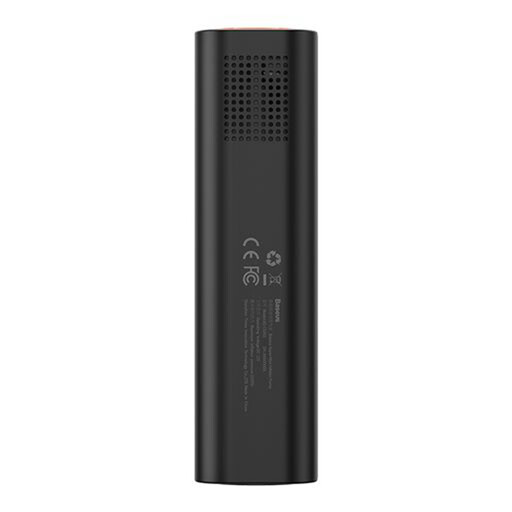
Why we recommend it: It's the perfect, simple, and reliable solution to keep in your glove box at all times. Its 12V power supply ensures it's always ready to go when you're in a pinch, without ever worrying about a dead battery.
As a corded model, it completely sidesteps the "phantom battery life" pitfall. Its power, supplied by the vehicle, is constant and inexhaustible.
12V Reliability: No battery to charge, it's always ready for use. Compactness: It fits anywhere in the cabin or boot.
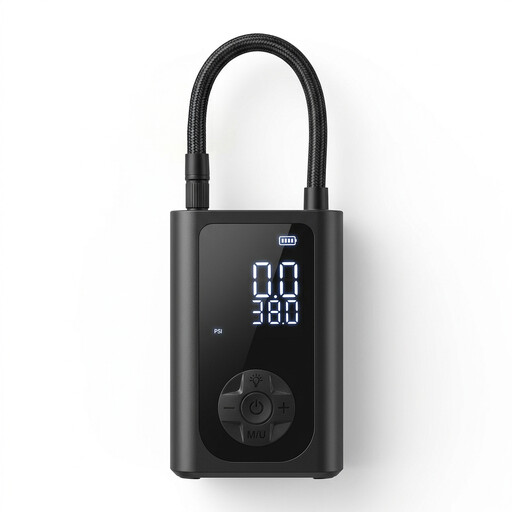
Why we recommend it: For those who want a Swiss Army knife. This cordless compressor is robust enough for car or motorcycle tyres and just as practical for bicycles and balls, thanks to its dedicated modes. Its power bank function is a welcome bonus.
It counters the marketing-hype pitfall with concrete numbers: a 26 L/min flow rate and a 4000 mAh battery capable, according to the manufacturer, of reinflating two flat car tyres.
Versatility and Performance: 5 inflation modes, auto-shutoff, and a comfortable air flow rate for a cordless device. Power Bank Function: Can help out by recharging a smartphone.
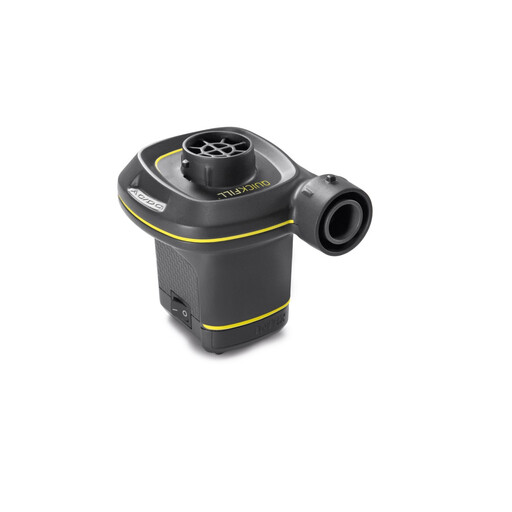
Why we recommend it: Note, this isn't a tyre compressor, but an electric air pump designed for high-volume, low-pressure items. It's ideal for quickly inflating (and deflating!) air mattresses, pool floats, and other inflatable boats.
It avoids any confusion by owning its specialty. It doesn't pretend to tackle tyres; instead, it excels in its specific field: high-flow inflation for recreational equipment.
Dual Power: It plugs into a mains socket (220 V) at home or the cigarette lighter (12 V) in the car. Deflation Function: Essential for removing air and packing up your gear in a flash.
We have put together a complete selection of products that meet our strict selection criteria and current safety standards.
The lifespan depends on the manufacturing quality and maintenance. To make it last, follow the manufacturer's recommended duty cycles (e.g., 10 minutes of operation followed by a 10-minute break to let the motor cool down). Also, remember to store it in a dry place, away from extreme temperatures.
Yes, provided you choose the right model. A cordless compressor with a robust battery (4000 mAh or more) and a decent air flow rate (over 25 L/min) can certainly reinflate a standard car tyre. The time required will, of course, depend on the tyre size and the battery's charge level. Be aware that inflating a completely flat tyre can drain a significant portion of the battery.
Generally, no. Most portable compressors come with a set of nozzles compatible with Schrader valves (the standard for cars and mountain bikes) and often an adapter for Presta valves (common on road bikes). For a motorcycle or bicycle, a compact, cordless model is the most practical choice, as it can easily be slipped into a backpack.