
Livraison le jour même ou le lendemain

Qualité garantie

Débloquez vos offres de bienvenue: Livraison GRATUITE | Jusqu'à -80 % | 30 jours d'essai gratuits à JoyPlus
Téléchargez l'application
An underinflated tire isn't just an inconvenience—it's a real safety risk, not to mention a drain on your fuel economy. That's why a portable air compressor has become an almost essential accessory to keep in your vehicle. The problem? The market is flooded with models making tempting promises, but many fall short in real-world use. As the Equipment Editor, my mission is to help you decode the spec sheets to make an informed choice.
Before you take the plunge, watch out for these three common traps that many drivers fall into:
To choose a portable car compressor that won't let you down, focus on these technical specs, which are far more telling than marketing slogans.
This is the first question you need to ask.
As we've seen, pressure alone isn't enough.
These options transform a simple inflator into a true safety partner.
Instead of just a long list, here are models that meet specific needs, keeping in mind the pitfalls we've discussed.

Why it's the right choice: Perfect for those who want a single device for their car, motorcycle, bike, and recreational gear. Its 4000 mAh battery and power bank function make it a true Swiss Army knife for the road.
It addresses the problem of inaccurate gauges with sensors that, according to AstroAI, ensure a reliable reading. Its 5 preset modes and auto-shutoff feature minimize user error and the risk of over-inflation.
Versatility: 5 modes and 4 pressure units. Multifunctional: Doubles as a power bank and a flashlight with an SOS mode.
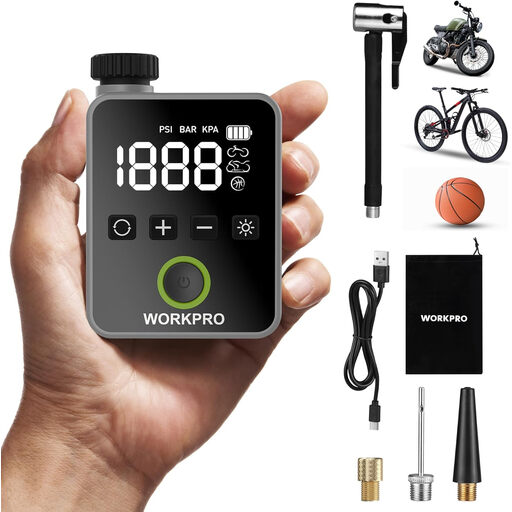
Why it's the right choice: Designed for those who prioritize light weight and a small footprint. At just 270g, it slips into a backpack or bike bag, and you'll completely forget it's there. The quintessential bike tire inflator.
It doesn't pretend it can inflate an SUV tire. Its purpose is crystal clear: portability above all else. It thus avoids the trap of overpromising by focusing on what it's made for (bikes, motorcycles, balls).
Ultra-Portable: A feather-light 270g and a pocket-sized design. Universal Charging: USB-C port to easily recharge it with any recent smartphone charger.
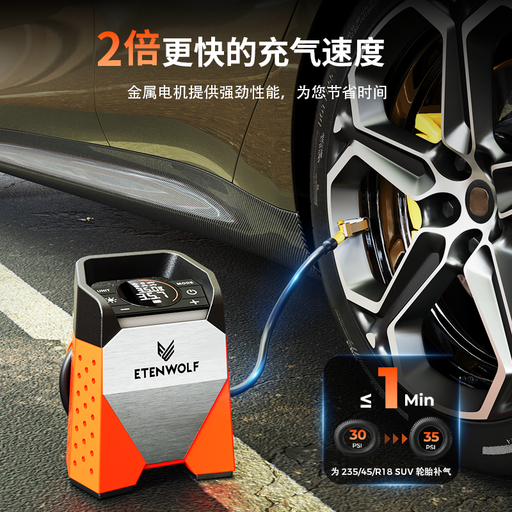
Why it's the right choice: Aimed at owners of large vehicles (SUVs, vans) or those who prioritize speed and robustness above all. Its high airflow and solid construction exude performance and durability.
It tackles the weak airflow pitfall head-on. It highlights its inflation speed and a 100% duty cycle, a sign of excellent thermal management that allows it to run for long periods without overheating.
Speed: A powerful airflow (1.25 CFM, or approx. 35 L/min) for lightning-fast inflation. Durability: Its more massive design suggests a motor and components built for heavy-duty use.
We have curated a complete range of products that meet our selection criteria and current safety standards.
Its lifespan is closely tied to that of its lithium-ion battery. To preserve it, avoid letting it discharge completely and remember to recharge it at least once every 3 to 6 months, even when not in use. A well-maintained device can serve you faithfully for several years.
A 12V mini compressor obviously draws power from the battery, but the risk of draining it is very low during normal use (5-10 minutes), provided your battery is in good health. As a precaution, it is always recommended to leave the car engine running during inflation. The alternator will then take over to compensate for the power consumption.
On quality models, the accuracy is generally sufficient for everyday use (often ±0.1 bar). The best practice is to compare the measurement once with a trusted manual pressure gauge to calibrate your device. This way, you'll know about any small discrepancy and can rely on the digital display with complete peace of mind.