Anyone looking specifically for a “sugars-free” claim
Compare the total sugar content shown under “of which sugars”, rather than relying on the “no added sugars” claim alone.


If you make porridge regularly and want to stock up on several packs, plain oats in a 1 kg pack give you a single-ingredient recipe, but they are not automatically “sugars-free”. If this is a strict requirement, check the “of which sugars” figure per 100 g: the Auchan and Quaker oats listed here contain 0.7 g and 1.1 g of sugars per 100 g respectively. “No added sugars” is a different claim and products carrying it may contain naturally occurring sugars.
Compare the total sugar content shown under “of which sugars”, rather than relying on the “no added sugars” claim alone.
A large pack of plain oats could suit you if you want to make each bowl from scratch. Before stocking up on several packs, check their best-before dates and storage instructions.
The presence of oats alone is not enough to establish that a product is gluten-free. Check the other ingredients and any precautionary allergen information on the pack you buy.
Before deciding how much to keep in your cupboard, work out what matters most to you: sugar content, pack size or ingredients.
| What to check | Check this | Who is it for? |
|---|---|---|
| Sugar content | Check “of which sugars” per 100 g and distinguish “sugars-free” from “no added sugars”. | If I’m looking for a product that strictly meets the “sugars-free” claim, total sugar content comes before the type of recipe; around 39% of consumers would make this their main consideration. |
| Pack size and storage | Compare the net weight and best-before date before buying several packs. | If I make porridge often, I want a quantity that suits how much I eat and the space I have to store it; this would be the priority for around 38% of consumers. |
| Ingredients and allergens | Check the cereals included and any precautionary allergen information for each product. | If certain cereals or allergens affect my choice, I need to be able to rule out any unsuitable recipe; around 23% of consumers would put this check first. |
These claims mean different things. According to the DGCCRF, nutrition claims are covered by Regulation (EC) No 1924/2006. Its annex reserves the “sugars-free” claim for products containing no more than 0.5 g of sugars per 100 g or 100 ml.
If you’re looking for a product that strictly meets this claim, check the “of which sugars” figure per 100 g, even if no sugar has been added to the recipe.
Auchan France says its Bjorg fig and raspberry porridge has “no added sugars”, but it contains 5.4 g of sugars per 100 g and includes ingredients such as figs and raisins.
If total sugar content matters to you, compare the nutrition information per 100 g for the recipes you’re considering.
A recipe may contain other cereals: the Bjorg three-cereal porridge featured by Auchan France includes wheat and spelt. Plain oats may also carry precautionary allergen information.
Check the ingredients and labelling on the pack in question; don’t assume it’s gluten-free based on the product category alone.
Plain oats in a 1 kg pack, for making your own porridge.
Wholegrain oats in a 1 kg pack, with no mixed cereals in the listed ingredients.
Plain wholegrain oats in 550 g and 800 g packs.
375 g porridges for anyone who prefers a recipe combining different cereals or fruit.
Worth a look if you’re after muesli rather than porridge or plain oats.
This selection features oat groats that need cooking to make porridge, rather than a pack of ready-to-use rolled oats. The 500 g pack size and cooking time are worth bearing in mind if you’re thinking of stocking up on several packs.
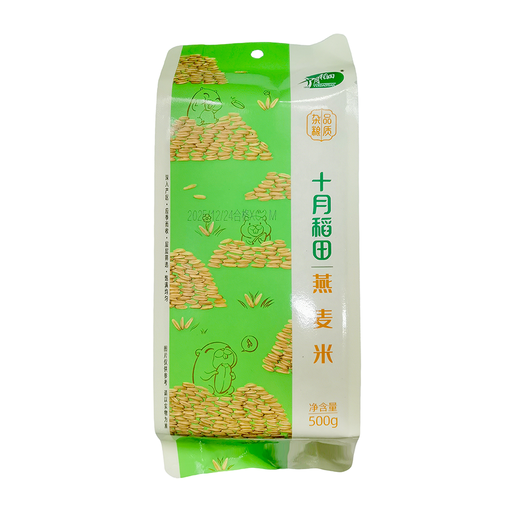 Image unavailable
Worth considering if you’d like to make porridge with oat groats rather than rolled oats. The pack contains 500 g, so if you’re buying in bulk, work out how many packs you’ll need. The instructions call for rinsing, followed by around 30 to 40 minutes of cooking. If you need to monitor your gluten intake, check the product labelling before buying.
No. The annex to Regulation (EC) No 1924/2006 sets the maximum for the “sugars-free” claim at 0.5 g of sugars per 100 g or 100 ml. According to Auchan France, Bjorg three-cereal porridge has “no added sugars”, yet contains 1 g of sugars per 100 g.
Single-ingredient oats could be a good choice if you make your own recipe and want a large pack. Carrefour France and Auchan France each list a 1 kg product made from 100% wholegrain oats. If you’re looking for the strict “sugars-free” claim, check the sugar content separately.
The “of which sugars” figure shows the total declared sugar content, even for a recipe described as having “no added sugars”. Auchan France says its Bjorg fig and raspberry porridge includes figs and raisins, among other ingredients, and contains 5.4 g of sugars per 100 g.
No. The word “oats” alone doesn’t mean a product is gluten-free. Quaker France says its oats may contain wheat and barley; check the ingredients, any precautionary allergen information and any specific statements on the pack you choose.