Anyone looking specifically for ‘sugar-free’
You need to check the amount shown on the ‘of which sugars’ line per 100 g. The threshold for this claim, set by Regulation (EC) No 1924/2006, cannot be determined from the front of the pack alone.


To choose a ‘sugar-free’ porridge for a quick dinner, check the ‘of which sugars’ line: Regulation (EC) No 1924/2006, published on EUR-Lex, sets a maximum of 0.5 g of sugars per 100 g of solid food for this claim. ‘No added sugar’ on the pack and an ingredients list containing only oats do not prove that the product meets this threshold: plain oats listed by E.Leclerc contain 0.9 or 1.1 g of sugars per 100 g. For your evening meal, choose a preparation and toppings to suit your needs, without assuming that porridge on its own makes a complete dinner.
You need to check the amount shown on the ‘of which sugars’ line per 100 g. The threshold for this claim, set by Regulation (EC) No 1924/2006, cannot be determined from the front of the pack alone.
You’re looking for a simple ingredients list or a recipe with no added sugar, while accepting that it may contain naturally occurring sugars. For a dried fruit mix, check both the ingredients and the nutrition information.
You want to use oats as the base for an evening meal. The format, ingredients and allergens of the product you choose also matter.
First decide whether you need the strict ‘sugar-free’ claim or are mainly looking to avoid added sugars. Then choose ingredients and a format that suit the evening meal you have in mind.
| Criteria | What to check | Who it’s for |
|---|---|---|
| ‘Sugar-free’ threshold | Check the ‘of which sugars’ line per 100 g: it must be no more than 0.5 g to use the ‘sugar-free’ claim, under Regulation (EC) No 1924/2006. | If I’m looking specifically for sugar-free porridge for dinner, a short ingredients list isn’t enough. Around 50% of consumers put meeting this threshold at the top of their list of criteria. |
| Added sugars and ingredients | Read the ingredients list and distinguish ‘no added sugar’ from ‘sugar-free’, particularly in dried fruit mixes. | I’m happy to accept naturally occurring sugars, but want to avoid added sugars in my meal. This is the main priority for around 30% of consumers. |
| A base for an evening meal | Check the format and allergens listed for the specific product before choosing an oat base to prepare. | When I’m making dinner quickly, I want a base whose format and allergens suit how I plan to use it. This is the main need for around 20% of consumers. |
A dried fruit muesli can be labelled ‘no added sugar’ and still contain naturally occurring sugars. This claim does not show that it meets the threshold for ‘sugar-free’.
If this threshold matters to you, check the ‘of which sugars’ amount per 100 g in the nutrition information, as required by Regulation (EC) No 1924/2006.
At E.Leclerc, Grainea and Bio Village oats contain 1.1 g and 0.9 g of sugars per 100 g respectively, despite being made from oats alone. These amounts are above the threshold for the ‘sugar-free’ claim.
Use the ingredients list to spot any additions, then check the nutrition table for the total sugar content.
Carrefour France’s product information for Quaker oats warns that they may contain barley and wheat. Its information for Carrefour Original oats mentions possible traces of other cereals containing gluten, mustard and lupin.
Check the allergen information on the pack of the product you plan to use.
These products show how ingredients and claims can vary. A brand name alone is no guarantee that a product is ‘sugar-free’.
Carrefour France lists oats made from 100% wholegrain oats.
Carrefour France lists plain oats made from 100% wholegrain oats.
E.Leclerc lists these oats in a 1 kg pack.
E.Leclerc lists organic wholegrain oats in a 500 g pack.
Carrefour France lists, among other products, a crunchy Bjorg muesli labelled ‘no added sugar’.
This selection features an oat-based porridge mix, with glucose supplied separately. If you’re specifically looking for a ‘sugar-free’ product, check the nutrition information for the mix as sold, and distinguish it from the glucose before using it for dinner.
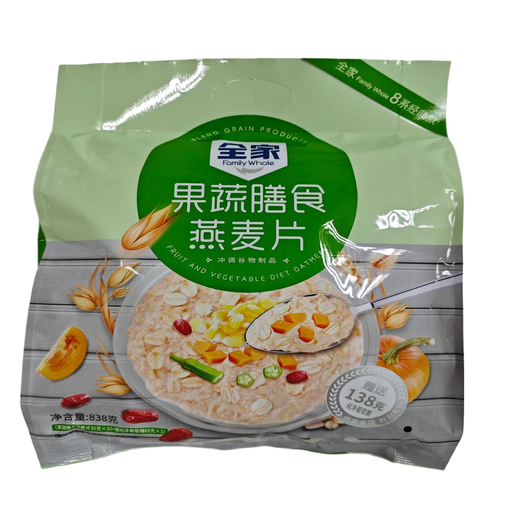 Image unavailable
This porridge mix can be used as the base for an evening meal, with glucose supplied separately. If you’re looking for a ‘sugar-free’ product, check the ‘of which sugars’ amount per 100 g for the mix on the pack of the product sold, and don’t add the glucose. Check its ingredients and allergens too: this is not a product made from oats alone.
No. For the ‘sugar-free’ claim, Regulation (EC) No 1924/2006, published on EUR-Lex, sets a maximum of 0.5 g of sugars per 100 g of solid food. ‘No added sugar’ does not guarantee this amount: the product may contain naturally occurring sugars.
No. E.Leclerc lists 1.1 g of sugars per 100 g for Grainea oats and 0.9 g for Bio Village oats; Joybuy lists 1.1 g per 100 g for QUAKER Oats 500 g. These products are above the 0.5 g per 100 g threshold for the ‘sugar-free’ claim.
Check the ingredients, the ‘of which sugars’ amount per 100 g and the allergens for the product you choose. If an ingredient, such as glucose, is supplied separately, treat it separately from the mix you’re preparing. Then adapt the recipe and toppings to your needs, rather than assuming porridge on its own makes a complete dinner for everyone.