
Livraison le jour même ou le lendemain

Qualité garantie

Débloquez vos offres de bienvenue: Livraison GRATUITE | Jusqu'à -80 % | 30 jours d'essai gratuits à JoyPlus
Téléchargez l'application
The promise of a pop-up camping tent is a dream come true: arrive at the campsite, toss it in the air, and watch it set itself up in the blink of an eye. Gone are the days of wrestling with tangled poles and unreadable instructions. But be warned, behind this near-instant setup can lie some real disappointments. As experts in the Home & Leisure section, our mission is to decode the spec sheets for you and help you avoid the marketing traps. Let's scrutinize the essential points for a successful purchase.
The market is flooded with models that look perfect in photos but reveal their weaknesses at the first downpour or gust of wind. Here are the crucial points to watch out for.
To avoid these disappointments, simply focus on a few objective technical specs. These, not the marketing spiel, reveal the true quality and durability of your future tent.
A waterproof tent worthy of the name must display a water pressure resistance rating, measured in millimetres (mm), also known as the Schmerber or PU rating.
Ease of setup should never come at the expense of sturdiness.
Comfort is also a matter of space and fresh air.
Keeping these criteria in mind, here are a few models that caught our eye, designed for different types of campers.
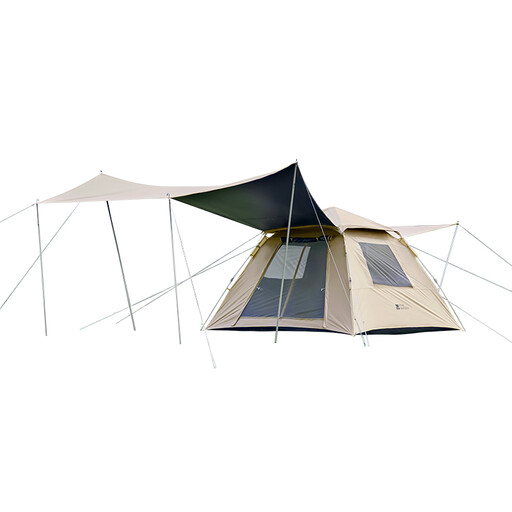
Why we chose it: Perfect for a group of 2 to 4 people, this tent comes with a separate tarp that creates a large awning. This additional living space is a real bonus for setting up a table, cooking under cover, or relaxing in the shade. It significantly enhances comfort, especially for multi-day stays.
It checks all the boxes: certified PU2000mm waterproofing with taped seams, and a fibreglass structure that combines quick setup with good wind stability.
Its tent + tarp duo offers modularity and an XXL living space. The UPF50+ protection and blackout fabric guarantee naps sheltered from the sun and peaceful nights for the whole family.
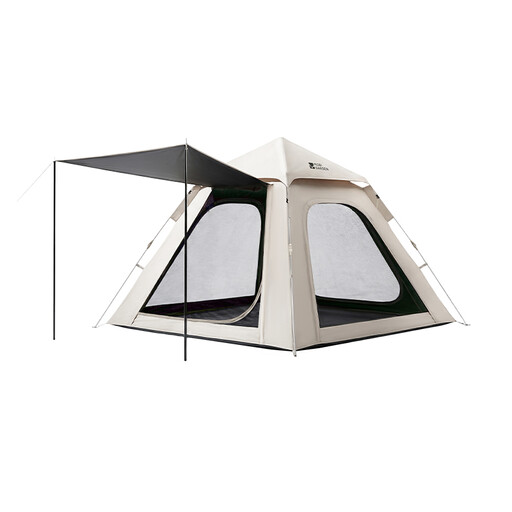
Why we chose it: The dream model for couples or festival-goers who don't compromise on sleep quality. Here, everything is designed around blackout technology to ensure near-total darkness and a cooler temperature, even at high noon.
It shatters the "fake blackout" myth with its 6-layer composite fabric that provides outstanding insulation from light and heat. Its five-sided ventilation system ensures excellent airflow without sacrificing darkness.
Its exceptional blackout capability, which allows for genuine lie-ins. The square interior space of nearly 5.76 m? is very comfortable for 2 to 4 people.
Discover our full selection of tents that meet our quality criteria and current standards.
What is the lifespan of a pop-up tent? It all depends on the quality of the materials and how you care for it. A model with fibreglass poles and a polyester fabric (190T or 210T) can last for many years. The secret: always clean it, make sure it's completely dry before storing it in a dry place, and avoid folding it the same way every time to prevent creasing the fabric.
Is an automatic tent really wind-resistant? Yes, if it's well-made. Quality models are equipped with flexible and durable fibreglass poles designed to bend without breaking. The most important thing is to properly use the guy lines and stakes to securely anchor the tent to the ground. Once properly secured, a good tent can handle Force 6 winds without any issues.
How do you fold a pop-up tent without having a meltdown? While unfolding is magical, folding requires a bit of a knack. Fortunately, modern systems are much simpler than they used to be. The principle: gather the poles to form circles, stack them, then twist them into a "figure 8" to slide them into the bag. Our advice: watch the manufacturer's video and practice once in your garden before you leave. Once you've mastered the move, it's a one-minute job, we promise.