
Livraison le jour même ou le lendemain

Qualité garantie

Débloquez vos offres de bienvenue: Livraison GRATUITE | Jusqu'à -80 % | 30 jours d'essai gratuits à JoyPlus
Téléchargez l'application
A pomegranate drink can come in many different forms: pomegranate juice, nectar, iced tea, infusion, fizzy pop or a drink combining pomegranate and aloe vera. The picture of the fruit on the packaging isn't enough to tell you about the taste, the sugar content or the actual amount of pomegranate.
Three common pitfalls crop up when you're buying:
Start by looking at where pomegranate appears on the ingredients list. These are usually listed in descending order of quantity. A pomegranate juice or nectar can contain juice from concentrate, water, sugar, acidity regulators or flavourings.
The proportion of pomegranate can vary enormously: Maaza states 18% pomegranate juice from concentrate, compared to 15% for Don Simon and 7% for Rubicon. In a recipe that combines several fruits, such as orange and pomegranate, you also need to check the amount of each juice.
A fruity pomegranate drink might therefore focus more on taste, tea, bubbles or aloe vera, without having a high juice content. It's better to read the ingredients than to rely solely on the packaging.
To compare two products, start with the "carbohydrates, of which sugars" per 100 ml line, then take into account the actual volume you'll be drinking. With a 330 ml can, the values given per 100 ml are automatically multiplied by 3.3.
Here are a few benchmarks from the product pages:
A sugar-free pomegranate drink can still contain sweeteners. Check in particular for steviol glycosides, sucralose or other sweetening agents if you want to limit this type of ingredient.
The right choice really depends on when you plan to drink it:
For a family, go for a 1 to 2-litre pack. For outings, multipacks of cans or 330 to 500 ml bottles are easier to carry and hand out.
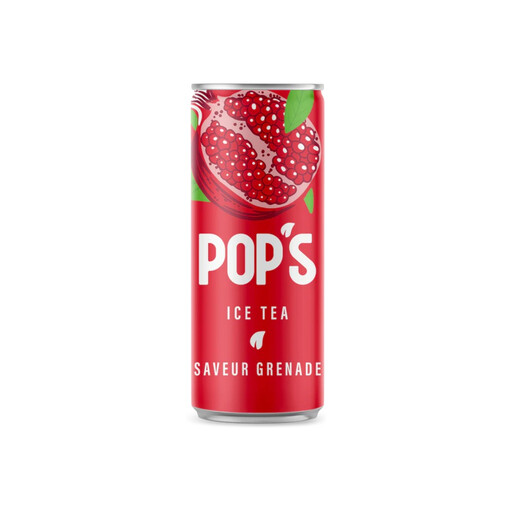
Why this suits this profile: With its 24 cans of 330 ml, this pack is ideal for households that want to always have a drink ready for meals, outings or get-togethers.
The product page states the total volume of 7.92 litres and the value of 26 kcal per 100 ml, making it easy to estimate what you're buying.
Black tea, natural pomegranate flavouring, concentrated lemon juice and individual cans that are easy to hand out.
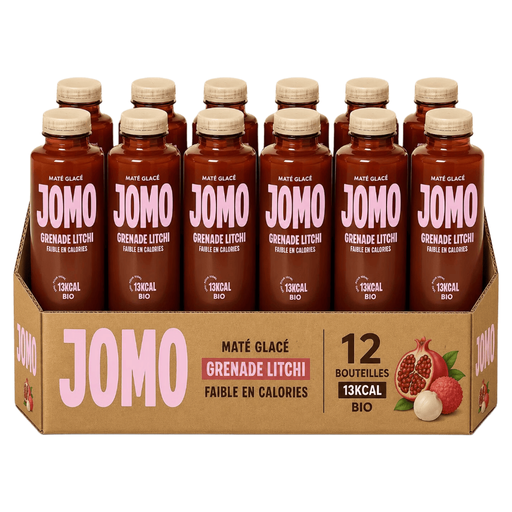
Why this suits this profile: Its organic, low-sugar recipe is ideal for those who care about where their ingredients come from and want a fruity taste without being too heavy.
The product page mentions a maté infusion, 6% organic pomegranate juice and 3.2 g of sugar per 100 ml.
Organic ingredients, made in France, recyclable rPET bottles and only 13 kcal per 100 ml.
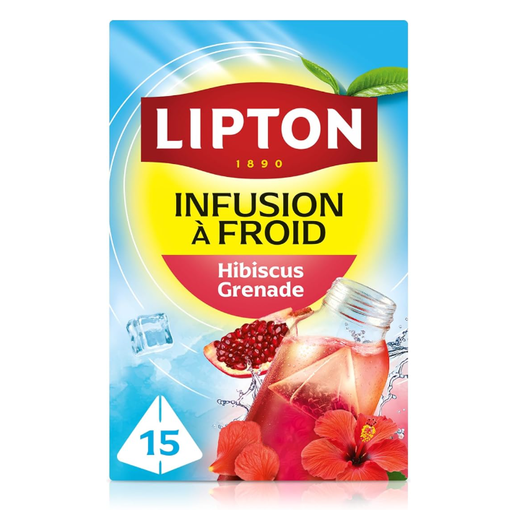
Why this suits this profile: The 15 tea bags are used directly in a 500 ml bottle. A format that's well suited to working days, commutes and those who prefer to make their own drink.
The preparation method is clearly stated: one tea bag in 500 ml of cold water for 5 minutes. The product page also confirms it's sugar-free, calorie-free and caffeine-free.
A blend of hibiscus, rosehip, apple and pomegranate peel, in a lightweight, easy-to-store format.
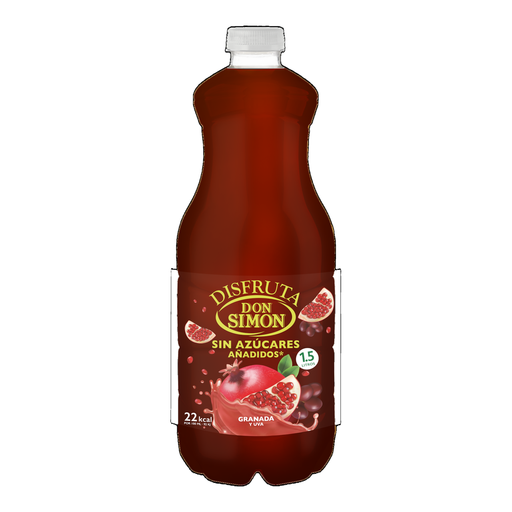
Why this suits this profile: This family-sized bottle is perfect for meals and sharing moments, without creating lots of individual packaging.
The "no added sugar" claim doesn't mean it's completely sugar-free: the product page states 4.7 g of sugar and 22 kcal per 100 ml.
15% pomegranate juice from concentrate, combined with grape juices, and needs to be kept in the fridge after opening.
Juice is generally made from fruit juice, possibly from concentrate. Nectar can contain water, a variable proportion of juice, sugar or sweeteners. The name alone isn't enough: always check the percentage of pomegranate and the nutritional information.
Not necessarily. "No added sugars" means that no sugar has been added to the recipe, but the fruit can contribute naturally occurring sugars. A drink labelled "sugar-free" can also contain a sweetener. The values given per 100 ml will help you tell the difference.
It depends on the recipe and the packaging. A bottled drink should generally be kept in the fridge after opening and consumed within the time stated on the packaging. For the products mentioned here, the product pages often state 2 to 4 days. An infusion in a tea bag is made to order; unopened cans keep until the best-before date printed on them.