
Livraison le jour même ou le lendemain

Qualité garantie

Débloquez vos offres de bienvenue: Livraison GRATUITE | Jusqu'à -80 % | 30 jours d'essai gratuits à JoyPlus
Téléchargez l'application
Whether you’re cycling, running, fishing or driving, polarised UV400 sports sunglasses need to meet several demands at once: filtering ultraviolet rays, reducing glare, staying securely in place and providing comfortable vision as light conditions change. It’s not always easy to know what to look for, especially when product descriptions are packed with promises that are hard to compare.
The UV400 label means the lenses filter ultraviolet rays up to 400 nanometres. On its own, it doesn’t guarantee reduced reflections from the road, water or car bodywork. For that, you also need to look for the term polarised or a clearly documented anti-reflective treatment.
A frame that’s too wide is likely to slip at the slightest head movement. Conversely, arms that are too tight can become uncomfortable after several hours. For cycling glasses, make sure to check for an adjustable nose bridge, non-slip temple tips and compatibility with your helmet.
Lightweight sunglasses are pleasant to wear, but weight alone isn’t enough to judge comfort or effectiveness. Also consider the frame material, the stated lens durability, ventilation and the accessories supplied. On a bumpy road, a very light pair that doesn’t fit well can quickly become annoying.
Polarised cycling glasses reduce reflections from horizontal surfaces such as wet asphalt or water. They are particularly well suited to bright conditions, fishing and sailing. However, polarisation can make some screens harder to read depending on their orientation.
Photochromic sunglasses automatically adjust their tint to the light intensity. They are ideal for routes that alternate between wooded areas, tunnels and open stretches. Always check the product details for the technology used, the tint range and the exact weight of the version you’re considering.
Interchangeable lenses offer a more flexible solution: one tinted lens for sunny days and a clear lens when the sky clouds over. The downside is that swapping them requires care to avoid scratches.
UV400 protection must be clearly stated on the product page or labelling. For UV400 protective sunglasses intended for sport and leisure, also check the compliance information provided by the seller and manufacturer. Sunglasses should never be used as industrial protection against flying debris, lasers or welding operations.
Some models mention impact resistance or performance certification. These claims should be understood in the context specified on the product page: resistance designed for sporting activity does not mean the glasses are suitable for all professional environments.
TR90 is commonly used for TR90 sports glasses because of its stated lightness and flexibility. However, that alone doesn’t guarantee a comfortable fit for every face shape.
For cycling and outdoor activities, look for:
For sunglasses intended for driving, choose a tint that preserves natural contrast perception. Avoid lenses that are too dark when light levels are low.
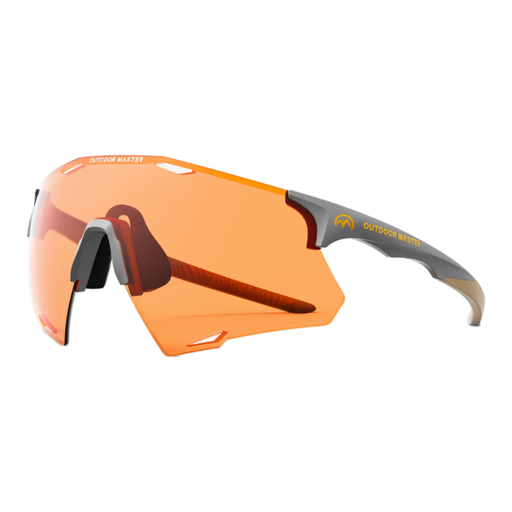
Why this choice suits this profile: This pair combines a stated lightweight TR90 frame, polarised polycarbonate lenses and an adjustable nose bridge. It’s suitable for your first cycling outings as well as various outdoor activities.
The product page mentions UV400 protection, a ventilated design and adjustable nose pads, rather than relying solely on a dark tint.
Stated weight of 25.5 g, claimed 20% wider peripheral field of vision and accessories including a case, cloth and strap.
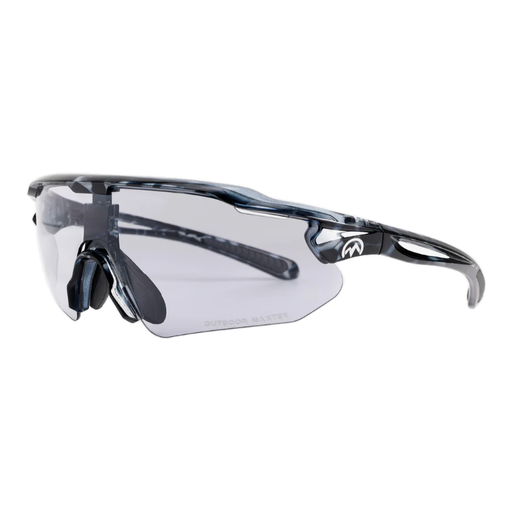
Why this choice suits this profile: Its photochromic and polarised lenses are ideal for routes where light changes, particularly between open roads and shaded sections.
The stated technology doesn’t rely on a fixed tint. The adjustable nose pads and flexible arms also help to fine-tune the fit.
Stated weight of 26 to 29 g depending on the version, UV400 protection and a 140 mm wide frame.
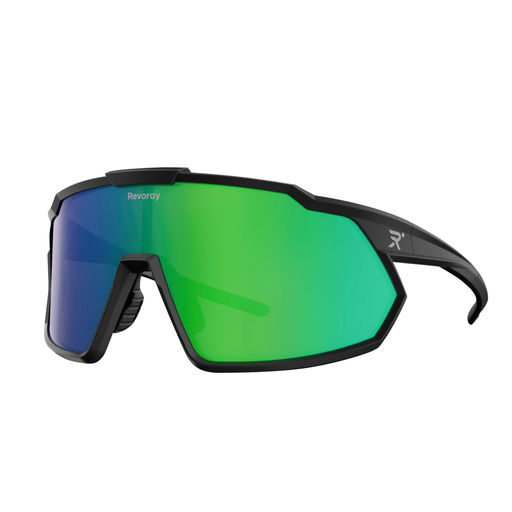
Why this choice suits this profile: This model is aimed at regular road or mountain bike rides, with polarised TAC lenses, a TR90 frame and adjustable non-slip features.
The product page states a visible light transmission of approximately 15.2%, along with water-repellent, oleophobic and scratch-resistant treatments.
Stated weight of approximately 33 g, adjustable nose pads and reference to the ANSI Z87.1 performance standard on the product page.
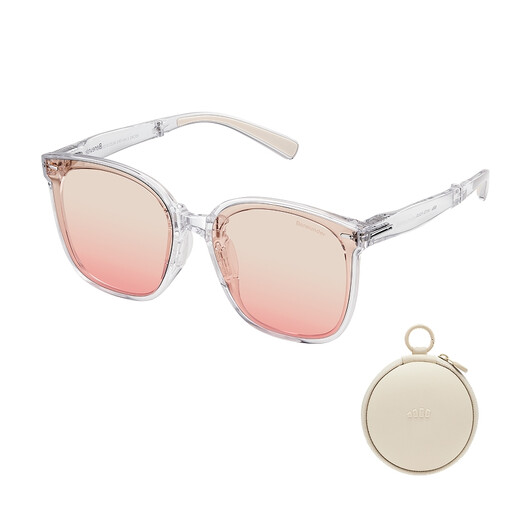
Why this choice suits this profile: Its foldable design fits easily into a bag or glovebox. This pair is suited to daily commutes and travel, rather than intense sporting activity.
The product page details a folded thickness of 35 mm and a weight of 26 g, allowing you to assess its actual size rather than relying on a vague promise of compactness.
TR90 frame, nylon lenses with stated UV400 protection and OAR anti-reflective treatment as indicated by the manufacturer.
We’ve put together a comprehensive, up-to-date selection of products that meet these demanding criteria and European safety requirements.
Clean the lenses with clean water and a clean microfibre cloth. Avoid abrasive products, alcohol unless recommended by the manufacturer, and fabrics that could cause micro-scratches. Store the glasses in their case and avoid leaving them in a car exposed to high temperatures.
Replace them if the lenses are heavily scratched, if the frame becomes distorted or if the nose pads no longer hold properly. Polarised UV400 sunglasses should not be used to look directly at the sun or for protection against professional hazards for which they are not designed.
They can reduce reflections from the road and car bodywork, but make sure the tint allows sufficient visibility. The glasses must not hinder reading instruments or affect your perception of traffic lights.
UV400 describes the range of ultraviolet rays filtered by the lenses, whereas polarisation is mainly aimed at reducing certain reflections. Both features can be combined, but one does not replace the other.
Routine maintenance generally comes down to water, a microfibre cloth and a suitable case. The cost increases mainly when you need to replace the glasses due to scratches, loss or breakage. Before buying, check the accessories included and the warranty conditions.