
Livraison le jour même ou le lendemain

Qualité garantie

Débloquez vos offres de bienvenue: Livraison GRATUITE | Jusqu'à -80 % | 30 jours d'essai gratuits à JoyPlus
Téléchargez l'application
Whether you’re on the road, on a mountain bike or just out for a leisurely cycle, polarised cycling glasses aren’t just about looking the part. They need to reduce glare, stay firmly in place and protect your eyes from ultraviolet rays, dust and spray.
However, marketing can muddy the waters. A very dark tint doesn’t guarantee full UV protection, while a lightweight frame can quickly become uncomfortable if the nose pads or arms aren’t properly adjusted. Here are the criteria to consider before choosing UV400 cycling glasses or sunglasses for cyclists.
A dark lens reduces the amount of visible light, but that alone doesn’t tell you how well it protects against UVA and UVB rays. Check for the UV400 label, as well as information about compliance and filter category.
In the UK, also look for the CE marking, the instructions and the filtration category stated by the manufacturer. A pair designed for sport is not a substitute for specialist equipment intended for industrial environments or direct observation of the sun.
Polarised lenses filter out some of the glare from surfaces such as the road, water or metal. They make vision more comfortable in bright conditions. However, a very low visible light transmission can be less suitable under trees, in overcast weather or at the end of the day.
When the information is available, compare the VLT (visible light transmission). The Revoray Y1 glasses, for example, have a transmission of around 15.2%, a value well suited to very bright conditions.
Protective cycling glasses that are too tight can put uncomfortable pressure on your temples. Conversely, a frame that slips at the slightest pothole loses much of its usefulness. For long rides, go for adjustable nose pads, non-slip temple tips and good airflow around the lenses.
Water-repellent and oleophobic coatings make cleaning easier, but they don’t make the lenses scratch-proof. A hard case and a microfibre cloth are therefore essential.
Look for an explicit UV400 protection claim. This should be backed up by consistent information on the product and its labelling. Good impact resistance can be valuable on both road and mountain bike, but check the specific standard cited.
The Revoray product page, for example, mentions testing to the ANSI Z87.1 standard. This standard relates to impact resistance, but on its own it doesn’t automatically equate to all applicable European requirements for protective equipment. For general sporting use, always check the conformity documents supplied with the pair.
A pair of photochromic cycling glasses isn’t therefore automatically better than a fixed-tint polarised model. It all depends on your route, the time of day you ride and the light conditions you most often encounter.
TR90 frames are valued for their flexibility and lightness. The models featured here weigh between approximately 25.5 and 33 g, depending on their design and the type of lens used.
Also consider:
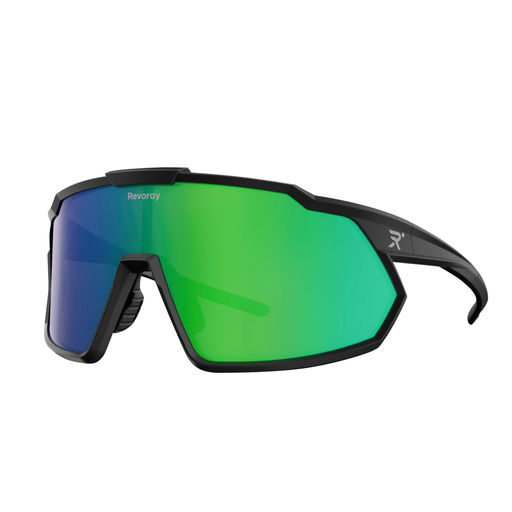
Why this choice suits this profile: This pair combines TAC polarised lenses, UV400 protection and a 33 g TR90 frame. It’s a great option for your first road rides or outdoor cycling trips.
The product page states the light transmission (around 15.2%), the weight and the water-repellent and oleophobic coatings. It doesn’t just rely on a vague promise of comfort.
TAC polarised lenses, adjustable silicone nose pads, UV400 protection and a stated one-year limited warranty on the product page.
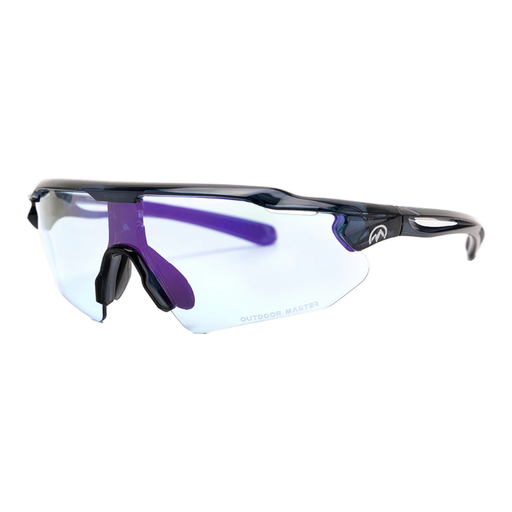
Why this choice suits this profile: The combination of photochromic and polarised lenses is ideal for cyclists who ride on open roads, through wooded sections and in changing light conditions.
The stated self-adjusting tint means you don’t have to change your glasses every time the light changes. The adjustable nose pads also let you fine-tune the fit.
TR90 frame, stated weight of 26 to 29 g, UV400 protection and impact-resistant polycarbonate lenses according to the product page.
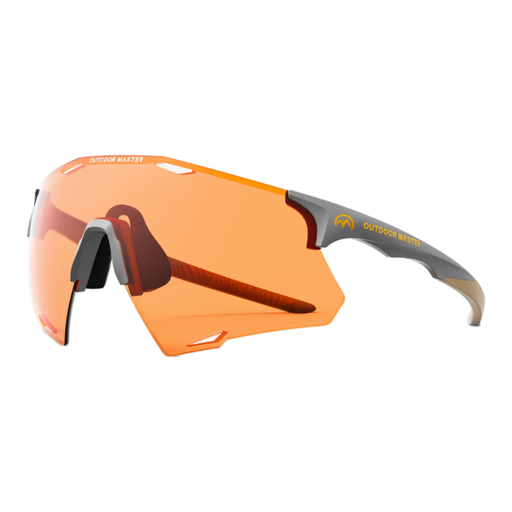
Why this choice suits this profile: Its ventilated design and stated weight of 25.5 g meet the demands of mountain biking, sport cycling and outdoor activities.
The ventilation helps prevent fogging, a common problem during exertion, while the adjustable nose pads reduce slipping.
Polarised polycarbonate lenses, UV400 protection, ventilated design and TR90 frame with silicone elements.
We’ve selected a full range, regularly updated, of products that meet these demanding criteria as well as European safety requirements.
The lifespan of your glasses depends primarily on the condition of the lenses and the frame. Replace them if they have significant scratches, distortion or an unstable fit. To preserve their coatings:
Anti-fog glasses can reduce condensation thanks to their ventilation or a surface treatment. However, no solution guarantees perfectly clear vision in all weather conditions.
Yes, they can be very useful when glare from the road, vehicles or water becomes bothersome. However, check their light transmission and choose a tint suited to your usual routes. For tunnels and poorly lit areas, a photochromic or interchangeable lens will often be more practical.
Look for the UV400 label, a filter category appropriate for the brightness and a clearly stated CE marking. For sporting use, also check impact resistance, ventilation and frame stability.
Choose a ventilated frame, avoid completely covering its vents with your helmet or neck warmer, and clean the lenses with a product suitable for optics. An adjustment that leaves a small gap between the frame and your face can also improve airflow.