Which system suits your needs?
The right switch depends as much on the space and time you can devote to making coffee as it does on how often you drink it.
Households making espresso every day
An automatic machine with a grinder lets you switch to beans without having to grind and prepare each dose separately. However, Que Choisir notes that it takes up more space and makes more noise than a pod system, and its trays need regular rinsing.
Small kitchens and occasional use
If a compact appliance and pre-portioned coffee matter more to you than switching to beans, keeping your pod machine is a sensible choice. Check which pod format it accepts and how to sort or drop off used pods near you.
Those happy to make espresso by hand
A portafilter machine is worth considering if you want to use ground coffee or grind your own beans, and are happy to spend time making your drink. Before choosing a model, check its maintenance requirements and which accessories are compatible with its exact model number.
What should you check before switching systems?
Start with the drinks you make most often, then check whether the available space and maintenance requirements of the system you’re considering fit your routine.
| Priority | What to check | Your needs |
|---|
| Drinks and steps |
For espresso made from beans, consider the difference between an automatic grinder and a portafilter machine. If you mainly make several cups at a time, a filter coffee machine may be a better fit; it won’t make espresso under pressure. |
I often make espresso, but don’t necessarily want to be involved at every step. Or, on the other hand, I prefer to take my time making coffee. |
| Space and noise |
Check the machine’s dimensions and how much room you’ll need to fill its reservoirs. In its 2025 advice, Que Choisir says an espresso machine with a grinder takes up more space and makes more noise than a pod system or a filter coffee machine. |
My worktop space is limited, or the noise of making coffee could disturb someone else in the household. |
| Maintenance |
Check the manual for instructions on rinsing the trays, descaling and, if you make milk-based drinks, cleaning the milk system. According to De’Longhi France, how often an espresso machine with a grinder needs descaling depends in part on water hardness. |
A simple brewing process isn’t enough if I can’t fit the machine’s cleaning requirements into my routine. |
| Consumables and parts |
Check which coffee or filter formats the machine accepts, then look up the care products and parts that match its exact model number. Philips, Sage and Melitta support pages list these for certain ranges, but this doesn’t mean they’re compatible with every model. |
I want to be able to identify the right filters, accessories and parts for the appliance I choose, rather than assume they’re interchangeable. |
| Keeping your pod machine |
Check which pod format your machine accepts and what sorting or collection options are available for your pods. In France, ADEME says aluminium and plastic pods go in the recycling collection for paper and packaging; also follow your local guidelines. |
I might keep my pod machine for an occasional coffee, even if I make my usual drinks another way. |
Which brands should you check for maintenance support?
These examples can help you check the support and consumables available for certain models; they don’t guarantee that parts are available across an entire brand.
De’Longhi
Worth checking if you’re looking into maintenance for an espresso machine with a grinder, using the brand’s French support service.
- De’Longhi France explains that descaling frequency depends on water hardness.
- Check the exact model number to find out which maintenance tasks and accessories apply to your machine.
Philips
The brand has a French support portal where you can look up coffee machine support by product number.
- Philips provides manuals and maintenance advice; the support page for the Series 2200 EP2224/10 also has a section for parts and accessories.
- Some instructions, such as lubricating the brew group, depend on the machine’s design, so check the manual for your model.
Sage
Worth a look if you’re considering a portafilter espresso machine and want to find out which care products it uses.
- Sage’s support page for the Barista Express Impress lists cleaning supplies and parts for this specific model.
- This doesn’t mean that every accessory is necessary or available for another Sage model.
Nespresso
A useful reference for households thinking about keeping their pod system.
- Nespresso France says it offers used pod collection points in its boutiques, along with other drop-off options.
- Check which format your machine accepts and what collection options are available near you.
Melitta
A brand to check for both filter coffee machines and some automatic bean-to-cup models.
- Melitta France lists filter sizes and spare parts for certain automatic machines and filter coffee machines.
- Check the filter size or part compatibility against the model number you’re considering.
Bean-to-cup machines and a manual option on Joybuy
These models are for those looking to switch from pods to making coffee from beans: four are described as electric machines with grinders or machines designed for beans, while the STARESSO set combines a manual coffee maker with a grinder. They suit different routines.
 Image unavailable
Philips Series 2200 EP2230/10 LatteGo
This machine with a grinder is worth considering if you want to make coffee from beans regularly. The product name specifies the LatteGo system; if you make milk-based drinks, check the manual for the relevant cleaning steps.
View on Joybuy
 Image unavailable
De’Longhi Magnifica Start ECAM220.21.WW, white
This machine is designed for coffee beans and suits a pod-free espresso routine. Before choosing a spot for it, check its dimensions, access to the reservoirs and the maintenance instructions for the ECAM220.21.WW.
View on Joybuy
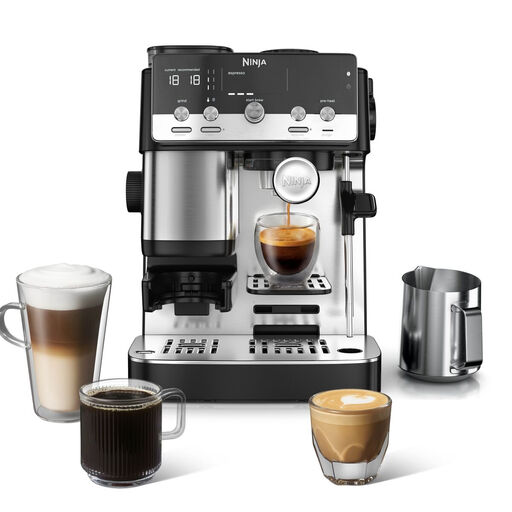 Image unavailable
Ninja Luxe Café Mini ES301EU, espresso and filter coffee
The product name combines espresso and filter coffee preparation with a built-in grinder, making this model worth considering if both types of drink are part of your routine. Check the frothing system supplied with the ES301EU, as well as its size and maintenance requirements.
View on Joybuy
 Image unavailable
De’Longhi Magnifica S ECAM22.140.B, black
The built-in grinder suits anyone who wants to make espresso from beans without a separate grinder. Check how much space you’ll need around this model and what’s required to maintain it before making it part of your daily routine.
View on Joybuy
 Image unavailable
STARESSO portable espresso maker with grinder and bag
This set combines a manual espresso maker with a grinder for using beans, rather than offering the automatic preparation of the other models featured here. If you plan to use it regularly at home, bear in mind that you’ll need to grind the beans and clean the equipment each time.
View on Joybuy
Frequently asked questions
What needs cleaning on an espresso machine with a grinder?
The cleaning routine depends on the model. Que Choisir recommends regularly rinsing the grounds and drip trays, while De’Longhi France notes that descaling frequency depends in part on water hardness. If your machine has a milk system or a brew group that needs maintenance, follow the instructions in the manual for its exact model number.
Can you find parts and care products for a bean-to-cup or portafilter machine?
Yes, for some models, but you’ll need to check compatibility for each model number. The French pages for Philips, Sage and Melitta have support sections, accessories or parts for specific ranges. Look up the manual and items that match the exact machine you’re considering.
Can you keep your pod machine after switching to beans?
Yes, if its simplicity or compact size still suits occasional use. In France, ADEME says used aluminium and plastic pods should be recycled with paper and packaging; also check the guidelines that apply locally.
How can you check whether a machine can be repaired before buying?
Look for a manual, repair support and parts listed for the exact model number. Some brands, including Philips and Melitta, provide these resources for specific models or ranges; you’ll need to check separately whether they’re available for another machine.


