What to look for
Start with the type of drink you prepare most often, then make sure the maintenance, available space and consumables suit your daily routine.
| Priority |
What to check |
Your needs |
| Reduce individual portions |
Check how the beans are stored, and how easy it is to access the grounds container and drip tray. For a refillable pod, check the compatible system and the filling, tamping, emptying and cleaning steps involved. |
I want to rely less on an individual portion for every coffee without adding a routine I will not be able to maintain. |
| Choose the right drinks |
Compare the recipes actually available: espresso, long coffee, filter coffee and milk-based drinks. Depending on how you plan to use it, check whether it has a portafilter, steam wand or carafe. |
My usual drinks should guide my choice: a carafe for several filter coffees does not offer the same experience as an espresso made to order. |
| Be prepared for maintenance |
Look at which parts need rinsing, how easy it is to access the containers and brewing unit, the descaling alerts and the milk-system cleaning process. Que Choisir points out that cleaning is essential to the operation of a bean-to-cup espresso machine. |
I would rather understand the steps required after each drink and each week than discover an inconvenience once the machine is installed. |
| Plan the installation |
Measure the appliance and the clearance needed to open the water tank and bean hopper. Check the grinding noise, any water or paper filters required, and compatible descaling products. |
Coffee may be made early or late in the day, so I need to be able to install the machine without restricting access to the worktop or overlooking the noise of the grinding cycles. |
Joybuy options
These Joybuy options mainly cover bean-to-cup espresso machines for everyday coffee at home, along with a portafilter machine and integrated grinder for a more hands-on preparation.
 Image unavailable
Philips EP2230/10 Series 2200 LatteGo
For regular espressos, coffees and cappuccinos made from beans, with a LatteGo system for milk-based drinks.
Grinder, intensity, temperature and volume settings; 275 g bean hopper and 1.8 L water tank. The removable brewing unit, front access and washable parts may make routine maintenance easier.
The AquaClean filter is not included; check its availability and follow the descaling alerts. If coffee is made early or late, also check the grinder’s noise level.
Joybuy
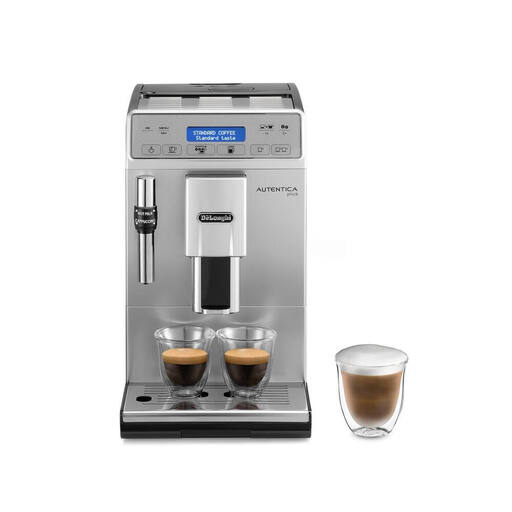 Image unavailable
De’Longhi Autentica Plus ETAM29.620.SB
This machine is aimed at households wanting espressos and long coffees made to order from beans, with occasional milk-based drinks prepared using the steam wand.
13 grind settings, aroma, temperature and quantity controls, and the option to prepare one or two cups. 1.4 L water tank and 200 g bean hopper.
The steam wand needs to be prepared and cleaned after making milk-based drinks. Check the manual for access to the containers, brewing unit maintenance and the noise level.
Joybuy
 Image unavailable
De’Longhi Magnifica Start ECAM220.21.WW
It is suitable for a household that mainly makes espresso, coffee or Doppio+ from beans and wants to prepare two coffees in succession.
Conical grinder, 13 grind settings and three direct recipes; 1.8 L water tank, 250 g bean hopper and grounds container advertised for 14 cups. Dimensions: 240 × 440 × 350 mm.
Milk-based drinks require the use and cleaning of the steam wand. Check the descaling programme, access to the brewing unit and the noise level before installation.
Joybuy
 Image unavailable
HiBREW H16 automatic espresso machine
This machine is aimed at households wanting to prepare espressos and milk-based drinks from beans, with several recipes available on the touchscreen.
15-level conical grinder, six drinks, programmable coffee and milk volumes, dual boiler and 1.5 L water tank. Dimensions: 270 × 320 × 310 mm.
Before buying, check the cleaning cycles, accessible parts, consumables, grinder noise and the capacity of the bean and grounds containers.
Joybuy
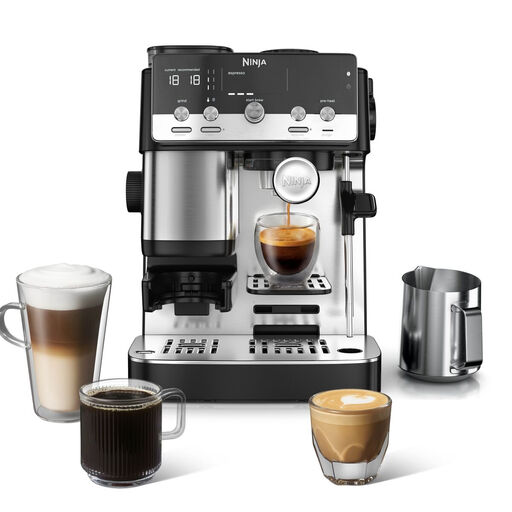 Image unavailable
Ninja Luxe Café Mini ES301EU
This option combines an integrated grinder and portafilter for people ready to take a hands-on approach to preparing espresso, Americano and milk-based drinks.
Conical grinder, weight-based dosing, advertised grinding and tamping functions, milk jug and removable parts. After use, the portafilter must be removed, the coffee puck emptied and the portafilter rinsed.
The milk-frothing system should be confirmed for this variant, as the title and description differ. Also check the water tank and bean hopper capacities, as well as the grinder noise.
Joybuy
Frequently asked questions
Do used coffee pods belong in general waste?
No. ADEME states that aluminium or plastic pods should go in the recycling bin, bag or container for paper and packaging. Paper pods can be composted at home, in a shared composting scheme or disposed of with food waste only where a local solution is available.
Is a refillable pod compatible with every pod machine?
No. Check your machine’s exact system and the compatibility stated by the refillable pod manufacturer before buying. Refillable pods generally involve filling, tamping, extraction, emptying and cleaning.
Does a water filter permanently eliminate the need for descaling?
No. Requirements depend on the model and on using the filter correctly. Philips explains that some models still require descaling after eight AquaClean filter cycles. Follow the manual for the reference you buy and the machine’s alerts.
What should you check before buying a bean-to-cup espresso machine?
Check access to the bean hopper, water tank, grounds container, drip tray and, where fitted, the brewing unit. Also compare the descaling procedure, the manual steps required and the noise level. Que Choisir includes these elements in its testing protocol.
What rights apply if a machine bought from a professional is not as described?
In France, the statutory legal guarantee of conformity is compulsory for new, second-hand or refurbished goods sold by a professional to a private individual, according to economie.gouv.fr. It covers, among other things, products that do not match their description, their usual purpose or the specific purpose communicated to the seller.


