
Livraison le jour même ou le lendemain

Qualité garantie

Débloquez vos offres de bienvenue: Livraison GRATUITE | Jusqu'à -80 % | 30 jours d'essai gratuits à JoyPlus
Téléchargez l'application
A pocket notebook should be your everyday companion without turning your bag into a suitcase. Yet product descriptions often focus more on looks than on what really matters: paper that's too thin, a cover that warps, an awkward binding, or dimensions that don't fit your bag or jacket pocket.
Students, professionals, travellers and journaling enthusiasts all have different needs. An A6 notebook works well for quick notes, while a larger model gives you more space for planning, sketching or writing a travel journal. Here are the points to consider before you place your order.
A compact size doesn't necessarily fit in every pocket. Check the stated dimensions, especially if a hard cover, spiral binding or elastic closure adds bulk. An A6 notebook typically measures around 10.5 × 14.8 cm, but the overall size also depends on the cover and binding.
A notebook that's too small can also reduce line length and the space available for lists or sketches. For everyday use, compare its dimensions with those of your bag, diary or the pocket you actually use.
The number of pages isn't enough to judge a lined or grid notebook. Paper weight, expressed in g/m², gives you an idea of thickness, but it doesn't alone predict how it will behave with all pens.
70 g/m² paper helps keep the notebook lightweight, while 90 to 100 g/m² feels nicer under a pen or pencil and holds up better to certain felt-tips. If you use a marker or fountain pen, also check the paper's opacity and compatibility with inks.
A notebook with an elastic closure and bookmark is handy for finding your page and keeping everything closed. However, these extras add a bit of thickness and can wear out over time. An inner pocket is useful for storing tickets or a few loose sheets, but it doesn't add much for simple note-taking.
It's better to choose accessories that match your habits, rather than paying for a long list of features you'll never use.
A lined notebook works well for continuous writing and meeting notes. Blank pages are more versatile for sketching, drawing or brainstorming. A grid notebook makes it easier to format tables, plans, calculations and diagrams.
For small squares, look closely at the grid size: a 5 × 5 mm grid offers precise guidance but can feel too dense if you write large.
A hard cover protects the pages better in a bag and provides a useful writing surface when you don't have a desk. A soft cover is lighter and slips more easily into a pocket.
The binding also affects comfort:
Finally, distinguish between a certification and a vague marketing claim. PEFC and FSC labels provide information about the origin of certain materials, depending on the product and the supply chain stated. They don't mean that all components of the notebook come from the same source.

Why this suits this profile: This pack of four A7 notebooks lets you separate lists, notes, ideas and reminders without weighing down your bag.
The size and number of notebooks are clearly stated: each notebook has 50 sheets and offers grid pages to structure your notes.
Top-opening spiral binding, grid pages, four colours and a compact footprint.
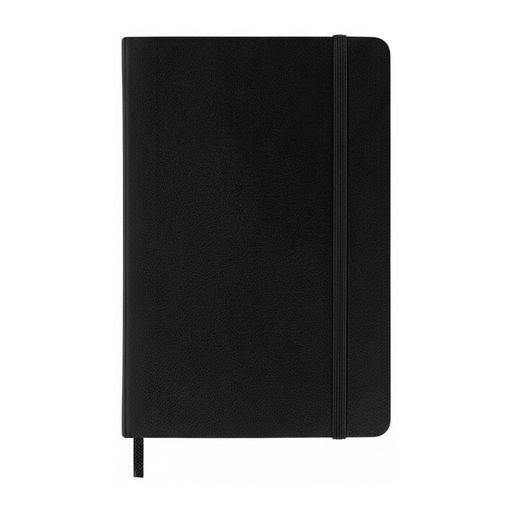
Why this suits this profile: Its pocket size, soft black cover and integrated accessories will appeal to those looking for a understated notebook for work or travel.
The product page specifies the 70 g/m² ivory ruled paper, elastic closure and 180° flat opening.
Bookmark, expandable inner pocket, rounded corners and paper from FSC certified sources according to the product page.
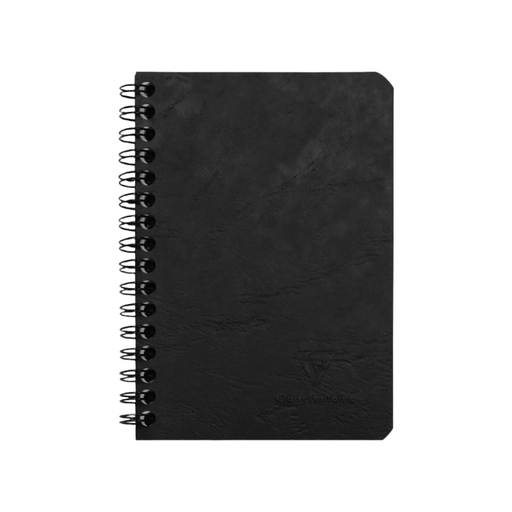
Why this suits this profile: Made in France, this notebook is ideal for regular notes, journaling and travel writing thanks to its flat opening and 90 g/m² paper.
The product page details the size, page count, paper weight, colour-through cover and binding, which allows 180° opening.
Clairefontaine Vélin Velouté paper, 100 pages, leather-grain cover and PEFC certification stated.
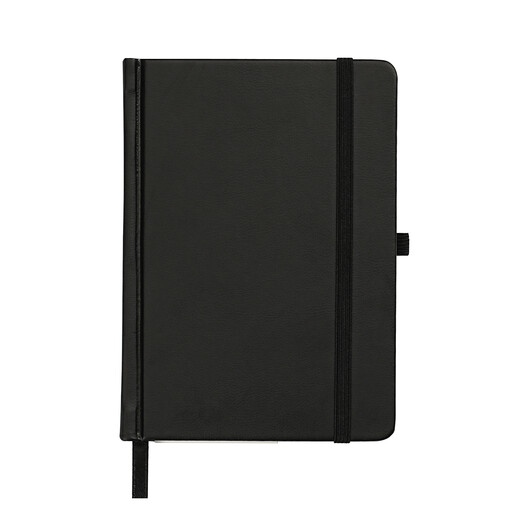
Why this suits this profile: With its A6 size and lined pages, this notebook is ideal for daily entries, lists and notes taken on the go.
The A6 dimensions, 80 sheets of 100 g/m² offset paper and accessories are clearly stated, making comparison easy.
PU hard cover, elastic closure, bookmark, pen loop and 160 pages stated.
We've compiled a comprehensive, real-time selection of products that meet these exacting criteria, while complying with European safety regulations.
A6 offers a good balance between portability and writing space. For very short reminders, an A7 may suffice. If you write several pages a day or regularly add sketches, a 9 × 14 cm format, or even larger, will be more comfortable.
A spiral notebook opens easily and can stay flat, making one-handed writing easier. A binding that allows 180° opening is better if you write on both sides of the page. As for a hard cover, it provides a useful writing surface when you don't have a desk to hand.
No. Environmental impact and mechanical durability are two separate issues. Look at the information about recycled paper and PEFC or FSC certifications, then examine the cover, binding and paper weight separately. The Clairefontaine Zap Book A6, for example, states 100% recycled, acid-free, pH-neutral paper, combined with a spiral binding and blank pages.