
Livraison le jour même ou le lendemain

Qualité garantie

Débloquez vos offres de bienvenue: Livraison GRATUITE | Jusqu'à -80 % | 30 jours d'essai gratuits à JoyPlus
Téléchargez l'application
What dog owner hasn't felt that little spark of joy watching their companion discover a new plush toy? A joy that is, alas, often short-lived. It's a familiar story: you pick out a toy labelled "durable" only to find it shredded in the blink of an eye. Choosing a plush dog toy can be a real headache, given the wide gap between marketing promises and real-world durability.
To put an end to disappointing purchases, let's break down the common pitfalls and the true quality criteria that will guarantee a more confident and lasting investment.
To avoid falling into the same trap, you need to focus on a few tell-tale technical details. These are what separate a short-lived gadget from a playmate that will stand the test of time.
The first step? Inspect the material. A basic, thin polyester plush won't last long against a determined chewer. To improve your odds, opt for sturdier options:
The sound of a squeaker is often irresistible to our four-legged friends. It's an excellent stimulant that turns a simple plush into a true interactive dog toy. But be careful—safety comes first. The squeaker must be inaccessible, ideally housed in a secure internal pocket with strong seams and dense stuffing. If your dog can extract it in minutes, the toy goes from fun to hazardous.
Some plush toys aren't just soft; their textures are designed to contribute to oral hygiene. By chewing on textured surfaces like corduroy or rubber inserts, the dog massages its gums and helps reduce tartar buildup. This is a significant bonus that turns the plush into a dental toy for dogs, combining fun with function.
Because every dog is unique, so are their toy preferences. From a simple, comforting dog comfort toy to an outlet for powerful jaws, here are our recommendations for different profiles.
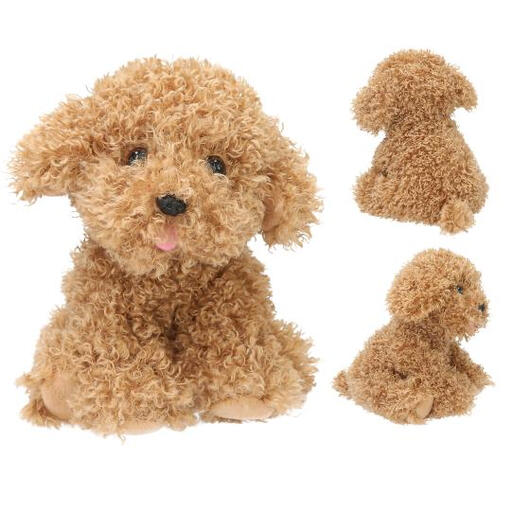
Who is it for? Perfect for calm or slightly anxious dogs looking for a comforting dog security toy, not a chew-fest. Its mission: to be a nap and cuddle buddy.
This toy doesn't pretend to be something it's not. Its purpose is clear: comfort, not durability. This avoids the disappointment of an unfulfilled promise of toughness.
Its 100% polyester composition ensures maximum softness. At 16 cm, it's a small companion that your dog can easily carry everywhere.
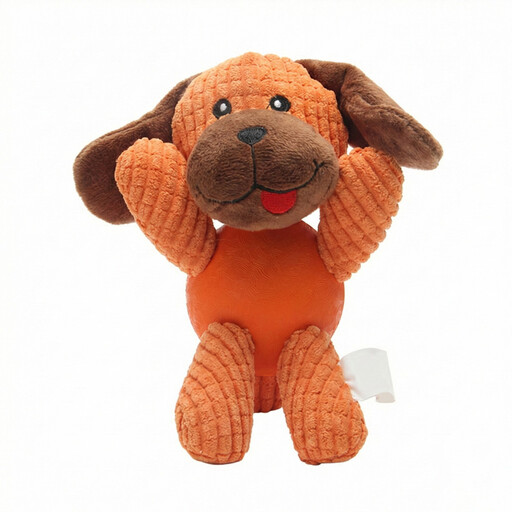
Who is it for? Designed for dogs who love to chew but also appreciate the softness of a plush toy. The perfect compromise between cuddliness and the need to gnaw (in moderation).
It avoids the "false durability" trap thanks to its combination of thick corduroy and natural rubber. This duo of materials is objectively more resilient than a standard plush toy.
It combines the sturdiness of a durable dog plush with the fun of a squeaky toy. Bonus: its texture contributes to dental hygiene, making it a good supplementary dental toy.
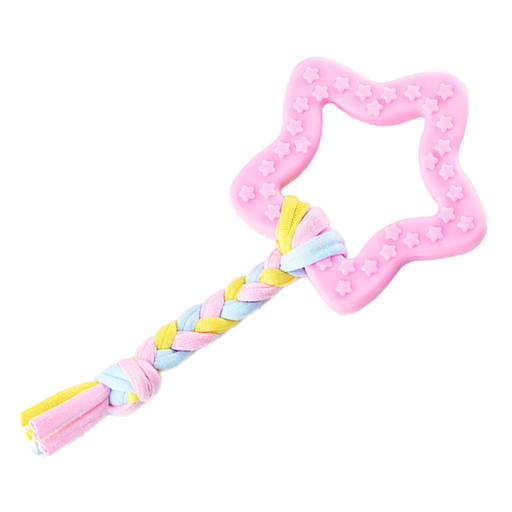
Who is it for? Ideal for owners who love to share playtime with their pet. Its design is tailored for sessions of fetch and tug-of-war.
It bypasses the pitfall of the passive toy that ends up forgotten in a corner. As an interactive dog toy, its value lies in shared activity, strengthening the owner-dog bond.
The combination of thermoplastic rubber (TPR) and braided rope offers varied textures for chewing and an excellent grip for both hands and jaws during games of tug-of-war.
Discover our full selection of products that meet our strictest quality and safety standards.
Most plush toys can be machine-washed on a low temperature, preferably in a wash bag to protect them. Use a mild, fragrance-free detergent without any fabric softener. The toy must be completely dry before you give it back to your dog to prevent mould. When in doubt, always refer to the manufacturer's label.
It all depends on your dog's chewing intensity and how often they play. The best practice is to inspect their toys regularly. A seam coming loose, stuffing starting to escape, or a piece breaking off? It's time to discard the toy. A damaged toy poses a real risk of ingestion.
Yes, for many dogs, a comfort toy can have a genuinely calming effect, especially for separation anxiety. When it's imbued with your scent, it becomes a reassuring object in your absence. However, be aware that a plush toy alone cannot solve a deep-seated anxiety disorder. It's a comfort tool that should be part of a broader approach, including a secure environment and, if necessary, advice from a canine behaviourist.